What happened
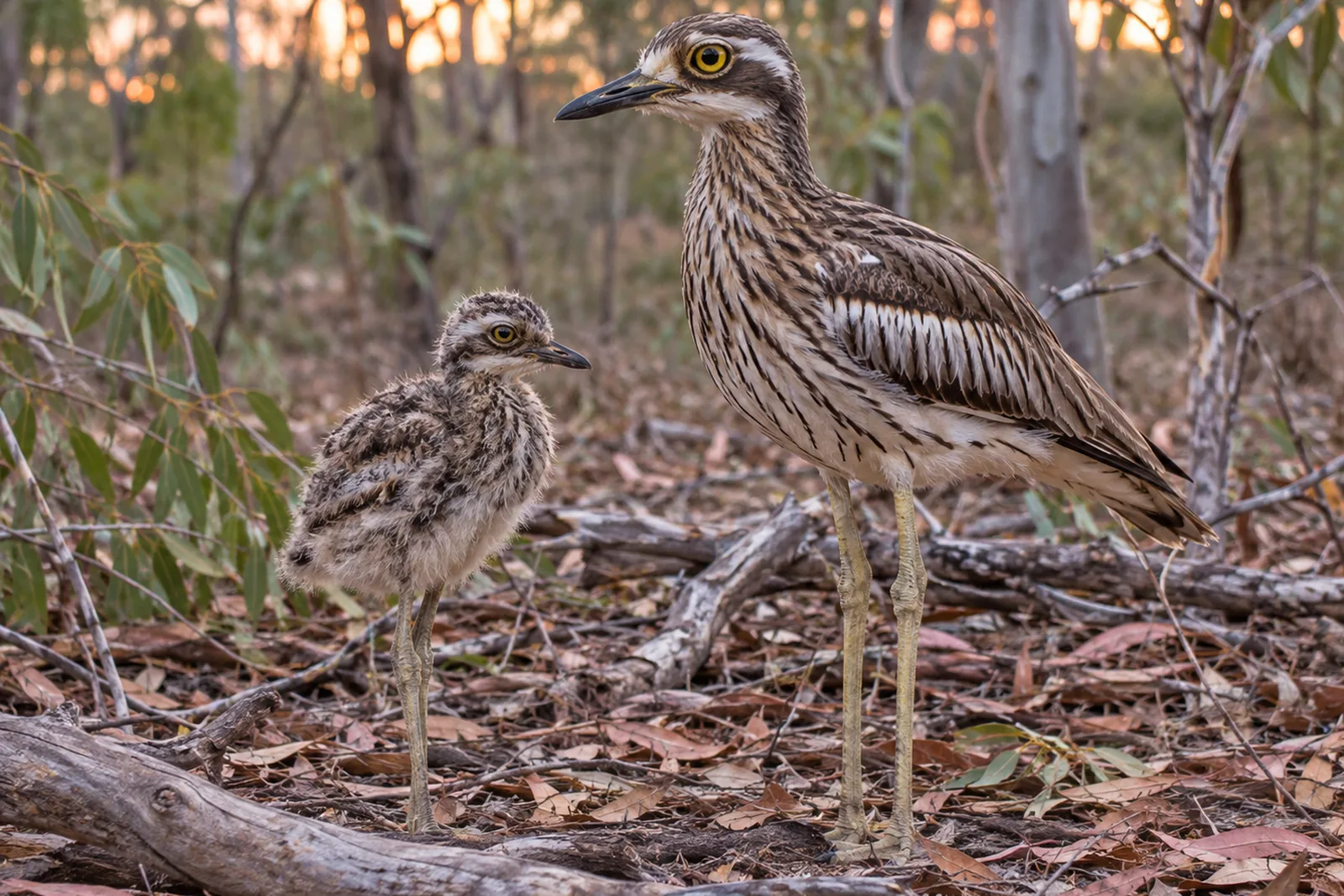
Wild bush stone-curlew chicks have hatched on Phillip Island (Milawul), off the coast of Victoria, for the first time in more than 50 years, the South Gippsland Sentinel-Times reported on 11 November 2026. Several wild breeding attempts have been recorded this season. The news came as Phillip Island Nature Parks released another 12 birds on Wednesday 4 November at the Koala Conservation Reserve, near the Oswin Roberts Reserve wetland. The birds came from five wildlife sanctuaries across Australia, and each wears a small GPS backpack so researchers can follow it.
Bush stone-curlews are tall, long-legged birds that live on the ground. They are critically endangered in Victoria. The last curlews were seen on the island in the 1970s, Nature Parks senior scientist Dr Duncan Sutherland said, according to an earlier Sentinel-Times report.
Why it matters
A release only works if the birds go on to breed. The first signs came earlier in 2026, when three wild chicks hatched but none survived to fledge, the Bass Coast Post reported in July. This season’s chicks show that breeding is continuing. Not all have survived: some have been taken by native predators such as ravens and kookaburras. Researchers said these early attempts are part of building a population that can sustain itself.
The Coexistence Conservation Lab at the Australian National University, which runs the research with the Nature Parks, puts Victoria’s population at only 50 to 100 birds. If the island’s population takes hold, it could make “a substantial contribution” to the state’s total, the lab says.
Having wild bush stone-curlew chicks hatch in the wild on the island for the first time in more than 50 years is an exciting milestone for the program.
Paula Wasiak, researcher, Australian National University
The wider picture
The project has moved in stages. According to the ANU lab, 12 pilot birds were released in August 2024, 24 in April 2025, eight in spring 2025 and 14 in June 2026. With November’s 12, that makes about 70 birds; the Sentinel-Times puts the total at more than 70. The June release was the first in which only half the birds had their wing feathers clipped. Researchers want to see whether birds that can fly are better at avoiding cars.
That matters because traffic is the main threat. About 40 per cent of reintroduced curlews on the island are killed in collisions within 12 months of release, the Sentinel-Times reported. Curlews usually do not fly to avoid cars, the Bass Coast Post noted. Dr Sutherland said the next phase would focus on reducing that threat. Locals are asked to drive slowly between dusk and dawn, keep dogs on a lead and cats inside, and leave fallen logs on the ground as habitat.
“Together with the great condition of birds after release, it suggests that the island has the resources needed for the birds to thrive,” ANU researcher Paula Wasiak said. In GGND’s view, the good condition of the released birds is as important a signal as the chicks themselves: it suggests the island can feed a growing population.
Could it work elsewhere?
The approach, with birds from many sanctuaries, careful tracking and close work with residents, could guide returns to other parts of south-eastern Australia where curlews have vanished. In GGND’s view, the hard part is roads: any site with busy traffic at night will need slower speeds, signs or safer crossings before releases make sense.
What remains unresolved
- Fledging. Hatching is a first step. Reports so far do not say whether any of this season’s chicks have fledged.
- Roads. With about 40 per cent of released birds killed by vehicles within a year, the population may not grow unless road deaths fall.
- Predators. Ravens and kookaburras have taken chicks. Whether enough survive each year to build a population is not yet known.
- Counting. Published totals of released birds vary between reports, and the number still alive has not been published.
What happens next
Breeding is expected to continue through the summer, with Nature Parks staff and Paula Wasiak watching nests and chick survival. The ANU lab describes the programme as a long-term effort in which “meaningful outcomes will take time”. Sightings can be reported on the Victorian Bush Stone-Curlew project on iNaturalist.
Sources
- Coexistence Conservation Lab, Australian National University Returning the bush stone-curlew to Phillip Island (Milawul) (accessed 16 November 2026)
- South Gippsland Sentinel-Times Wild curlew chicks hatch on Phillip Island after 50 years (11 November 2026)
- South Gippsland Sentinel-Times Watch: Endangered curlews released back into the wild at Phillip Island (2 July 2026)
- Bass Coast Post New hope for curlew comeback (2 July 2026)
Analysis and context are by The GGND Team. Where we draw our own conclusions, we say so. To report an error, contact us.