What happened
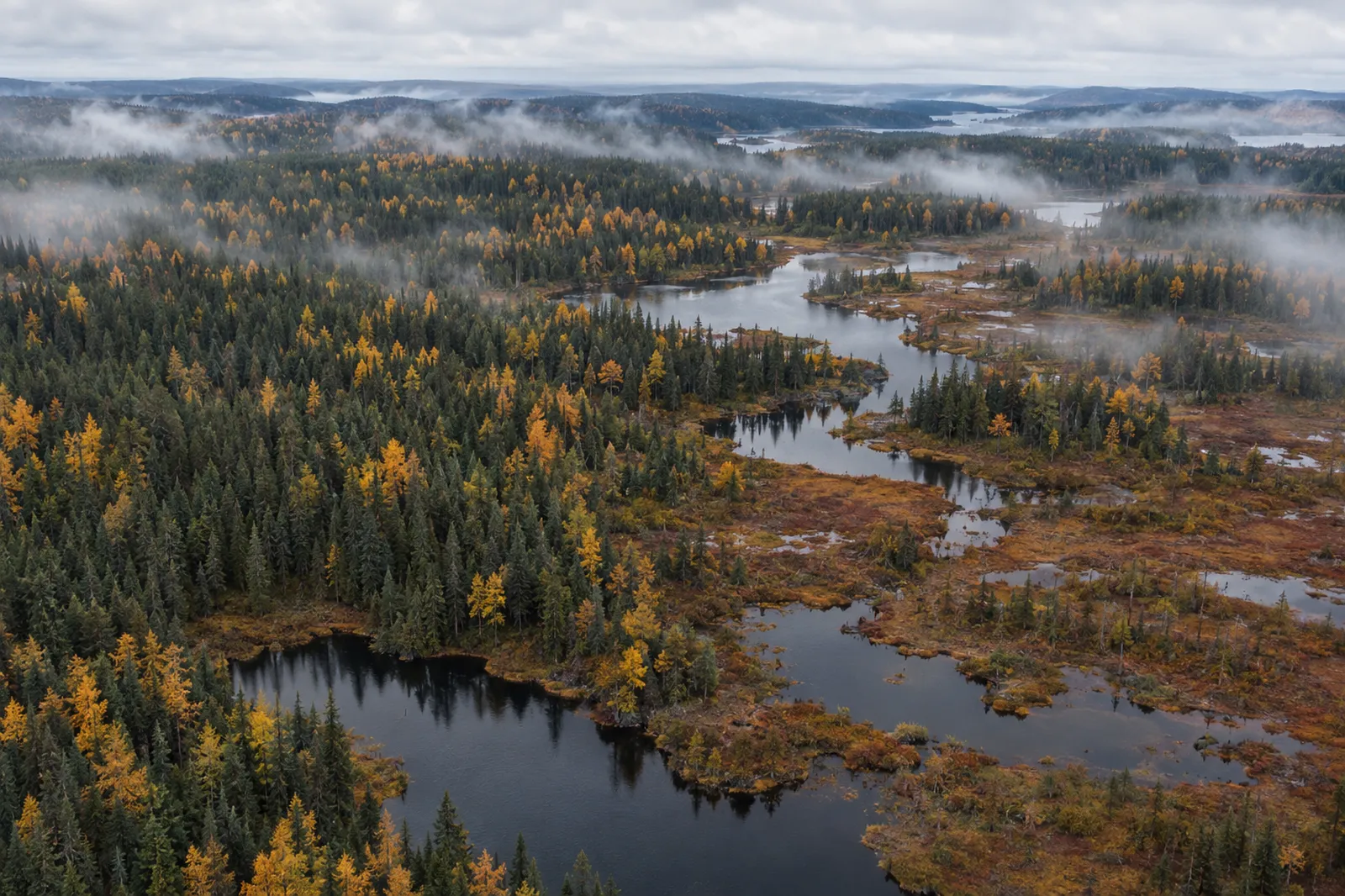
On 13 October, Canada’s federal government and the Nature Conservancy of Canada (NCC) announced the protection of more than 81,400 hectares of taiga forest and peatland south of Kapuskasing, in northern Ontario. That is about 1.3 times the size of the City of Toronto. The federal government contributed more than C$13 million through its Natural Heritage Conservation Program, as part of a C$64 million total that also includes the Government of Ontario, businesses, foundations and private donors.
Ontario’s environment minister, Todd McCarthy, called it one of the largest private land conservation projects in the province’s history. The project brings NCC’s conservation work in Ontario’s northern boreal region to more than 230,000 hectares.
Why it matters
Peatlands are layers of waterlogged plant matter built up over thousands of years, and they are among the most carbon-dense landscapes on Earth. Canada holds about a quarter of the world’s peatlands, NCC notes, and its boreal forests and soils hold nearly twice as much carbon per square kilometre as tropical forests. The newly protected area stores more than 30 million tonnes of carbon, which the federal government compares to the annual emissions of about 34 million passenger vehicles.
The land also provides habitat for at-risk species, including the bobolink, wood thrush, Canada warbler, olive-sided flycatcher and red-headed woodpecker. Large, connected, intact systems also cope better with drought, wildfire and flooding than fragmented ones.
Canada has a rare opportunity to protect globally significant northern peatlands while they are still healthy and intact.
Christian Bauta, Weston Family Foundation
The wider picture
Canada has committed to protecting 30 percent of its land and waters by 2030. The announcement came days before COP17, the United Nations biodiversity conference in Yerevan, Armenia, which reviews global progress toward the Kunming–Montréal Global Biodiversity Framework and its 2030 targets.
The financing model is worth noting. Since its creation, the Natural Heritage Conservation Program has invested more than C$558 million of federal money, matched by more than C$1.1 billion from conservation groups and land trusts, to protect nearly 966,000 hectares. Public money attracts private money, and land trusts take on long-term stewardship.
Could it work elsewhere?
Blended public and private funding is replicable wherever governments can match donors and capable land trusts exist. The more distinctive feature here is the carbon. Few landscapes store enough to help finance their own protection.
What remains unresolved
- Paying for permanence. NCC says the carbon stored on the property lets it use carbon financing to support long-term protection from commercial harvesting, and that as a registered carbon project it could generate further revenue. In our assessment, that ties part of the project’s future to carbon-market demand and to the integrity of credits over decades.
- Indigenous stewardship. The land lies within Treaty 9 territory. NCC says it is actively engaging with nearby Nations, including Brunswick House First Nation, on collaborative stewardship. What that will look like has not yet been announced.
- Protection is not immunity. Legal protection stops logging, but not the drought, wildfire and warming that are already changing the boreal forest.
What happens next
NCC is still raising funds to care for the landscape, and Canada will present its conservation record at COP17. Over the longer term, the things to watch are the stewardship arrangements with First Nations and how the carbon project performs.
Sources
- Environment and Climate Change Canada Federal government supports conservation of northern Ontario’s taiga forests and peatlands (13 October 2026)
- Nature Conservancy of Canada Boreal forest and peatlands secured to support climate resilience
Analysis and context are by The GGND Team. Where we draw our own conclusions, we say so. To report an error, contact us.