What happened
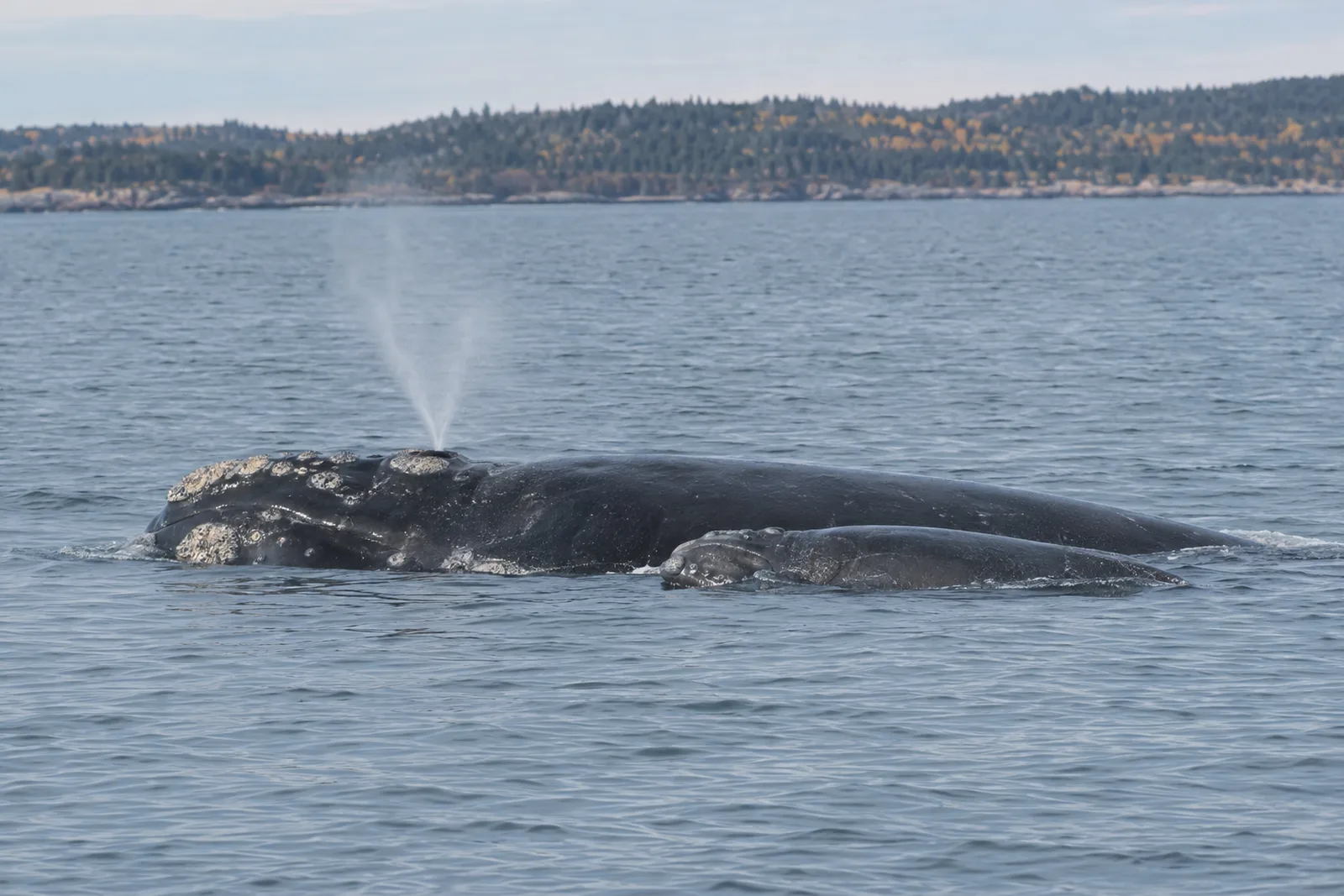
On 25 September, researchers from the Mingan Island Cetacean Study photographed a North Atlantic right whale and a calf near Anticosti Island in Quebec. After weeks of comparing photographs and sighting records, scientists concluded that the calf was new, probably born during the 2025-26 calving season but missed by the winter surveys, the New England Aquarium announced on 2 November.
The mother is a whale known as Silt (Catalog #1817). She is at least 38 years old, and this is her sixth known calf. “Silt was briefly seen in the southeastern U.S. calving grounds in February 2026, so it’s possible she had the calf there but snuck away before they were documented together,” said Amy Warren, a scientist at the aquarium. Silt then evaded boat and aerial surveys along the East Coast through the spring and summer.
The calf brings the season’s total to 24. NOAA had counted 23 mother-and-calf pairs by the end of the season, the highest number since 2009, NOAA Fisheries reported in April.
Why it matters
North Atlantic right whales are among the most endangered large whales in the world, with only about 380 left, according to the aquarium. Every calf counts. The last population estimate, for 2024, put the species at about 384 whales, 2.1% more than the year before and the fourth year of slow growth, the Cape Cod Times reported, citing the North Atlantic Right Whale Consortium.
There is another encouraging sign in the NOAA figures. Of the 20 mothers that returned to calve this season, 13 had last given birth in 2021 or 2022. That is a shorter gap than the seven to ten years seen in recent times, though healthy females calve every three to four years, NOAA said, describing itself as “cautiously optimistic”. In GGND’s view, shorter gaps suggest that at least some females are in better condition than they were a decade ago.
This is an exciting discovery for us so late in the year.
Amy Warren, scientist at the New England Aquarium’s Anderson Cabot Center
The wider picture
Silt’s family history shows both the species’ resilience and the dangers it faces. She has survived at least five entanglements in fishing gear, some leaving heavy scarring on her head and tail. Her 2022 calf, Division, died of a severe entanglement earlier this year, and her eldest calf died after being struck by a vessel in 2005, the aquarium said. She also has three grandchildren, and her first great-grandchild was born this year.
Canada has listed the species as endangered since 2005 and has had a recovery strategy since 2014, CP24 reported. In recent years both Canada and the United States have used fishing closures and ship speed limits in areas where right whales feed and travel. In GGND’s view, the fact that a mother and calf could go unseen for months is a reminder that these whales are spending more time in places, such as the Gulf of St Lawrence, where protections have had to catch up.
Could it work elsewhere?
The tools used to protect right whales, including photo-identification catalogues, dynamic fishing closures and speed limits for ships, are already being applied to other large whales. In GGND’s view, the lesson from this season is that long-term monitoring pays off: a single photograph matched against decades of records turned an unknown pair into a documented birth.
What remains unresolved
- Human-caused deaths. Entanglement and vessel strikes remain the main threats, and Silt’s own family has lost two members to them.
- Calf survival. A calf’s first year is dangerous, and scientists hope to document this one again and that it avoids the hazards right whales face, the aquarium said.
- The latest count. The population estimate for 2025 has not yet been released, the Cape Cod Times reported, so it is too early to say whether growth has continued.
- Protections. In GGND’s view, rules on fishing gear and ship speeds are politically contested, and any weakening could quickly undo the gains of a good calving year.
What happens next
The next calving season in the south-eastern United States runs from mid-November to mid-April, the aquarium said, so survey teams will soon be back on the water and in the air. Researchers hope to see Silt and her calf again. In GGND’s view, a second strong season in a row, and a population estimate that keeps rising, would be the clearest sign yet that this species can be pulled back from the brink.
Sources
- New England Aquarium In surprise sighting, previously unknown North Atlantic right whale calf is spotted in Canadian waters (2 November 2026)
- NOAA Fisheries By the numbers: 2026 North Atlantic right whale calving season (30 April 2026)
- Cape Cod Times North Atlantic right whale calf found off Canada (4 November 2026)
- CP24 Critically endangered mother and calf North Atlantic right whale seen in Quebec (2 November 2026)
Analysis and context are by The GGND Team. Where we draw our own conclusions, we say so. To report an error, contact us.