What happened
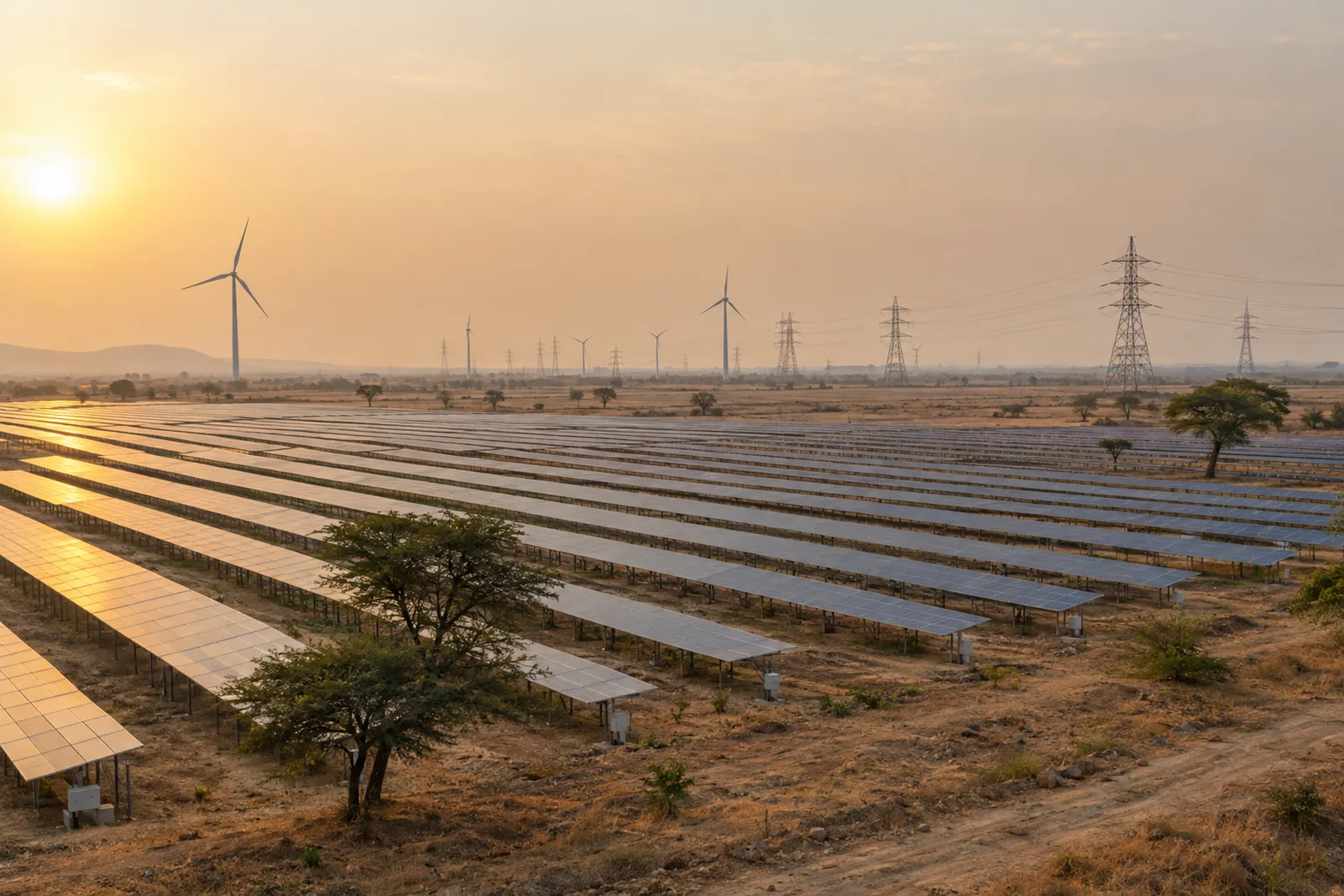
On 2 November, Prime Minister Narendra Modi opened the Bharat Renewable Energy Summit and Expo in New Delhi, held alongside the ninth Assembly of the International Solar Alliance. At the opening, renewable energy minister Pralhad Joshi said India’s non-fossil installed capacity had passed 200 GW in September 2024 and has since reached 310 GW, an addition of more than 110 GW in two years, according to the government’s Press Information Bureau.
Over the past 12 years, non-fossil capacity has grown from 80.3 GW to more than 310 GW, the minister said. Solar capacity has risen from 2.8 GW to 171 GW and wind from 21 GW to 60 GW. India’s factories can now make 225 GW of solar modules a year, up from 2 GW, and 45 GW of solar cells, up from none. The PM Surya Ghar rooftop solar scheme has passed 6.5 million installations.
Modi set a new goal. “Now, over the next 10–11 years, our effort will be to add another 500 GW of new non-fossil capacity,” he said, Moneycontrol reported.
Why it matters
India is the world’s most populous country and its electricity demand is rising fast. In 2025, it reached its Paris climate pledge of getting half of its installed power capacity from non-fossil sources, five years ahead of the 2030 deadline, Moneycontrol reported. Solar power has also become much cheaper: winning solar tariffs fell from ₹10 to ₹11 per unit in 2011-12 to ₹2.15 in 2024-25, the government said.
Modi also linked clean energy to security. “If India had not invested in clean energy and built new systems for it over the past decade, our crisis could have been far more severe than that faced by the rest of the world,” he said, referring to the crisis in West Asia, according to Moneycontrol. In GGND’s view, that argument, that domestic sun and wind protect a country from imported fuel shocks, is likely to carry more weight with many governments than climate targets alone.
This target is somewhat challenging, but I have faith in the capabilities of our country.
Prime Minister Narendra Modi on adding 500 GW more non-fossil capacity, as reported by Moneycontrol
The wider picture
Installed capacity measures how much power plants could produce, not how much they actually do. Coal and lignite still generated about 66% of India’s electricity between July and September 2026, the second quarter of the financial year, according to an analysis by the Centre for Research on Energy and Clean Air (CREA). Coal plants generate about 70% of India’s electricity on average because they run for more hours than solar or wind farms, the BBC reported in September, even though power from solar, wind, hydro and nuclear briefly outstripped coal on a hot July afternoon.
The grid is also struggling to keep up. About 4.2% of solar generation could not be absorbed by the grid in July and August, as peak demand hit 270 GW, ET EnergyWorld reported, citing CREA data and highlighting weak transmission. The government is investing ₹1.86 lakh crore in the third phase of its Green Energy Corridor transmission programme, the Press Information Bureau said.
Could it work elsewhere?
India’s mix of large auctions that drove prices down, a domestic manufacturing push and subsidies for rooftop panels on ordinary homes offers a model for other fast-growing economies. In GGND’s view, its experience also carries a warning: building panels is the easy part, and countries that copy the approach need to plan for transmission lines and storage from the start.
What remains unresolved
- Coal. Coal still supplies about two-thirds of India’s electricity, and its output was still growing year on year, CREA’s data show.
- Wasted power. Transmission bottlenecks mean some solar power is being turned away even during shortages, CREA’s data show.
- Money. Modi said investment opportunities in the sector could exceed ₹20 lakh crore (about US$220 billion) by the end of the decade, Moneycontrol reported. Raising that sum is not guaranteed.
- Storage. Solar produces most power around midday, but demand often peaks in the evening, so large amounts of batteries or other storage will be needed.
What happens next
The summit runs until 5 November. Modi also called for a “Clean Cooking Movement” so that families can cook with electricity from their own rooftop solar panels, Moneycontrol reported. In GGND’s view, the most important number to watch over the coming years is not installed capacity but the share of electricity actually generated from clean sources, and whether it rises fast enough to start pushing coal down.
Sources
- Press Information Bureau, Government of India Bharat Renewable Energy Summit and Expo 2026 inaugurated; non-fossil capacity reaches 310 GW (2 November 2026)
- Moneycontrol Clean energy investments helped India weather West Asia crisis, says PM Modi; eyes 500 GW more capacity (2 November 2026)
- Centre for Research on Energy and Clean Air India Energy Snapshot Q2 2026 (October 2026)
- ET EnergyWorld / Reuters India wastes 4% of solar power amid power shortages in July, August: Report (12 October 2026)
- BBC News India is producing more green energy - but wasting a lot of it (22 September 2026)
Analysis and context are by The GGND Team. Where we draw our own conclusions, we say so. To report an error, contact us.