What happened
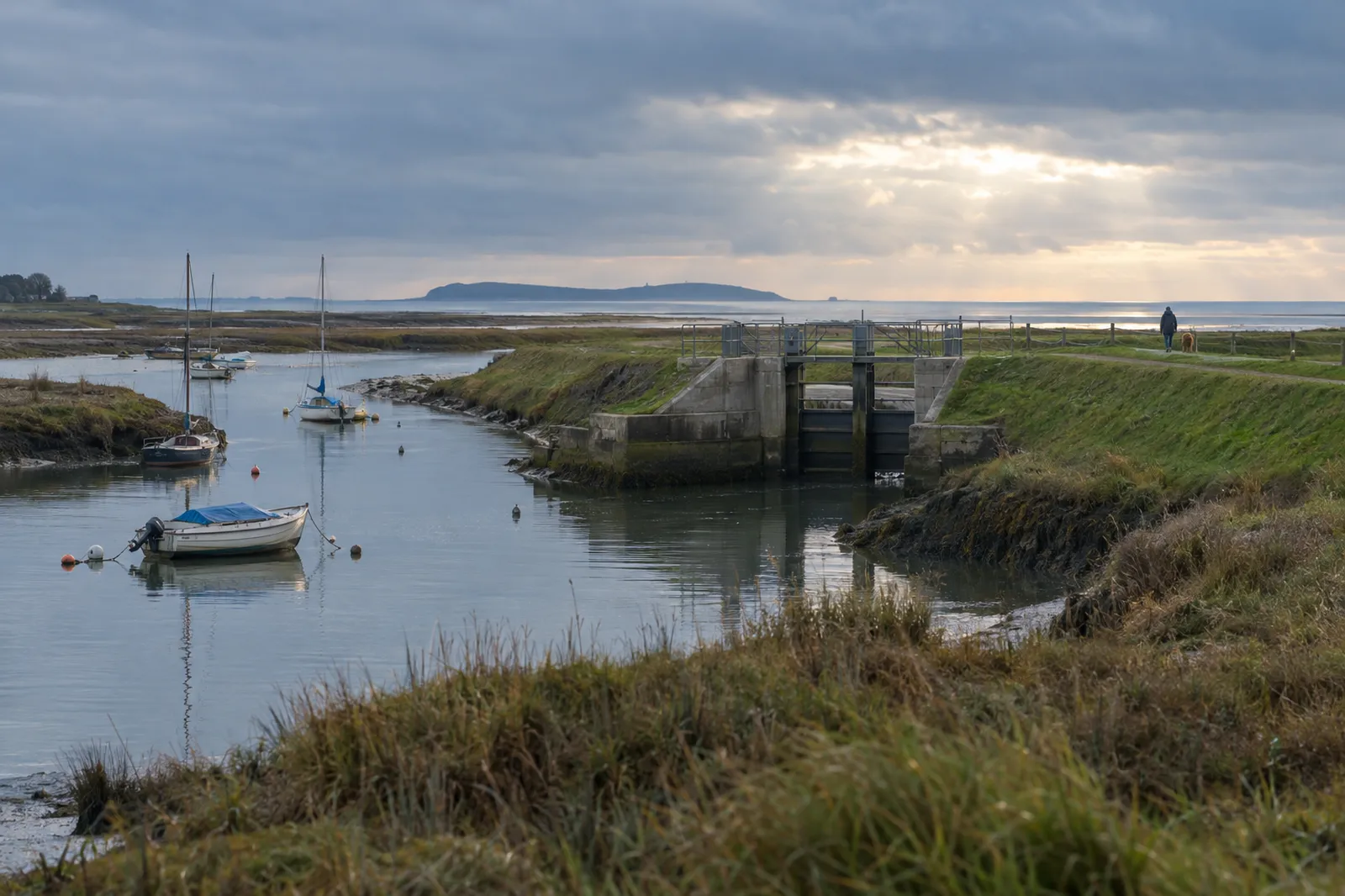
The Environment Agency has replaced the Avon Water tidal outfall at Keyhaven Harbour in Hampshire, better protecting around 40 properties from flooding ahead of winter. The outfall sits between the Solent and Avon Water and forms part of the local flood defence network. The old structure had corroded significantly.
The work was difficult. Much of the structure is underwater for long periods, so the schedule depended on the tides, and specialist divers carried out detailed underwater inspections. The new outfall uses more durable materials, which the agency says will withstand the coastal environment, reduce future maintenance and extend its working life.
Why it matters
The problem at Keyhaven is known as tidal locking. When a high tide holds the sea above a river’s outlet, the river cannot drain, and its water backs up and can flood properties upstream. The outfall acts as a barrier that prevents this. Artur Podsiadly, the agency’s project manager, said tidal locking can contribute to flooding at Keyhaven in winter.
The timing matters too. The agency notes that England has seen a wet winter followed by a historic summer drought, including the driest July in nearly two centuries, and is now preparing for a wetter winter.
Extreme weather is becoming more common due to climate change, and we can’t stop all flooding.
Artur Podsiadly, Environment Agency project manager
The wider picture
Keyhaven is a small project inside a large problem. The Environment Agency’s national flood risk assessment found 6.3 million properties in England in areas at risk of flooding from rivers, the sea or surface water. Around 2.4 million are at risk from rivers and the sea. With climate change, the total could reach around 8 million by mid-century, roughly one property in four.
Against numbers like that, replacing one outfall can look minor. But much of flood protection is this kind of work: keeping ageing structures in working order before they fail, rather than building new ones. It rarely makes headlines, and it is where protection most often succeeds or fails.
Could it work elsewhere?
Any low-lying coast with rivers draining into the sea faces tidal locking. The transferable lesson is to inspect and replace before failure, using materials suited to the environment, rather than any particular design.
What remains unresolved
- Defences have limits. The agency itself says it “can’t stop all flooding,” and urges residents to check their risk, draw up a flood plan and sign up for warnings.
- Rising seas. A more durable outfall extends the life of the defence. The long-term pressure on low-lying harbours like Keyhaven will continue to grow as sea levels rise.
- Scale. Forty properties are protected here. Millions more depend on similar, often unseen, structures that need the same attention.
What happens next
Winter will be the first real test. Nationally, the government has launched a Flood and Drought Resilience Taskforce to strengthen planning and response to extreme weather and to give communities a stronger voice.
Sources
- Environment Agency (GOV.UK) Major flood defence upgrade completed at Keyhaven ahead of winter (13 October 2026)
- Environment Agency (GOV.UK) Environment Agency publishes major update to national flood and coastal erosion risk assessment
Analysis and context are by The GGND Team. Where we draw our own conclusions, we say so. To report an error, contact us.