What happened
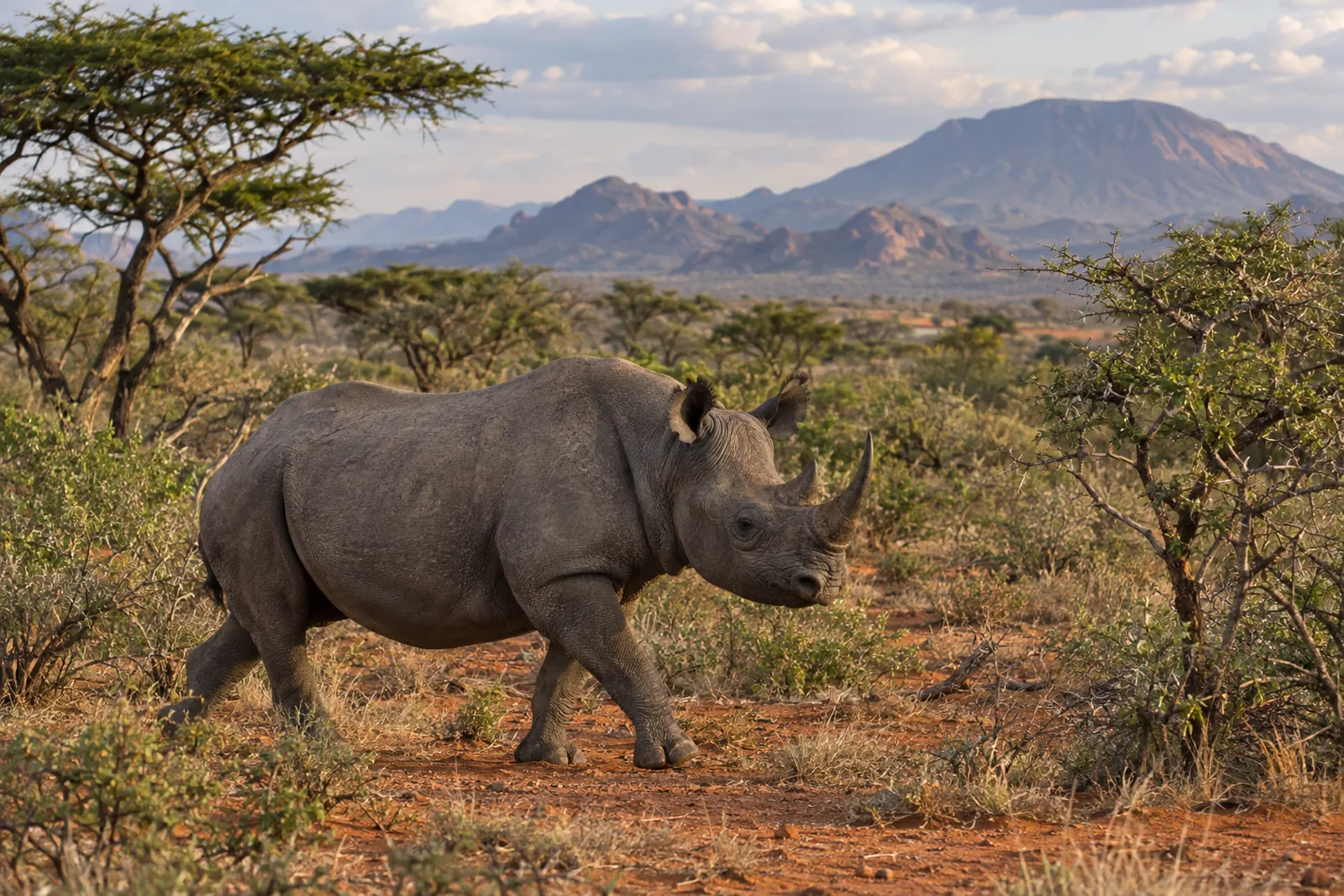
On 27 October 2026, Kenya Rhino Range Expansion (KRRE), Kenya Wildlife Service (KWS) and San Diego Zoo Wildlife Alliance marked 18 months of a partnership that aims to give the country’s growing rhino populations more room, the alliance announced. The biggest step came in September, when the last section of fence went up around the expanded Tsavo West Rhino Sanctuary. At about 3,200 square kilometres, it is described as the largest rhino sanctuary of its kind in Africa, and it gives Tsavo West’s black rhinos roughly 30 times more space than before.
The partners say more than 14 landowners and organisations in Central Kenya have now signed agreements committing to work towards opening their properties to rhinos. In Naibunga Community Conservancy in Laikipia, KRRE is working with the community to clear invasive plants and restore grazing land that could one day support rhinos, according to the announcement.
Why it matters
Kenya’s rhinos are, in a sense, victims of their own recovery. The Tsavo landscape once held more than 8,000 black rhinos, but poaching cut that number to fewer than 20 by 1989, KWS said when the sanctuary opened. Today Kenya has about 2,000 rhinos, including more than 1,000 black rhinos, which is almost 78 per cent of the world’s Eastern black rhinos.
But many of those animals live in small fenced sanctuaries. The old Ngulia Rhino Sanctuary in Tsavo West covered just 92 square kilometres and had been over its ecological carrying capacity for years, Save the Rhino explains. When rhinos are crowded, they compete for food and water, fight more, breed less and lose more calves. The expanded sanctuary joins about 150 black rhinos from Ngulia with about 50 from the surrounding Intensive Protection Zone, creating a founder population of about 200, the largest single black rhino population in Kenya.
KWS says the aim is to lift the black rhino population’s annual growth rate from 5 per cent to 8 per cent and reach targets of 1,450 rhinos by 2030 and 2,000 by 2037, The Standard reported.
What we are ultimately trying to create is space.
Jamie Gaymer, Chief Executive of Kenya Rhino Range Expansion
The wider picture
A bigger fence is not enough on its own. Protecting 200 rhinos across 3,200 square kilometres needs far more people and equipment than guarding a small sanctuary. The new sanctuary has led to the deployment of more than 100 rangers, along with new ranger housing, water points and fencing, KBC reported. KWS and KRRE have also ear-notched and fitted transmitters to many of Tsavo West’s rhinos so that rangers can identify and follow them. KBC put the share of identifiable animals at 75 per cent; the October announcement says nearly 70 per cent of the 200 rhinos have been ear-notched.
Money is a big part of the story. KBC reported that KRRE and KWS have set out a Ksh 5.8 billion plan to expand rhino habitat across Tsavo and Central Kenya. KRRE argues that rhinos should bring jobs as well as conservation gains. ‘We need to drive a wildlife economy,’ Jamie Gaymer, KRRE’s chief executive, told KBC, pointing to new work for rangers, lodge staff, drivers, builders, rhino monitors and researchers. KWS expects the Tsavo West sanctuary alone to generate more than US$45 million in tourism and conservancy revenue by 2030.
Poaching has not gone away. Save the Rhino warns that illegal killing for the international horn trade remains a threat even to well-protected populations, and a larger area means more ground to watch.
Could it work elsewhere?
Several African countries face the same problem of rhinos recovering inside sanctuaries that are now too small. In GGND’s view, Kenya’s approach offers a template: a national body that brings land, money and expertise together, rather than each sanctuary acting alone. The Central Kenya agreements are the part most worth watching, because they test whether private and community landowners will share land with a large, dangerous and valuable animal. That depends on rhinos paying their way through tourism and jobs, and on landowners feeling that the risks are shared fairly.
What remains unresolved
- Will the rhinos breed faster? The aim is to raise growth from 5 to 8 per cent a year. It will take several years of monitoring to know whether more space delivers more calves.
- Community consent. Any decision to bring rhinos to Naibunga will go through a free, prior and informed consent process, the partners say. The outcome is open.
- Numbers that do not quite match. The October announcement says ‘more than ten’ partners have committed in one paragraph and ‘more than fourteen’ in another, and the ear-notching figures differ between sources.
- Long-term funding. Patrolling a landscape 30 times bigger is expensive. How it will be paid for after the first wave of donor money is not yet clear.
What happens next
KRRE says its next phase is to turn the Central Kenya agreements into new rhino areas and connect them, while working with communities on how rhinos might fit into their land. GGND will look for KWS population figures from Tsavo West, the first rhino moves into Central Kenya and the result of the consent process in Naibunga.
Sources
- San Diego Zoo Wildlife Alliance From Concept to Conservation at Scale: Partnership Creates New Space for Kenya’s Rhinos (27 October 2026)
- Kenya Wildlife Service Kenya opens the world’s largest rhino sanctuary in Tsavo West National Park (9 December 2025)
- KBC KWS, Kenya Rhino Range Expansion team up in Ksh 5.8B rhino recovery efforts (15 October 2026)
- The Standard How Tsavo West Rhino Sanctuary expansion will boost black rhino population (10 December 2025)
- Save the Rhino International Groundbreaking expansion of Tsavo West Rhino Sanctuary in Kenya (19 December 2025)
Analysis and context are by The GGND Team. Where we draw our own conclusions, we say so. To report an error, contact us.