What happened
On 21 October, at Tsavo West National Park, Kenya’s government launched Thamani Asili, a US$160 million national conservation programme run with The Nature Conservancy (TNC) and the alliance Enduring Earth. The name means “value of nature” in Kiswahili. Tourism and Wildlife Cabinet Secretary Rebecca Miano launched it on behalf of President William Ruto, The Star reports.
The money is split evenly. The government has committed US$80 million over ten years, and the same amount in philanthropic funding is being raised through TNC and Enduring Earth, according to a Kenya Wildlife Service statement. Over the decade, the plan aims to conserve about 17.3 million hectares: establishing about 2.7 million hectares of new conserved areas with communities, improving the management of 11 million hectares of existing ones, and helping communities manage another 6 million hectares. The programme covers 31 counties.
Why it matters
Conservation in many countries runs on short grants. Rangers are hired, a project ends, and the work fades. Thamani Asili uses a model called Project Finance for Permanence, in which governments and donors agree a long-term plan and the funding to carry it out before any money flows. The aim, according to the KWS statement, is to move conservation beyond short-term funding cycles towards predictable investment, accountability and measurable results. A newly created independent trust, the Thamani Asili Fund for Kenya, will manage and pay out the money and track progress.
The stakes are economic as well as ecological. Past government estimates, cited by Reuters, suggest that about 42% of Kenya’s GDP and 70% of its jobs depend on nature in some form. The programme expects to benefit about 1.6 million people directly and create around 7,800 direct jobs and 15,000 indirect ones, in ecotourism, sustainable grazing, carbon projects and other nature-based businesses. It also expects to help avoid about 7.5 million tonnes of carbon emissions by 2035.
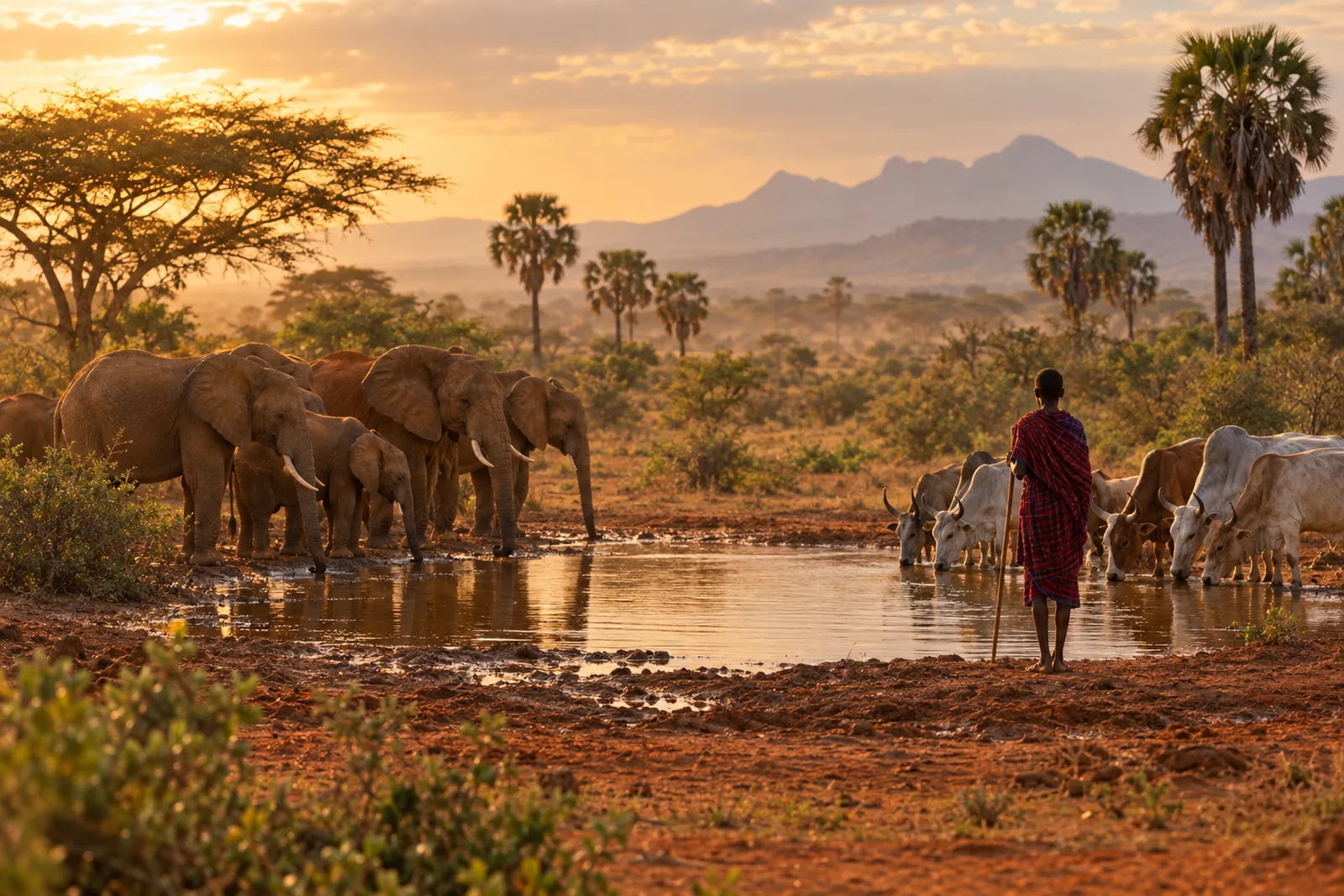
When elephants and livestock drink from the same water points, we are reminded that we share one landscape and one responsibility.
Prof. Erustus Kanga, Director General, Kenya Wildlife Service
The wider picture
The first work will focus on four landscapes: Tsavo to the coast, Greater Ewaso, the Greater Rift to western Kenya, and southern Kenya. Tsavo alone holds about 40% of Kenya’s elephants and 20% of its critically endangered black rhinos, Reuters reports, and the southern landscape includes the Maasai Mara, which connects to Tanzania’s Serengeti.
The programme is built around the people who share land with wildlife. It puts communities at the centre: strengthening local governance and land-use planning, and supporting practical steps against human-wildlife conflict, such as better protection for livestock, according to KBC. “When communities lead, conservation can deliver lasting results,” said Ruth Masha, TNC’s country director for Kenya. Ademola Ajagbe, TNC’s Africa regional managing director, said success would be measured by better livelihoods and new opportunities for local people, not by the size of the fund, The Star reports.
Could it work elsewhere?
It already does, in different forms. Thamani Asili is the third such agreement in Africa and the tenth supported by Enduring Earth, which has worked with governments including Gabon and Mongolia, TNC says. Similar agreements are in the works in Namibia and Botswana, according to Reuters. Kenya currently protects about 20% to 23% of its land, by TNC’s estimate. The programme supports its goal of conserving 30% of its lands, inland waters and near-shore ecosystems. “There is a substantial gap that would be largely closed,” said Ryan Bidwell, who heads TNC’s programme for these agreements.
What remains unresolved
- A decade of public money. Half the funding is meant to come from Kenya’s own budget over ten years. Keeping that commitment across budget pressures and future governments is the real test of “permanence.”
- The policy conditions. This kind of deal ties funding to government policy changes. The specific commitments were not set out in the launch materials we reviewed, so it is not yet possible to judge how demanding they are.
- Benefits that people can feel. The job and income figures are projections. Whether families living alongside elephants and lions see fewer losses and more income will decide whether communities stay committed.
- Development pressure. The launch came weeks after President Ruto and Aliko Dangote broke ground on a US$16 billion oil refinery on Kenya’s coast, Reuters notes, a reminder that conservation and industrial plans compete for the same land and attention.
What happens next
The new trust fund will manage and pay out the donor money and report progress against agreed targets, while work begins in the four priority landscapes. “Our commitment is clear: to protect our wildlife, empower communities and build a future where both people and nature thrive together,” Rebecca Miano said at the launch. GGND will follow how the first funds are spent, and whether communities in Tsavo and beyond see the difference.
Sources
- The Nature Conservancy The Government of Kenya and The Nature Conservancy unveil US$160m Thamani Asili community conservation initiative (21 October 2026)
- Kenyans.co.ke Kenya launches Ksh20 billion conservation project, targets 7,800 jobs (21 October 2026)
- The Star (Kenya) State launches Sh20.78bn wildlife conservation plan (23 October 2026)
- KBC Kenya unveils Ksh 20.8B conservation initiative (21 October 2026)
- BusinessDay / Reuters Kenya seals $160m conservation finance deal (21 October 2026)
Analysis and context are by The GGND Team. Where we draw our own conclusions, we say so. To report an error, contact us.