What happened
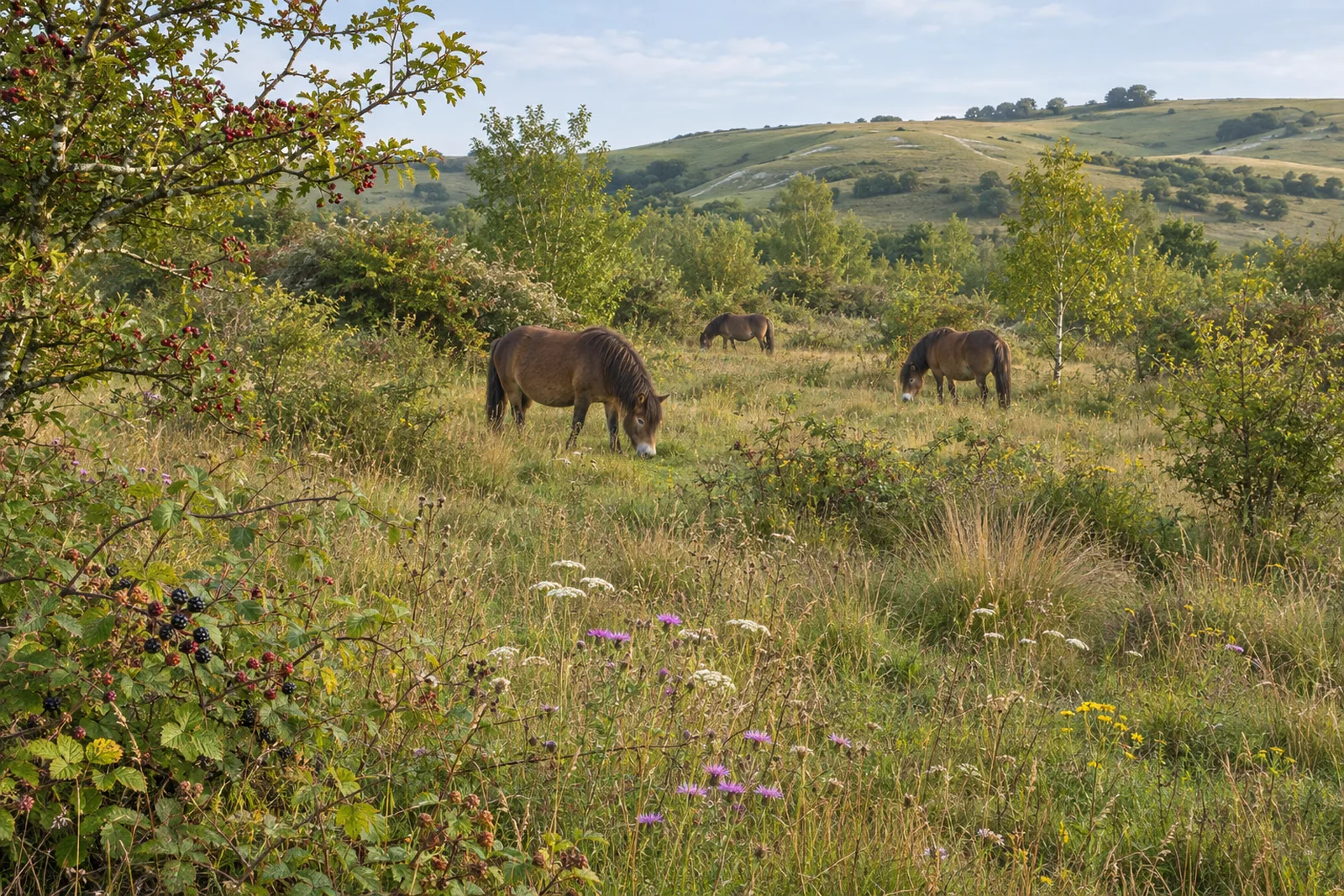
On 20 November, Hampshire & Isle of Wight Wildlife Trust published Five Years of Rewilding, a report on two former farms it is letting return to nature. Wilder Little Duxmore, a 42-hectare site near Newchurch bought in 2020, is grazed by Exmoor ponies and cattle. Wilder Nunwell, 142 hectares near Brading acquired in 2022, is grazed by cattle and pigs. The animals stand in for the wild grazers that once shaped the landscape, while staff and volunteers carry out regular surveys.
The headline results are striking. At Little Duxmore, the number of birds almost tripled between 2021 and 2025, and 20 new bird species were recorded. Across both sites, 75 bird species have now been seen, including 14 on the UK Red List of highest conservation concern, such as the yellowhammer, and 27 on the Amber List, including the short-eared owl and Dartford warbler, the Trust said.
Why it matters
Insects have responded too. At Nunwell, butterflies counted per survey rose by 117%, and 27 butterfly species have been recorded, nine of them new since 2021, Island Echo reported. They include the Glanville fritillary and the wall, both classed as Endangered in Britain. Bumblebee numbers at Nunwell rose 64% between 2022 and 2025. The number of moth species recorded rose from 321 in 2023 to 547 in 2025.
Underground, earthworm numbers at Nunwell rose 66% between 2022 and 2024, and 16 earthworm species have been found, three of them uncommon or rare, the report says. Sixteen species of dung beetle, which feed on and bury animal dung, have also been recorded. Soil tests suggest the land is slowly recovering from intensive farming: mineral nitrogen in the soil at Little Duxmore fell by 32.6% between 2021 and 2025, and phosphate at Nunwell fell by 23.5% between 2022 and 2026.
In GGND’s view, the soil results matter as much as the birds. Healthy soils hold water, store carbon and support everything above them, and they are often the slowest part of a farm to recover.
One of the biggest highlights has been seeing just how quickly nature can respond when it’s given the opportunity.
Aggie Iveson, Hampshire & Isle of Wight Wildlife Trust
The wider picture
“The findings show what’s possible when we take a more bold approach to nature recovery, with benefits being seen not just in the number of species, but in the health of the wider environment too,” said Sara King of Rewilding Britain, quoted by the Trust. The report’s author, Aggie Iveson, struck a measured note: “Five years is a really exciting milestone, but it’s only the start of a long-term journey.”
The report is open about the problems. “Very high levels of nutrient pollution in the ditches at Wilder Nunwell have been recorded regularly,” it says, reflecting fertiliser left from decades of farming that is still washing out of the soil. Some counts also swing from year to year; the report notes that numbers in one survey fell sharply in 2024 before recovering in 2025, and that such fluctuations are not uncommon. The findings were also covered by the Isle of Wight Observer.
In GGND’s view, the findings are encouraging but should be read with care. Five years is a short time in ecology, the baselines at Nunwell begin only in 2022, the monitoring is carried out by the Trust itself, and there are no comparison farms in the report. Rising numbers on a small site can also reflect wildlife moving in from nearby, which still depends on the wider landscape.
Could it work elsewhere?
Both sites were ordinary farmland, which makes the results relevant to landowners elsewhere in lowland Britain and Europe. The approach, light grazing by hardy animals, no fertiliser and careful monitoring, does not need rare habitats to begin. In GGND’s view, the bigger question is how such sites fit alongside food production, and whether they can be linked so that wildlife can move between them.
What remains unresolved
- Short records. Five years, and only four at Nunwell, is too short to tell lasting trends from good years.
- Self-reported data. The surveys were carried out and published by the Trust, without independent comparison sites.
- Legacy pollution. Nutrients from past farming still reach the ditches at Nunwell, and it is unclear how long they will take to fall.
- Connections. New species need routes to arrive and space to spread, which depends on land beyond the Trust’s control.
What happens next
The report draws on 15 types of survey across the two sites, and the Trust describes the five-year mark as the start of a long-term journey. GGND will look for future reports that show whether the rise in birds and insects holds, and whether nutrient levels in Nunwell’s water begin to fall.
Sources
- Hampshire & Isle of Wight Wildlife Trust Nature bounces back after five years of rewilding (20 November 2026)
- Hampshire & Isle of Wight Wildlife Trust Five Years of Rewilding 2021–2026, report (November 2026)
- Island Echo Bird numbers almost triple and butterflies soar 117% as Isle of Wight rewilding success revealed (23 November 2026)
- Isle of Wight Observer Rewilding brings nature back to life (25 November 2026)
Analysis and context are by The GGND Team. Where we draw our own conclusions, we say so. To report an error, contact us.