What happened
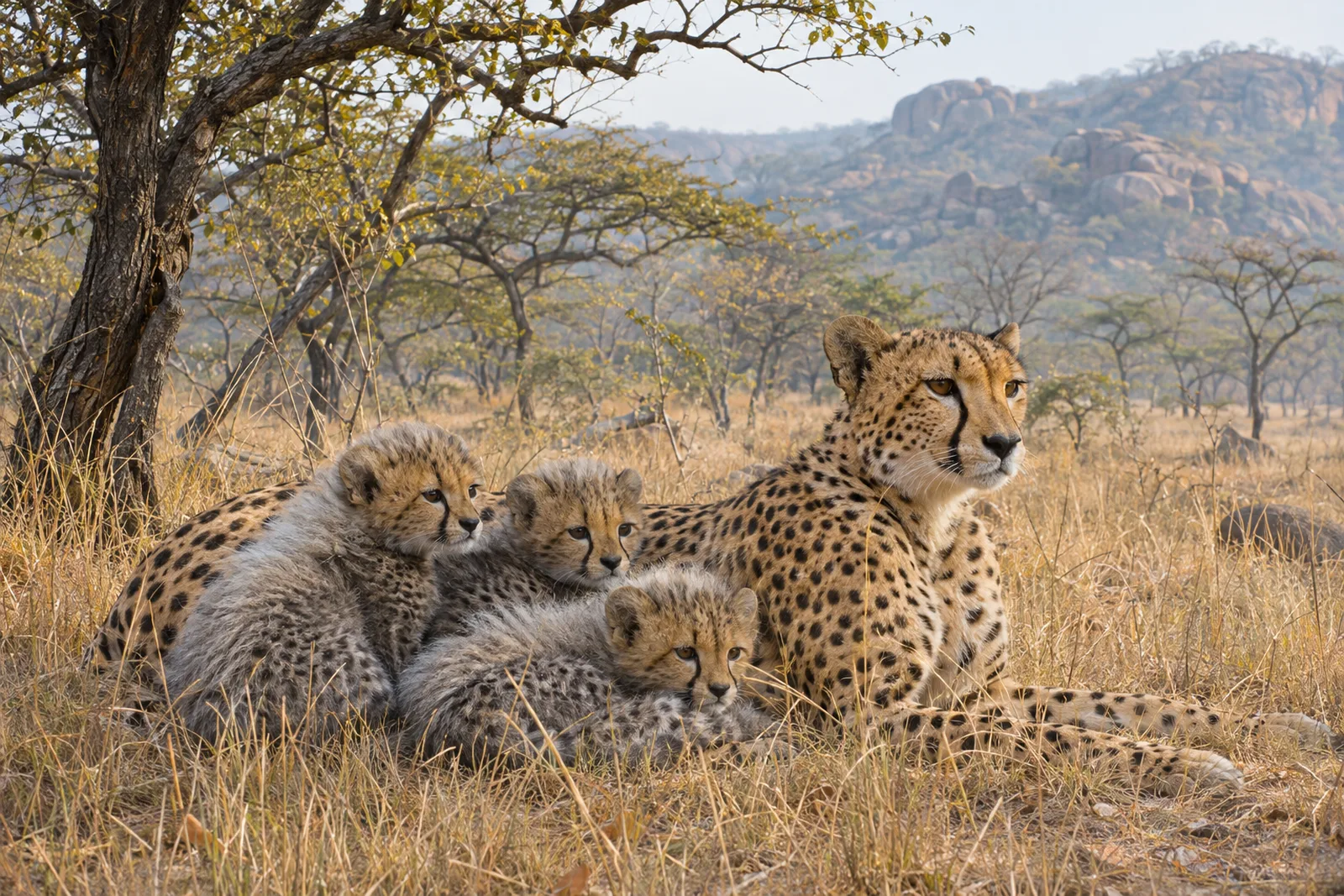
On 20 November, a two-and-a-half-year-old female cheetah known as KOMG 3 gave birth to four cubs in the wild at Kuno National Park in Madhya Pradesh, India’s Press Information Bureau said. She is the first female cheetah from Botswana to give birth in India. She had spent more than four months roaming freely in the park before the birth, which happened under natural conditions rather than in an enclosure.
Environment Minister Bhupender Yadav announced the litter on social media and called it “a landmark moment for Project Cheetah and a proud milestone in India’s journey towards restoring a viable cheetah population”. With the four cubs, India’s cheetah population has risen to 62, including 43 born in India, the government said. “All four cubs are healthy,” Kuno’s director, Uttam Kumar Sharma, told The Indian Express. The father is an India-born male, The New Indian Express reported.
Why it matters
Cheetahs were declared extinct in India in 1952. Project Cheetah began on 17 September 2022, when eight cheetahs from Namibia arrived at Kuno. Twelve more came from South Africa in February 2023, and nine, six females and three males, came from Botswana in February 2026 to widen the population’s genetic diversity, The Indian Express reported. Of the Botswana group, seven remain at Kuno, one has moved to Gandhi Sagar Wildlife Sanctuary and one to Veerangana Durgavati Tiger Reserve, according to The New Indian Express.
Many cubs have been born at Kuno since 2022, but most were born to mothers kept in enclosures. Breeding in the wild is considered an important sign that the animals are adapting to the habitat, The Indian Express noted. This is only the second recorded wild birth since the programme began, the government said. In GGND’s view, that makes KOMG 3’s litter more meaningful than the headline count: the aim is a population that can survive and breed without fences.
Every such birth strengthens our hope, deepens our commitment and reminds us that conservation is a journey of patience, perseverance and collective effort.
Bhupender Yadav, India’s Minister of Environment, Forest and Climate Change
The wider picture
The project has had a run of births this year. In February, the Namibian cheetah Aasha had five cubs and the South African female Gamini had three; in March, Namibian female Jwala had five; and on 5 October, an India-born female, KJP21, had five cubs with a Botswana male, the first time the Botswana line appeared among India-born cheetahs, The Indian Express reported.
It has also faced serious setbacks. The first wild litter, four cubs born in April to KGP12, an India-born daughter of Gamini, was found dead in the forest on 11 May, possibly killed by another animal, The New Indian Express reported. Eight cheetahs have died in 2026 alone, including that litter, ThePrint reported, and the project has been criticised by conservationists over deaths. On 27 October, a 19-month-old male, KNG22, died after being shot in forests in Morena district; five pellets were recovered from its body and two brothers were later arrested, according to The Indian Express. Local activists blamed negligence by the forest department, ThePrint said.
There is also a long-running scientific debate. The animals are African cheetahs, not the Asiatic cheetahs that once lived in India, ThePrint noted. In GGND’s view, the births show that African cheetahs can breed in central India; whether Kuno and nearby reserves can hold a self-sustaining population, with enough prey and space and few conflicts with people, is a separate question that will take years to answer.
Could it work elsewhere?
Moving large carnivores between continents is rare, costly and risky. Its lessons travel further than the method itself. In GGND’s view, the useful parts are the soft release, in which animals spend weeks in an enclosure before being freed, close monitoring of every individual, and bringing in new animals to widen the gene pool. The shooting of KNG22 shows that working with people living around a reserve matters as much as the science.
What remains unresolved
- Cub survival. Young cheetahs are vulnerable to predators, and the only previous wild litter at Kuno did not survive its first month, The New Indian Express reported.
- Deaths. Eight cheetahs have died in 2026, ThePrint reported. The government statement on the new litter does not mention mortality.
- Safety outside the park. The October shooting near the Morena–Sheopur border shows the risk when cheetahs roam beyond protected land.
- Long-term viability. A headline count includes young cubs that may not survive. Independent data on survival rates and prey numbers would help judge whether the population is truly self-sustaining.
What happens next
Park staff will monitor KOMG 3 and her cubs closely in the coming weeks. GGND will watch whether the litter survives its first months, whether more Botswana females breed in the wild, and how the investigation into KNG22’s death concludes.
Sources
- Press Information Bureau (India) Botswana-born Cheetah gives Birth to Four Cubs in the Wild; India’s Cheetah Population Rises to 62 (20 November 2026)
- The Indian Express Cheetah from Botswana is Kuno’s latest mom, 4 cubs take India’s population to 62 (21 November 2026)
- The New Indian Express Botswana-born cheetah gives birth to four cubs in wild at Kuno, boosts Project Cheetah in MP (20 November 2026)
- ThePrint Botswana-born cheetah gives birth to four cubs in Kuno. Cheetah count at 62 (20 November 2026)
Analysis and context are by The GGND Team. Where we draw our own conclusions, we say so. To report an error, contact us.