What happened
At 23:51 Indian time on 30 October, the Indian Space Research Organisation (ISRO) launched the NVS-03 navigation satellite on its GSLV-F18 rocket from the Satish Dhawan Space Centre in Sriharikota. The rocket placed the satellite, weighing about 2,250 kg, into a geosynchronous transfer orbit, and the satellite completed its first orbit-raising manoeuvre on 31 October, India’s Press Information Bureau said. It was the 20th flight of the GSLV, according to ISRO.
The launch restored NavIC, India’s regional satellite navigation system, to its minimum operational configuration of four satellites, the Press Trust of India reported. NVS-03 is the third of five second-generation NavIC satellites. It carries an atomic clock developed in India alongside imported clocks, and transmits signals in the L1, L5 and S bands.
Why it matters
NavIC is India’s version of GPS, covering the country and a region up to 1,500 km beyond its borders. It gives India positioning, navigation and timing services that do not depend on a foreign system, which matters for defence and for civilian infrastructure alike.
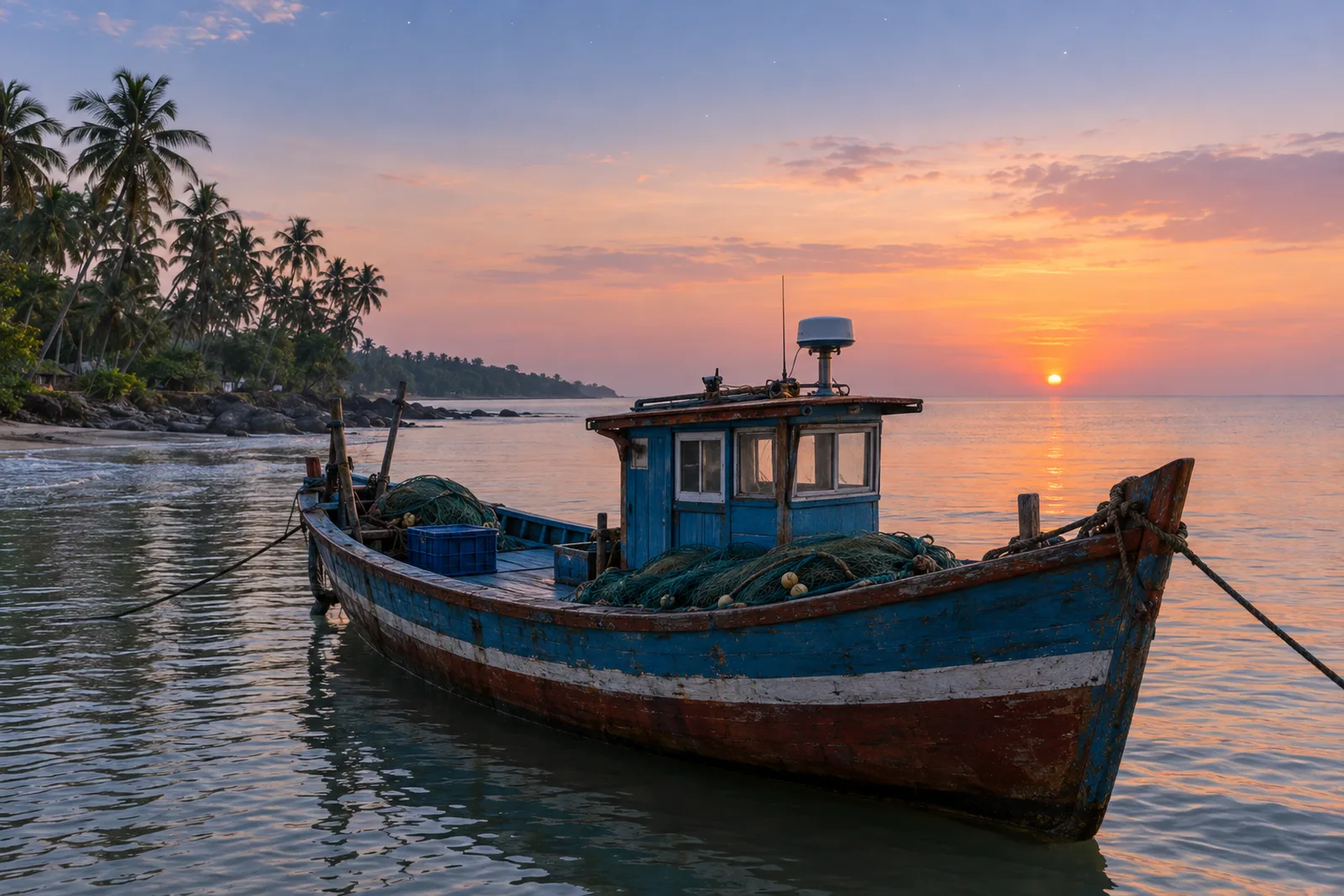
It is also already in everyday use. ISRO chairman V Narayanan said 10,400 railway locomotives and 64,000 fishing vessels are tracked in real time using NavIC, with 15 lakh (1.5 million) tracking devices fitted, the Telegraph reported. Under a national fisheries scheme, the Pradhan Mantri Matsya Sampada Yojana, ISRO aims to track one lakh (100,000) fishing vessels within six months. For people who fish far offshore, that can mean faster help in an emergency and warnings about bad weather.
Accurate time matters too. NavIC is an important component of India’s ‘one nation, one time’ project, Narayanan said, and the government has recently notified new rules on Indian Standard Time, PTI reported.
NavIC ((Navigation with Indian Constellation) is a strategic national asset which provides independent access to Position, Navigation, Timing services, and it is also used for civilian applications like real time tracking of trains, vehicles, shipping vessels.
V Narayanan, chairman of ISRO, speaking after the launch, as reported by PTI
The wider picture
NavIC had been running short. The previous satellite in this series, NVS-02, launched in 2025, failed after the drive signal did not reach a valve on the engine needed to raise its orbit, the Telegraph reported. For NVS-03, ISRO flew the satellite with three of these pyro valves already open, a precaution PTI described as unprecedented, after testing approved by a national committee.
The rocket also delivered the satellite very close to its target. Against a planned lowest point of 170.36 km, the orbit’s perigee came out at 170.31 km, Narayanan said, the Telegraph reported. After a flight of about 18 minutes, all three stages of the 50-metre rocket, including its Indian-built cryogenic upper stage, performed as expected. The cryogenic stage, which burns liquid hydrogen and liquid oxygen, replaced a Russian-supplied stage used on earlier flights, the Press Information Bureau noted.
Prime Minister Narendra Modi congratulated ISRO’s scientists and engineers, saying the mission ‘marks an important step in strengthening NavIC, our indigenous satellite navigation system’. The Minister of State for Science and Technology, Jitendra Singh, described it as part of ‘our unwavering commitment to strengthening sovereign indigenous navigation capabilities’.
The launch came 56 days after the previous GSLV mission, the shortest gap so far between two flights of the rocket, Narayanan said. He added that almost 80% of the mission budget went to Indian industry, PTI reported.
The new L1 signal is significant. It is the same band used by GPS, and it should make NavIC easier to build into everyday consumer devices. In GGND’s view, that is where the system could make its biggest difference to ordinary people, but it is not there yet.
Could it work elsewhere?
Only a few powers run their own satellite navigation systems: the United States, Russia, China and the European Union run global ones, and Japan and India run regional ones. Building one is expensive, so the lesson for most countries is not to copy NavIC directly. In GGND’s view, the transferable idea is how India uses such signals for public services, such as cheap trackers on small fishing boats, which any coastal country can do using existing systems.
What remains unresolved
- Phones. NavIC will be offered on mobile phones only once the full seven-satellite constellation is in place, Narayanan said, according to the Telegraph.
- Reliability. Four satellites is the minimum. Another failure, or problems on an older satellite, could again leave NavIC short.
- Final orbit. The satellite must still complete its manoeuvres to reach its final slot, and published accounts give different details of where that slot is.
What happens next
ISRO plans to launch NVS-04 in about five months and NVS-05 in about ten, the Telegraph reported. NVS-03 will continue raising its orbit over the coming days using its own engine, the Press Information Bureau said, before beginning its navigation service.
Sources
- Press Information Bureau, Government of India GSLV-F18/NVS-03 Mission: Strengthening India’s Indigenous Navigation Capabilities (1 November 2026)
- Indian Space Research Organisation (ISRO) GSLV-F18/NVS-03 Mission (October 2026)
- Business Standard (PTI) Isro’s GSLV successfully places NVS-03 satellite into ‘designated’ orbit (31 October 2026)
- The Telegraph (India) ISRO successfully launches NVS-03 satellite, restores NavIC constellation to four satellites (31 October 2026)
Analysis and context are by The GGND Team. Where we draw our own conclusions, we say so. To report an error, contact us.