What happened
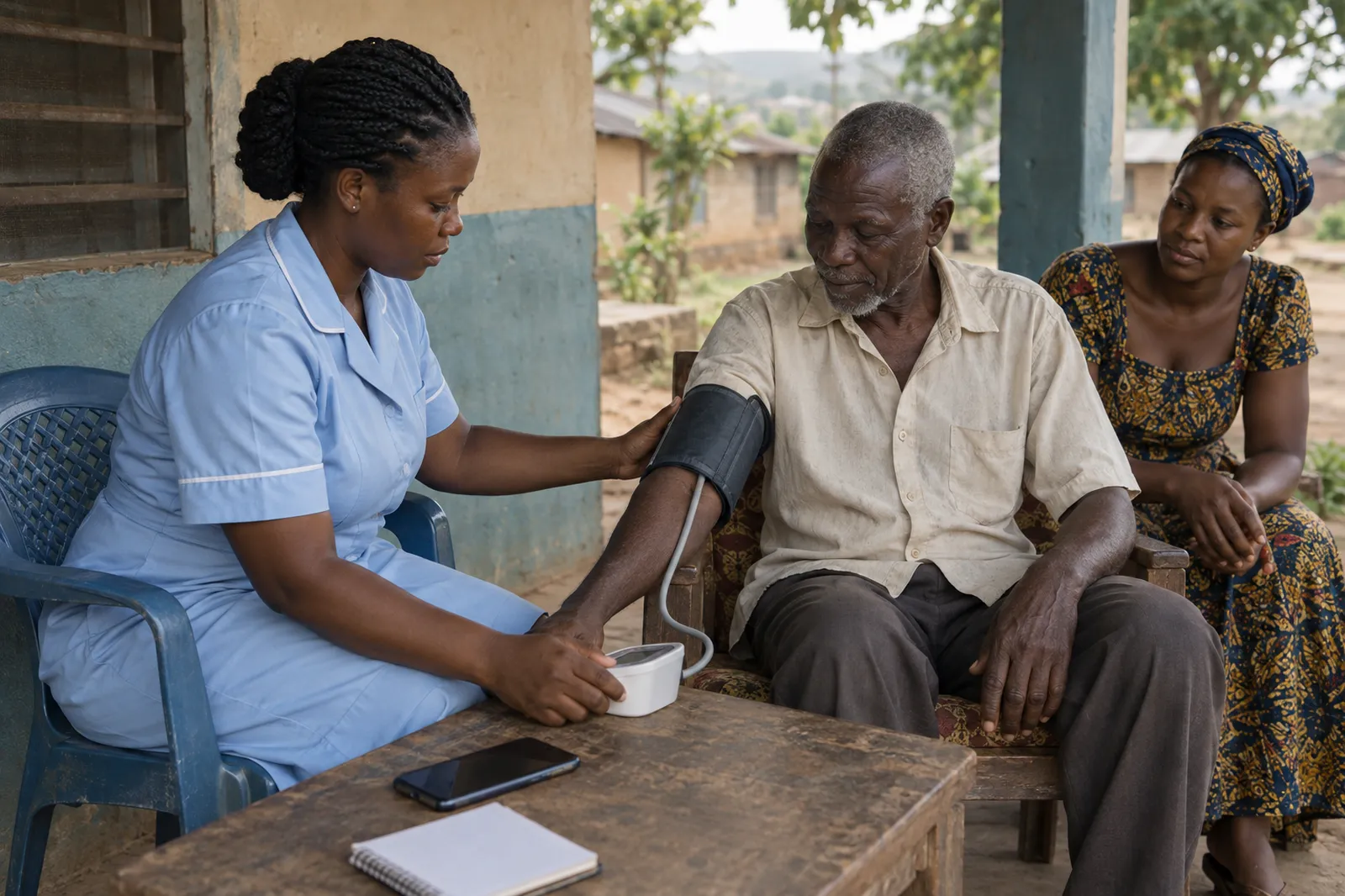
On 15 October, the Icahn School of Medicine at Mount Sinai in New York announced a five-year, US$3.3 million grant from the National Heart, Lung, and Blood Institute, part of the US National Institutes of Health. The money will test a community-based model of care for high blood pressure in rural Ghana. It is shared with the Navrongo Health Research Centre, a research centre of the Ghana Health Service, and the work is led jointly by David Heller of Mount Sinai’s Arnhold Institute for Global Health and Raymond Aborigo, Navrongo’s chief health research officer.
The grant builds on an earlier pilot. Over 90 days, community nurses and health workers in rural Ghana counselled and treated 37 people with hypertension, and 86 percent of them reached normal blood pressure, according to Mount Sinai. The next stage is a randomised clinical trial of 504 adults in 36 communities across Northern Ghana. It will test whether care delivered through an existing public primary-care programme is as good as, or better than, care at clinics that are, in the institution’s words, “often far away and hard to access.” The trial is due to start in fall 2027 and run for three years.
Why it matters
High blood pressure rarely causes symptoms, which is part of what makes it dangerous. It is a major risk factor for stroke and heart attack. In the World Health Organization’s African Region, fewer than a third of people living with hypertension are on treatment, and only about 12 percent have it under control. The same WHO analysis put the global figures at around 42 percent taking medication and 21 percent with the condition controlled.
WHO lists the reasons for the gap plainly: low awareness, limited access to health services, overburdened health systems, workforce shortages, and medicines that people cannot easily afford. For a farmer in a dispersed rural community, a monthly trip to a distant clinic can cost a day’s work, as well as the fare.
When a nurse, trusted by the people, goes door to door to check on the babies, she should also check their parents’ blood pressure, and their grandparents’, and be able to refer them for treatment close to home.
Raymond Aborigo, Navrongo Health Research Centre
The wider picture
Ghana is not starting from scratch. Since 1999, its Community-based Health Planning and Services programme, known as CHPS, has been national policy. Resident nurses called Community Health Officers live in the communities they serve, supported by volunteers, and provide door-to-door care. The model grew out of early pilots in Navrongo and Nkwanta. That makes the Navrongo team’s involvement in this trial something of a homecoming.
CHPS was built mainly for maternal and child health, and it has worked. “Up until now, community-based care in Ghana has successfully improved prenatal care and addressed infectious diseases like malaria and pneumonia in children,” Aborigo said in the announcement. The trial asks whether the same trusted home visit can also handle a lifelong condition.
The idea fits a broader shift across the continent. WHO says it has supported 27 African countries, through an approach called WHO-PEN, to move the management of chronic diseases, including hypertension, into primary care. A follow-on strategy, PEN-Plus, has shown promising early results in Liberia, Malawi and Rwanda.
Could it work elsewhere?
The model’s strength is that it builds on what already exists: a workforce that communities trust and already let into their homes. Countries with similar community health programmes could adapt it. It would travel less well where no such workforce exists, or where nurses cannot reliably get affordable medicines to the people they diagnose.
What remains unresolved
- The evidence is still early. The pilot involved 37 people over 90 days, and the announcement does not describe a comparison group. The trial is designed to answer the question the pilot cannot: does community care do better than clinic care, or only as well?
- Hypertension is lifelong. Three months of control says little about whether people keep taking medication for years, or whether supplies stay reliable.
- Nurses’ time is finite. Researchers studying CHPS have noted barriers to adding cardiovascular care to a programme designed for mothers and children. Adding chronic disease could stretch staff who are already busy.
- Funding after the grant. The project will study cost-effectiveness and engage policymakers, but national adoption, and the budget to pay for it, are not yet decided.
What happens next
A community stakeholder board will advise the study throughout, and the team says it will share results widely. The trial begins in fall 2027. The signal to watch for after that is whether the Ghana Health Service builds hypertension care into CHPS as routine practice rather than a research project.
Sources
- Mount Sinai Health System Mount Sinai receives $3.3 million NIH grant to bring chronic disease care to people’s doorsteps in Ghana (15 October 2026)
- WHO Regional Office for Africa Low awareness and control hamper hypertension fight in Africa
- Frontiers in Public Health Implementation of CHPS in rural and urban Ghana: a history and systematic review
- Annals of Global Health Constructing a nurse-led cardiovascular disease intervention in rural Ghana
Analysis and context are by The GGND Team. Where we draw our own conclusions, we say so. To report an error, contact us.