What happened
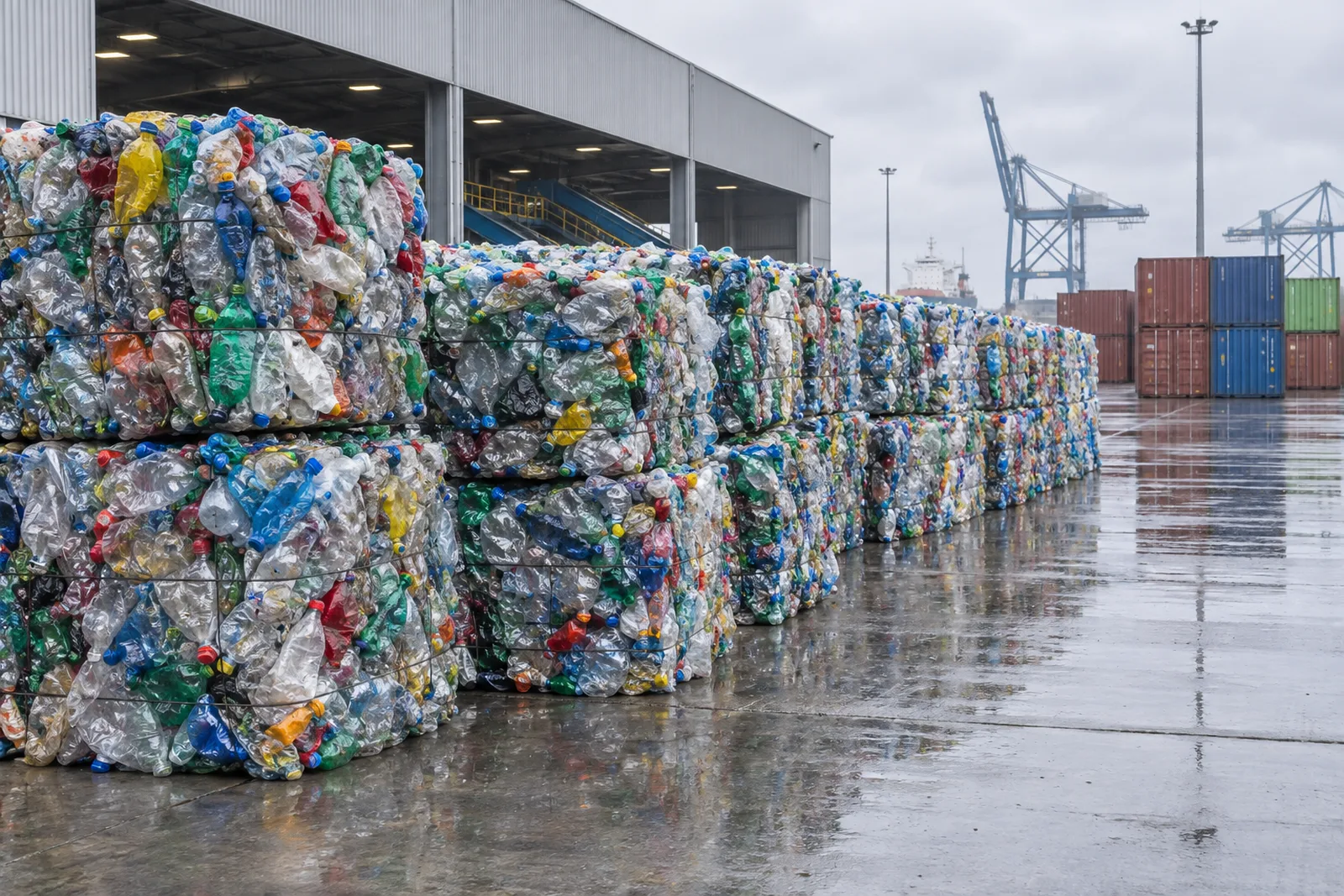
Since Saturday 21 November, it has been illegal to export plastic waste from the European Union to countries outside the Organisation for Economic Co-operation and Development (OECD). The ban, set by the EU Waste Shipment Regulation, will apply until at least 21 May 2029, after which those countries may apply to receive EU plastic waste again, the European Commission said.
The EU produces around 40 million tonnes of plastic waste a year and exports between 1 and 1.5 million tonnes. In 2025 about half went to OECD countries and half to countries outside it. The biggest destinations were Türkiye (510,000 tonnes), Malaysia (276,000 tonnes), Indonesia (215,000 tonnes), Vietnam (137,000 tonnes) and the United Kingdom (108,000 tonnes), the Commission said. Malaysia, Indonesia and Vietnam are outside the OECD, so they can no longer receive EU plastic waste.
Non-OECD countries received 735,000 tonnes in 2025, out of 1.46 million tonnes exported, EUobserver reported.
Why it matters
Countries outside the OECD often lack the infrastructure to recycle the waste they receive, so it risks ending up in illegal dumps or the sea, Belga News Agency reported. The Commission says exporting plastic waste to these countries “is not a sustainable way of managing plastic waste generated in the EU”.
The story goes back to 2018, when China banned plastic waste imports. Before that, China and Hong Kong took around three-quarters of Europe’s plastic waste exports; afterwards, shipments moved to Malaysia, Indonesia, Vietnam and Türkiye, EUobserver reported. In GGND’s view, the ban matters because it puts the cost of Europe’s plastic back where it is produced, which gives European companies and governments a stronger reason to use less plastic and recycle more of it at home.
This landmark measure ensures the EU takes greater responsibility for the waste it generates.
European Commission, Directorate-General for Environment
The wider picture
The ban is one step in a wider tightening. Since 21 May 2026, every export of plastic waste to a country outside the EU has needed the prior consent of the exporting, transit and receiving countries, and from May 2027 exporters must show that the receiving plant has passed an independent audit, the Commission’s guidance says. From 21 May 2027, the EU will also stop exporting most other waste to non-OECD countries, including non-hazardous paper, rubber, metal and glass, Reuters reported, unless a country asks to keep receiving it and shows it can manage it properly.
The biggest question is Türkiye, which is in the OECD and can still receive EU plastic. The Commission itself expects “a shift in destination countries”, with part of the waste diverted to OECD countries outside the EU, EUobserver reported. Türkiye received more than 500,000 tonnes in 2025, its highest level, the Commission’s assessment shows. That assessment, published in September, found no indication that Türkiye was failing to manage the waste in an environmentally sound way, but called for significant improvements and more transparency by 2028, Belga reported. EUobserver noted that it also highlighted a “lack of transparency” in waste data and unclear governance.
Critics are not convinced. Lauren Weir of the Environmental Investigation Agency told EUobserver: “We think that there’s a disconnect between the commission’s application of the regulation and what that regulation actually says needs to happen.” Sedat Gündoğdu, a marine biologist at Çukurova University in Adana, has recorded fires at recycling facilities rising from six a year in 2017 to 125 a year in 2022. “How can this country soundly manage waste that belongs to other countries? This is pollution transfer,” he told EUobserver.
Could it work elsewhere?
The EU rules build on global plastic waste amendments under the Basel Convention, the Commission says. In GGND’s view, other big exporters could follow the same path, but the lesson from China’s 2018 ban is that closing one door simply moves waste to the next one. A ban works only if exporters also build recycling capacity at home and check the destinations that stay open.
What remains unresolved
- A shift to Türkiye. Much of the waste that used to go to Southeast Asia may now go to Türkiye, where the Commission itself found gaps in transparency and enforcement.
- Capacity at home. It is not clear whether Europe’s recycling plants can take the extra waste, or whether more will be burned or sent to landfill.
- Illegal shipments. Stricter rules can push some waste into illegal trade. How well customs will enforce the ban is untested.
- After 2029. Non-OECD countries can apply to receive EU plastic waste again from May 2029, if they show they can manage it.
What happens next
The first list of non-OECD countries allowed to receive other EU waste will be published by the end of 2026, and independent audits of receiving plants begin in May 2027, the Commission said. GGND will look for the first figures on where EU plastic waste goes in 2027, and whether exports to Türkiye rise.
Sources
- European Commission EU bans plastic waste exports to non-OECD countries from November 21 (20 November 2026)
- European Commission Plastic waste shipments (October 2026)
- Council of the European Union Commission assessment of plastic waste exports to Türkiye, document 12685/26 (November 2026)
- EUobserver Plastics export ban begins: how much more of EU’s trash mountain will go into landfills? (21 November 2026)
- Belga News Agency EU bans plastic-waste exports to non-OECD countries from Saturday (20 November 2026)
- Reuters EU ban on plastic waste exports to non-OECD takes effect (20 November 2026)
Analysis and context are by The GGND Team. Where we draw our own conclusions, we say so. To report an error, contact us.