What happened
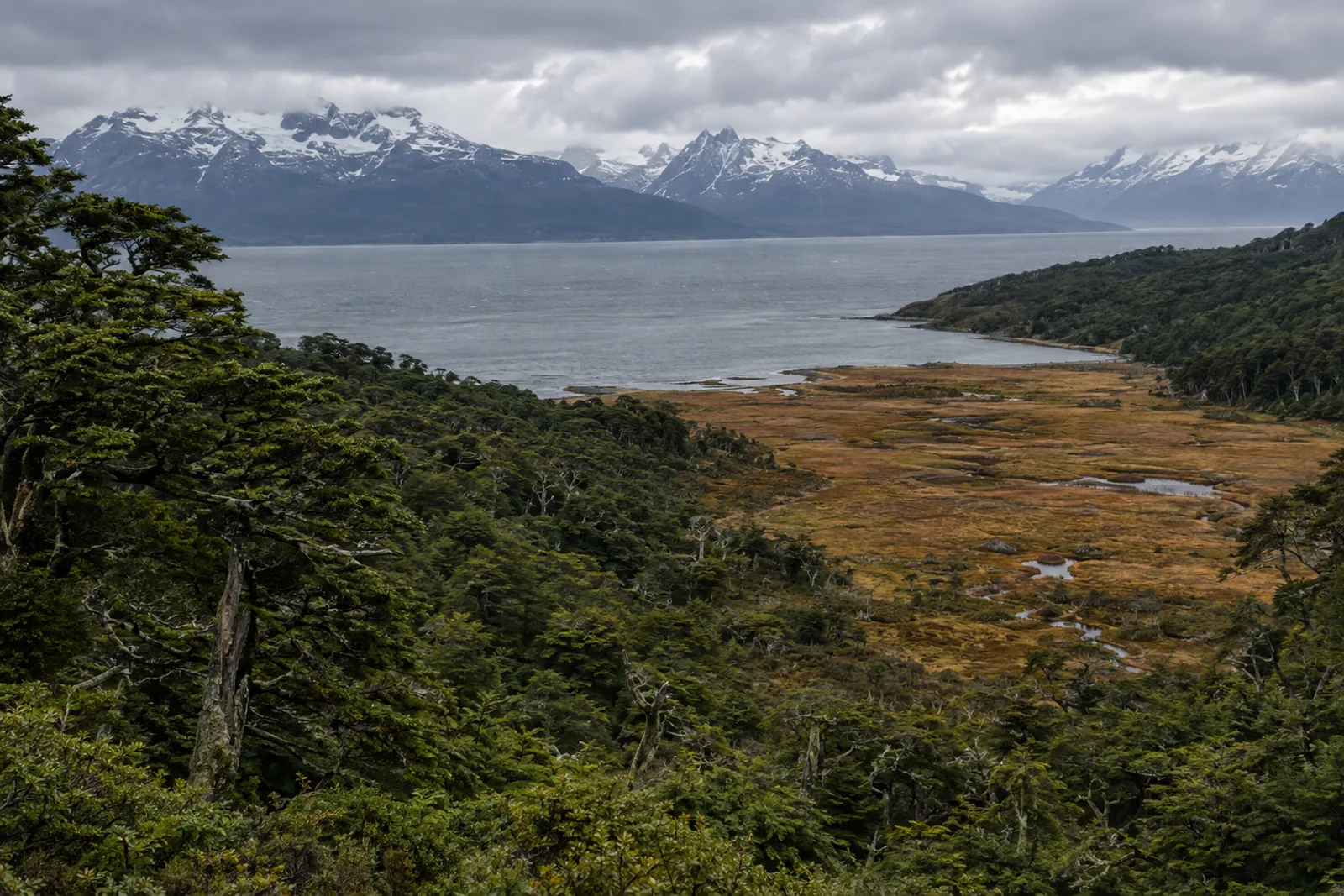
Chile has moved a step closer to a large new national park at the very end of the American mainland. On Tuesday 3 November, ministers and the conservation foundation Rewilding Chile signed a Complementary Protocol Agreement at La Moneda for a further donation of 22,333 hectares towards the future Cabo Froward National Park, near Punta Arenas, Chile’s Ministry of the Environment announced.
The signatories were the Minister of National Assets, Catalina Parot; the Environment Minister, Francisca Toledo; the national director of the Biodiversity and Protected Areas Service (SBAP), Tomás Saratscheff; and Rewilding Chile’s president, Kristine Tompkins, and executive director, Carolina Morgado.
The new land adds to 127,302 hectares that the foundation has already given to the state, registered in the state’s name in November 2025, and to two state-owned protected properties, Río Batchelor and Cabo Froward, created in 2006. Together they would form a park of about 183,000 hectares. CNN Chile gave the exact projected figure as 183,045 hectares, of which 149,635 would come from Rewilding Chile and 33,410 from state land. “More than 80% of the national park will be formed with land donated by the Rewilding Foundation,” Parot said, according to CNN Chile.
Why it matters
The ministry says the park would protect old subantarctic forests, including the Guaitecas cypress, which it describes as the southernmost conifer on the planet, and large areas of peatland, which store carbon. Cabo Froward is one of the last mainland habitats of the huemul, an endangered Andean deer, and borders the southernmost known nesting site of the ruddy-headed goose, also endangered.
The new piece of land also fills a gap. Toledo told La Prensa Austral that it connects the two protected state properties, which sit “at the ends”, and that a section had been missing. In GGND’s view, that matters as much as the extra hectares: wildlife such as the huemul needs connected land, not scattered islands of protection.
The area is ancestral territory of the Kawésqar people, who have navigated the Strait of Magellan for millennia, the ministry notes. SBAP director Saratscheff compared the planned park to the whole of the province of Santiago in size, CNN Chile reported, and Toledo said it would bring Chile closer to its goal of protecting 30 per cent of its territory by 2030.
If a country wants to protect the jewels it has, it needs a link between the public and the private.
Kristine Tompkins, President of Rewilding Chile, as reported by CNN Chile (translated from Spanish by GGND)
The wider picture
The donation is the latest in a long line of land gifts linked to the Tompkins family, whose foundations helped create parks such as Pumalín and Patagonia. CNN Chile reported that Morgado offered to build public access infrastructure for Cabo Froward, as the foundation did in those parks.
The process has not been smooth. La Prensa Austral reported that a first indigenous consultation, called in March 2025, was suspended in June at the request of Kawésqar organisations, who had objected to Mapuche-Huilliche communities also being invited, and was revoked in July, partly because the land donation had not yet been completed. A new consultation began on 20 October 2026, the ministry said. The official resolution that opened it described a park of about 161,315 hectares, which did not include the new land; Toledo told La Prensa Austral that the full area will now be consulted on.
The mining and industry outlet Redimin pointed out that signing the protocol does not mean the park legally exists yet. The ministry hopes to finish the consultation towards the end of the first quarter of 2027, and the timetable could change.
Could it work elsewhere?
Private land bought by philanthropists and then given to the state, combined with neighbouring public land, has now been tried at scale several times in Chile. In GGND’s view, the model can work wherever there is large, lightly used private land and a government willing to take on long-term management. The weak points are also clear: governments must fund rangers and visitor facilities once the donors step back, and indigenous peoples must be consulted properly rather than as a formality.
What remains unresolved
- The decree date. Toledo told La Prensa Austral she hopes to sign the creation decree at the end of 2027. Parot said a second protocol in the coming months would fix 8 October 2027 as the decree date, CNN Chile reported.
- A deadline in the donation. La Prensa Austral reported that, according to Rewilding Chile, the earlier donation is conditional on the park being created within two years, a period that would end around November 2027. The minister did not say whether the decree will come before then.
- The consultation. Planning meetings with Kawésqar communities were due to start on 18 November. Their views could still shape the park’s limits and rules.
- Who runs it. SBAP takes over national parks from the forestry agency Conaf in March 2027, La Prensa Austral reported. Funding for staff and access roads has not been set out publicly.
What happens next
The indigenous consultation now moves into planning meetings, and the government has promised a further protocol with a decree date. If everything holds, Cabo Froward would become the first national park lying wholly within the commune of Punta Arenas, La Prensa Austral reported. GGND will follow the consultation and the decree.
Sources
- Ministerio del Medio Ambiente (Chile) Chile recibe nueva donación de Fundación Rewilding Chile para concretar el Parque Nacional Cabo Froward en Magallanes (3 November 2026)
- CNN Chile Donación de 22 mil hectáreas se suma al proyecto para crear el Parque Nacional Cabo Froward (3 November 2026)
- La Prensa Austral Ministra de Medio Ambiente apunta a firmar a fines de 2027 la creación del Parque Nacional Cabo Froward (4 November 2026)
- Redimin Chile prepara un parque de 183.000 hectáreas donde termina el continente americano (3 November 2026)
Analysis and context are by The GGND Team. Where we draw our own conclusions, we say so. To report an error, contact us.