What happened
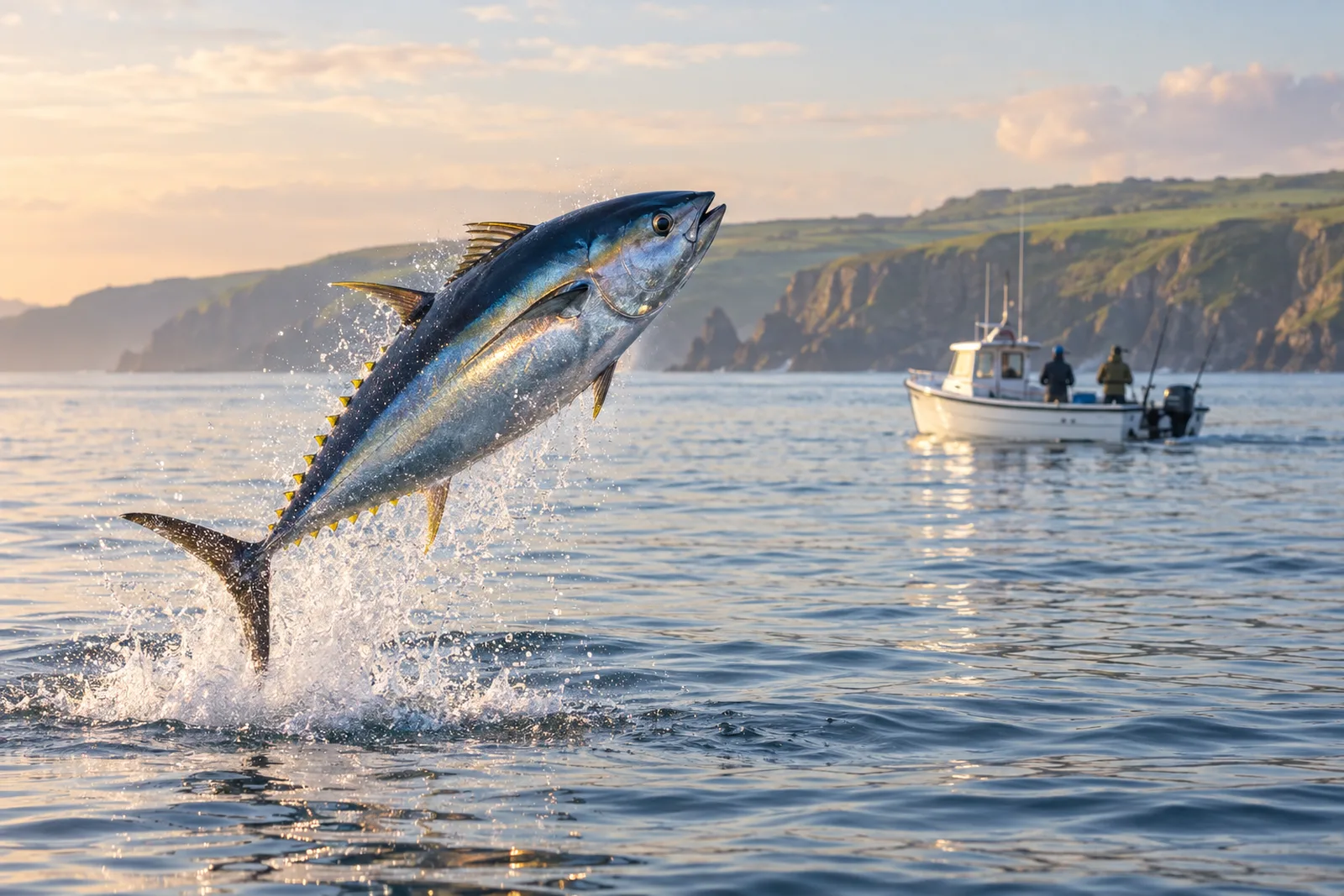
On 8 October, WWF and the Zoological Society of London published the Living Planet Report 2026. Its headline finding is sobering: monitored wildlife populations have fallen by an average of 73% since 1970. But this edition also highlights recoveries, and one of the most striking is in British seas. Atlantic bluefin tuna have returned in large numbers to the waters off Cornwall and around the UK coast, the BBC reports.
The return is visible in the fishery itself. In August, a bluefin weighing about 338 kg was landed off Whitby in Yorkshire, the first there in about 60 years, the BBC reported. For 2026 to 2028, the UK’s share of the international catch rose from 63 tonnes a year to about 230 tonnes.
Why it matters
Bluefin are among the ocean’s great travellers. They can grow to about 700 kg, swim at up to 45 miles an hour, and are among the few fish able to move between equatorial seas and Arctic waters, Wicked Leeks reports. In the 1920s and 1930s, North Sea tuna fishing drew Hollywood stars. Then the fish disappeared. By the mid-1960s the population had collapsed because of “some really excessive takes, particularly of juvenile bluefin,” University of Exeter ecologist Lucy Hawkes told the BBC. “Too many were being killed before they ever had a chance to reproduce.”
The recovery came from a concerted international effort: lower catch quotas, minimum sizes, protection of spawning grounds, and campaigns backed by consumers, chefs and retailers, the BBC reports. The International Commission for the Conservation of Atlantic Tunas (ICCAT) adopted a recovery plan in 2006. Fishing pressure has stayed within sustainable levels since the early 2010s, and the eastern stock’s breeding population is at its highest since the 1960s, according to an OSPAR assessment based on ICCAT’s science.
I think bluefin tuna is a golden case study that fisheries management works.
Hannah Rudd, head of marine, Angling Trust, speaking to the BBC
The wider picture
Around 2014, fishers and boat operators off Cornwall began reporting what looked like “funny-looking dolphins, with their tails on the wrong way.” Exeter researchers identified them as bluefin. Since 2018, the university and the government science agency Cefas have worked with anglers to catch, tag and release the fish. About 3,000 have been tagged in the UK, and around 170 carry electronic tags, which show that tuna from the English Channel spend the winter in the Bay of Biscay, Wicked Leeks reports.
The UK is now rebuilding a fishery with care. In 2026, 120 tonnes went to a commercial fishery of about 30 small boats, each allowed four tonnes and only rod and reel, and about 150 permits went to recreational catch-and-release boats, which need a person on board with mandatory training in handling and releasing the fish, according to the Marine Management Organisation. WWF’s report places the tuna alongside other comebacks: wild tigers rose from about 3,200 in 2010 to about 5,700 in 2025, the BBC reports.
Could it work elsewhere?
That is WWF’s point. “Hope is not the same thing as wishful thinking,” said Mike Barrett, WWF-UK’s chief scientific adviser. “Hope is not passive. Hope’s about action.” The tuna show what happens when countries agree to fish less for long enough. But the same report estimates that in 2023 about US$7.3 trillion flowed into activities that harm nature, roughly 33 times what was spent protecting it.
What remains unresolved
- How many fish? The number of bluefin in UK waters is unknown. It could be anything from thousands to tens of thousands, Hawkes told Wicked Leeks.
- When do they breed? Catch rules assume bluefin start spawning at around five years old. New research suggests it may be eight or nine. If so, fish could be caught before they have bred.
- Pressure elsewhere. The UK’s quota is less than 0.5% of the eastern Atlantic and Mediterranean total. In the Mediterranean, the number of tuna fattened in farms has risen from about 55,000 a year in 2003 to around one million in 2024, according to a Compassion in World Farming report cited by Wicked Leeks, and the true scale of illegal fishing is uncertain.
- A warming sea. Warmer waters may be part of why the tuna are back. But climate change could also make Mediterranean spawning grounds too hot, OSPAR notes.
What happens next
The UK fishery runs until the end of December, and tagging continues. ICCAT’s current rules for setting catches are due for review in 2028, when new evidence on breeding age and climate effects could change the limits. For now, the bluefin’s return is one of the clearest signs that patient, shared rules can bring an ocean giant back.
Sources
- BBC News UK bluefin tuna comeback shows nature can recover, says WWF (8 October 2026)
- WWF-UK Living Planet Report 2026 press release (8 October 2026)
- BBC News Scientists and fishermen celebrate return of tuna (10 September 2026)
- Marine Management Organisation (GOV.UK) Bluefin tuna (BFT) fisheries in 2026
- OSPAR Commission Status Assessment 2025: Atlantic bluefin tuna
- Wicked Leeks The return of bluefin tuna to UK waters: a conservation success story or a species at risk? (19 October 2026)
Analysis and context are by The GGND Team. Where we draw our own conclusions, we say so. To report an error, contact us.