What happened
On Tuesday 17 November, Zambia’s Health Minister, Professor Roma Chilengi, broke ground on a cholera vaccine plant at the Lusaka South Multi-Facility Economic Zone, Xinhua reported. The plant belongs to ZAMVAX, a joint venture in which the state-owned Industrial Development Corporation (IDC) holds 60% and the Chinese firm Jijia International Medical Technology holds 40%.
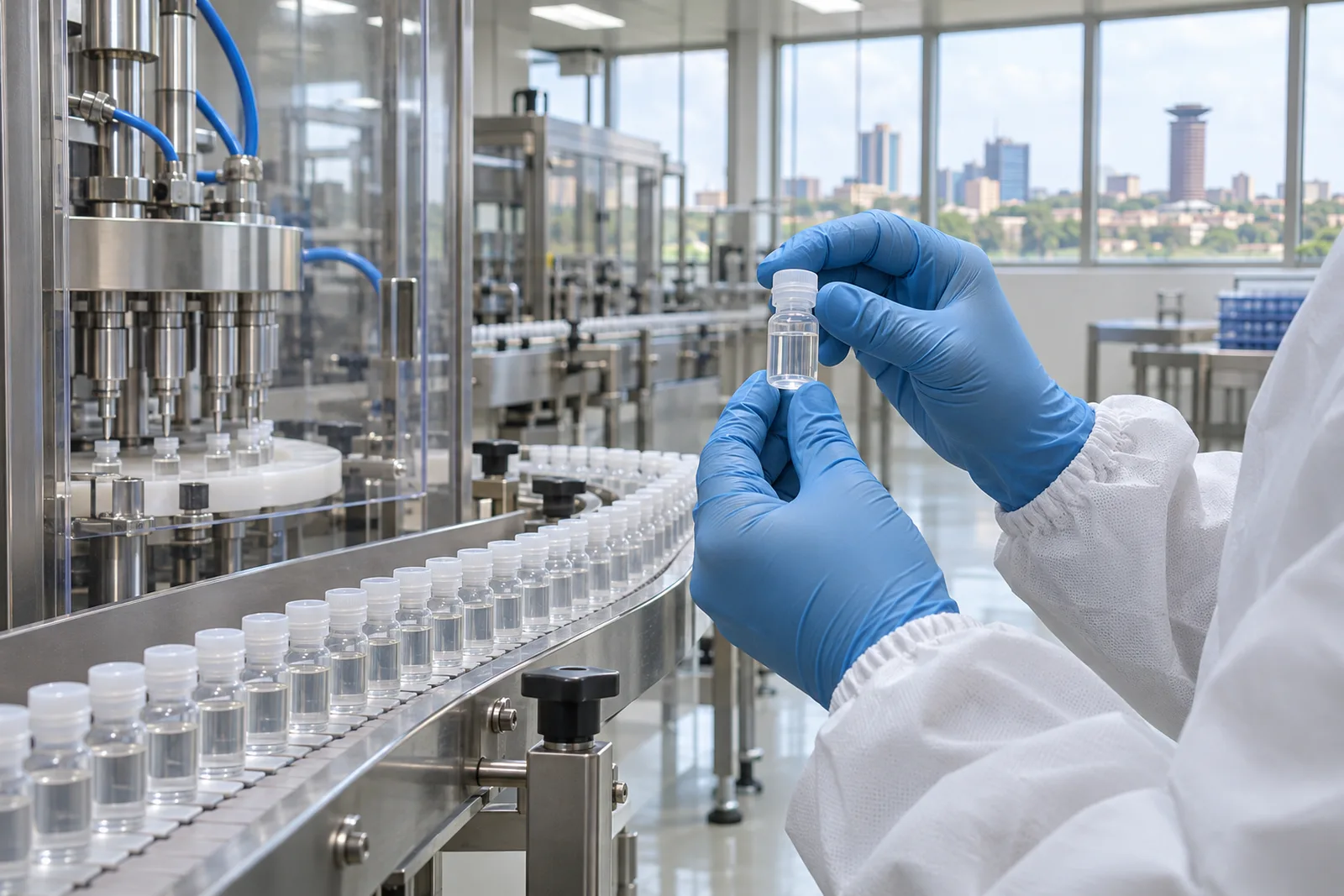
The first phase is estimated to cost about US$24.1 million and is designed to produce up to 20 million doses of oral cholera vaccine a year, the IDC said. It will be a fill-and-finish operation: bulk vaccine made elsewhere will be filled, packaged and released in Lusaka. The IDC said it will begin with OraVacs, an oral cholera vaccine that China donated and that helped contain an outbreak in Lusaka last year. A later phase would make the vaccine’s active ingredient, or antigen, locally, giving Zambia end-to-end production, according to Xinhua. Possible future products include HPV, malaria and animal vaccines, the IDC said.
The whole project, built in several phases, is costed at around US$213 million, and the joint venture agreement was signed on 2 November, Ecofin Agency reported. Wang Sheng, minister counsellor at the Chinese Embassy, attended the ceremony.
Why it matters
Zambia is in the middle of another cholera outbreak. By the government’s briefing on 23 November, there had been 3,584 cases and 81 deaths across 27 districts in seven provinces, Information Minister Elvis Nkandu said, according to Zambia Monitor. Thirty-seven of those who died did so in the community, before reaching care, and 78% of cases were in people who had not been vaccinated. A vaccination campaign in Lusaka and Chibombo began on 14 October. “This is a small improvement, not a victory,” Nkandu said.
Cholera vaccine is scarce worldwide. For several years almost all doses have come from one South Korean supplier, EuBiologics, and global stockpiles have repeatedly fallen below emergency thresholds, forcing countries to use single-dose campaigns instead of the full two doses, Ecofin reported. Africa makes only about 1% of the vaccines it uses; the African Union wants that to reach 60% by 2040.
“Many thought it was not possible to manufacture vaccines in our setting,” Chilengi said at the ceremony, according to the IDC. “Today is an important day, because we defy that logic.” He linked the plant to the lessons of the pandemic: “commodity sovereignty is not an option if you want to achieve public health security,” he said, as reported by Zambia Monitor.
A groundbreaking is a promise. Its fulfilment will be measured in the vaccines produced, the Zambians equipped with new skills, and the communities that benefit from more reliable access to protection.
Cornwell Muleya, Chief Executive, Industrial Development Corporation of Zambia
The wider picture
The IDC calls ZAMVAX “Africa’s first cholera vaccine plant”. In GGND’s view, that claim needs care. Filling and packaging is a real step, but it is not the same as making a vaccine from start to finish. In South Africa, Biovac is seeking regulatory approval for end-to-end production of its own oral cholera vaccine by late 2028, which would be the first cholera vaccine made entirely in Africa, the Associated Press reported on 25 November. The European Investment Bank has lent Biovac €75 million, and the company says it could make 30 to 40 million doses a year if approved.
The two projects need not compete. Demand regularly outstrips supply, and several regional sources would make Africa less exposed when one factory has problems. Chilengi was also clear that vaccines are only part of the answer: “A dependable supply of oral cholera vaccine can strengthen our response alongside safe water, sanitation, surveillance and timely care,” he said, according to the IDC.
The partnership also depends on real skills transfer. “Technology transfer is successful when the receiving team can carry out its work and take responsibility for product quality,” said Xu Yonglin of Jijia International, quoted by the IDC.
Could it work elsewhere?
In GGND’s view, the model, starting with fill-and-finish and moving towards full production once staff, regulators and finance are in place, is a sensible path for countries that cannot build a full vaccine plant at once. The test is whether buyers, including global vaccine purchasers, commit to doses made in Africa.
What remains unresolved
- Timing. No construction schedule or production start date has been made public, Ecofin noted in its weekly health update.
- Supply of antigen. Phase one relies on bulk vaccine from outside Zambia, and it is not yet clear where antigen will come from in the long term.
- Money and approvals. The second phase depends on further financing, feasibility work and regulatory approval, the IDC said.
- Water and sanitation. Vaccines buy time, but outbreaks end only when people have safe water and sanitation.
What happens next
Construction of the first phase now begins. GGND will watch for a published timeline, the first regulatory approvals, and whether Zambia’s outbreak, which officials describe as only slowly improving, comes under control.
Sources
- Industrial Development Corporation of Zambia ZAMVAX breaks ground on Africa’s first cholera vaccine plant (18 November 2026)
- Xinhua Zambia breaks ground on cholera vaccine plant (18 November 2026)
- Zambia Monitor Zambia breaks ground on first cholera vaccine manufacturing plant (17 November 2026)
- Ecofin Agency Zambia begins construction of $213 million cholera vaccine manufacturing plant (20 November 2026)
- Zambia Monitor Zambia cholera cases rise to 3,584 as death toll reaches 81 (November 2026)
- Associated Press (via WPXI) South Africa’s Biovac seeks approval for first cholera vaccine made entirely in Africa (25 November 2026)
Analysis and context are by The GGND Team. Where we draw our own conclusions, we say so. To report an error, contact us.