What happened
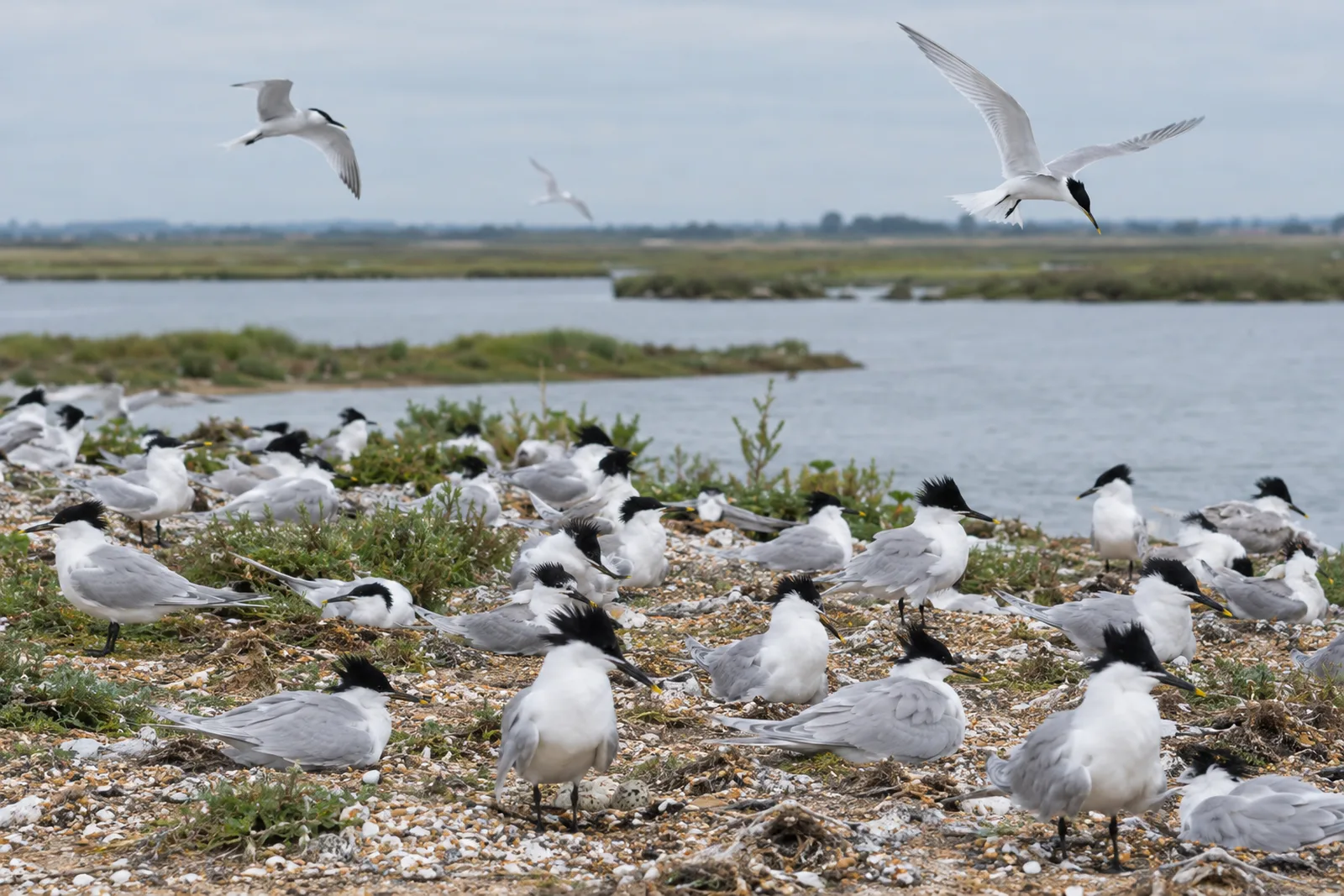
Four years ago, the Sandwich tern colony at RSPB Pagham Harbour in West Sussex collapsed. Highly pathogenic avian influenza (HPAI), or bird flu, swept through in 2022 and the birds abandoned their island completely. This summer, at least 756 pairs nested there and 570 chicks fledged, Oceanographic reports. In 2023 there were none.
The terns were not the only winners. At Pagham Harbour, black-headed gull fledglings rose from 51 in 2025 to 504 in 2026, and little tern fledglings from 21 to 34, according to Inside Ecology. Ringed plovers and oystercatchers also nested in greater numbers along the coast. The RSPB first shared the news with its supporters in early October, and the wider results were reported by the Press Association and local papers from 18 October, including the Sussex Express.
Why it matters
Bird flu has hit Britain’s seabirds hard. The current H5N1 strain spread widely through UK wild birds in 2022. An RSPB-led study, the first to measure the effects of the outbreaks on UK seabird populations, found that Sandwich terns had declined by 35% and common terns by 42%, falls it said were likely to be largely driven by the disease. Nine of the 13 species studied had declined by more than 10%.
Some losses were even steeper. The same study recorded a 76% decline in great skuas and a 25% decline in gannets across most of their UK populations, both species that had been increasing before the outbreak. Before bird flu arrived, Sandwich and common tern numbers had been stable. That is why a single colony bouncing back matters: it shows the birds can return when a site is ready for them.
Against that background, a colony that goes from nothing to one of the largest ever recorded on the Solent is real evidence that recovery is possible. “In 2022, Sandwich Terns, Black-headed Gulls and Mediterranean Gulls were hit severely by HPAI/bird flu, leading to the abandonment of their breeding colony at Pagham Harbour,” said Wez Smith, RSPB Senior Project Manager, as quoted by Oceanographic.
It’s taken several years of dedicated conservation action, but the situation began to ‘tern’ around last year, and the site is now thriving with record breaking populations using it.
Wez Smith, RSPB Senior Project Manager
The wider picture
The comeback did not happen by itself. Reserve staff and volunteers, working with the multi-partner Solent Seascape Project, cleared selected vegetation to keep nesting areas open, monitored for rats, and put up predator-exclusion fencing to keep mammals away from ground-nesting birds. Patrols and remote cameras watch over the site, and rangers talk to visitors and local people during the nesting season to keep disturbance down.
Other species benefited from habitat work too. Under the Downs to the Sea project, new islands were built in the saline lagoon at Ferry Pool. This year 18 pairs of avocets nested there and raised 24 fledglings. Before, avocets had rarely used the area: one pair in 2003, one in 2010, two in 2012 and two in 2018, The Argus reports. Further along the coast, nesting rafts at RSPB Medmerry in West Sussex and RSPB West Hayling in Hampshire have given black-headed gulls and common terns predator-free places to breed, away from people, dogs and boats. The works have also improved wetland habitat for mammals and invertebrates, and new paths, viewing platforms and benches let visitors watch the birds without disturbing them, the RSPB says.
Could it work elsewhere?
The tools are not exotic: fences, rafts, rat checks, vegetation clearance and wardens. What made the difference at Pagham was doing all of them, every year, so the birds had a safe place to return to when they were ready. In GGND’s view, that is the lesson for other colonies hit by bird flu. Managers cannot vaccinate wild terns, but they can remove every other pressure so that survivors breed successfully. The RSPB has long argued that seabirds face several threats at once, including unsustainable fishing, invasive predators, offshore wind development and climate change, and that bird flu has been added to that list.
What remains unresolved
- Bird flu could return. Dense colonies like this one are exactly where the virus spreads fastest. One good year does not make a colony safe.
- Constant care. The islands need ongoing vegetation clearance, fencing repairs and strict biosecurity to keep rats out. That costs money and depends on staff and volunteers every season.
- Where did the birds come from? The reports do not say whether the returning terns are survivors, birds that moved from other colonies, or both. That matters for judging the national picture.
- One site, not a nation. A record on the Solent does not reverse national declines. Fuller surveys will show whether UK tern populations are recovering overall.
What happens next
Further restoration is under way or being developed along the Solent, according to Inside Ecology. Over the winter, teams will prepare the islands for next spring. GGND will look again when the terns return in spring 2027 and the next counts come in.
Sources
- Oceanographic Solent seabirds enjoy record breeding year after bird flu recovery (19 October 2026)
- Inside Ecology Record ‘tern’ around for seabirds on Solent RSPB nature reserves (21 October 2026)
- Sussex Express (PA) Record ‘tern’ around: seabird numbers soar in Solent after RSPB recovery work (October 2026)
- The Argus Bird flu-hit West Sussex seabird colony makes stunning recovery (18 October 2026)
- RSPB Winchester Local Group Sandwich Tern Boom at Pagham Harbour (5 October 2026)
- RSPB Study shows role of bird flu in widespread declines of UK seabirds
Analysis and context are by The GGND Team. Where we draw our own conclusions, we say so. To report an error, contact us.