What happened
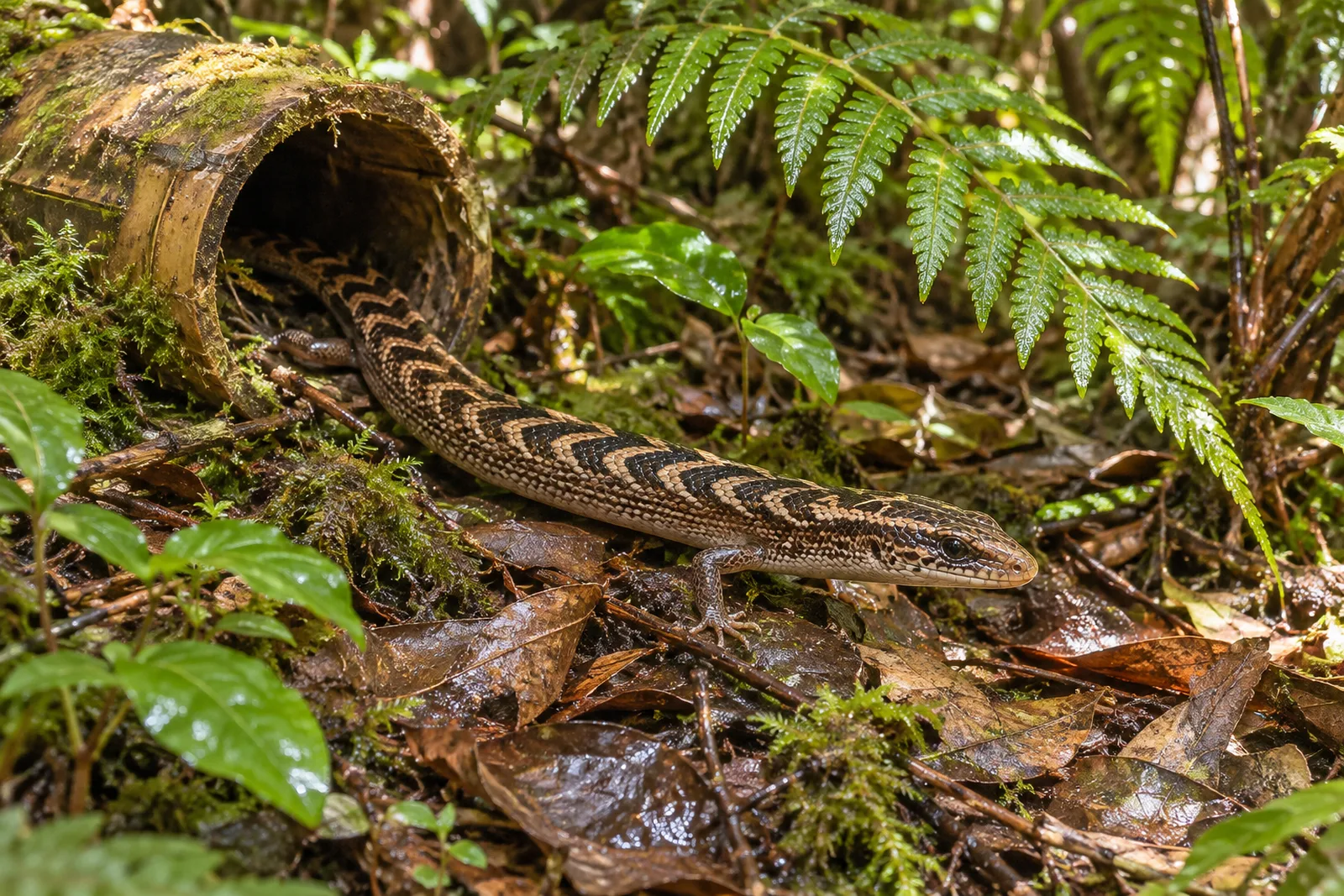
Eleven niho taniwha, also called chevron skinks, have been released into the forest at Glenfern Sanctuary on Aotea/Great Barrier Island, the Department of Conservation (DOC) announced on 23 November. They join ten others released there in July. Growing up to 30 cm from nose to tail, the niho taniwha is New Zealand’s longest lizard.
All of them trace back to three injured skinks that left Aotea for rehabilitation at Auckland Zoo between 1997 and 1999. Those animals bred, and the zoo group grew to two of the original adults and 19 zoo-bred skinks, DOC said. The first release, on 8 July as Matariki rose, carried eight zoo-raised skinks and two “elders” into the bush in bamboo containers, New Zealand Geographic reported.
The project was led by Ngāti Rehua–Ngātiwai ki Aotea Trust with DOC, Auckland Zoo, Glenfern Sanctuary and Auckland Council, to meet a long-held iwi aspiration to bring the taonga, or treasured species, home.
Why it matters
The niho taniwha is classified as ‘threatened – nationally vulnerable’ and now lives only on two islands in the Hauraki Gulf: Aotea and Te Hauturu-o-Toi/Little Barrier Island, DOC said. It was once widespread in the upper North Island, according to New Zealand Geographic. “This translocation is the first for the species,” said Associate Professor Marleen Baling of Unitec, who supervises the students studying the release, Unitec reported.
For Ngāti Rehua, the return is also personal. Rodney Ngāwaka called the skink “a true jewel of Aotea”, and said its return “is about reconnecting them to their whakapapa and bringing them home to their rightful place”, according to DOC. In GGND’s view, it is a good example of a zoo acting as a lifeboat: animals that came in injured have, after a generation, helped to rebuild a wild population.
The niho taniwha is unique to our rohe, making it one of our most precious taonga.
Rodney Ngāwaka, Kaumātua and Ahi Kā, Ngāti Rehua
The wider picture
The release is also an experiment. Before leaving the zoo, the skinks spent several weeks getting used to custom-made bamboo refuges, which were then placed in the forest with them so they had a familiar place to shelter. “The use of the bamboo refuges is novel,” said Richard Gibson, Auckland Zoo’s head of animal care and conservation, according to DOC. Tiny transmitters weighing less than half a gram were taped to their tails, and Unitec master’s student Sophie Whittall is tracking released and resident skinks daily for up to a month, recording where they go and which refuges they use, Unitec said.
Glenfern was chosen because it already holds a known population of chevron skinks and is protected by predator control, the sanctuary says. Introduced predators are the main threat to lizards like this one. Across the island, a project to remove feral cats “is now well advanced” after a slow start, the Great Barrier Island Environmental Trust reported in September.
Fletcher Beazley, DOC’s Aotea operations manager, said community involvement drove the project. “We felt very strongly we needed to return these niho taniwha back to the wild alongside iwi and the community – to bring the best outcomes for conservation,” he said. Local children and adults were invited to see the skinks, and some helped place the refuges in the bush.
Could it work elsewhere?
Breeding animals in a zoo and returning them is a well-known tool, but very few lizard translocations have been carefully tracked from the first day. The data from the bamboo refuges and transmitters is meant to support future moves of this species, Gibson said. In GGND’s view, the approach could help other rare and secretive reptiles, provided the release site is protected first and the people who live there want the animals back.
What remains unresolved
- Survival and breeding. It is far too early to know whether the released skinks will survive, settle and breed in the wild.
- Predators. Glenfern is predator-controlled, not predator-free, and rats and cats still live on parts of the island.
- Small numbers. Twenty-one skinks is a small group. NZ Geographic had reported that 12 were due to return in November; DOC says 11 were released.
- Two islands only. The species still survives on just two islands, so a single disaster could do great harm.
What happens next
The partners have committed to annual niho taniwha surveys at the release site, DOC said, and the tracking data from the July and November groups will be compared with wild skinks. GGND will look for the first survey results and for any sign of young skinks born in the wild at Glenfern.
Sources
- Department of Conservation New Zealand’s longest lizard returned to wild (23 November 2026)
- New Zealand Geographic Land of lizards (October 2026)
- Unitec Postgraduate research advances conservation of endangered native skinks (2 November 2026)
- Glenfern Sanctuary About us (accessed November 2026)
- Great Barrier Island Environmental Trust A feral cat free Aotea (17 September 2026)
Analysis and context are by The GGND Team. Where we draw our own conclusions, we say so. To report an error, contact us.