What happened
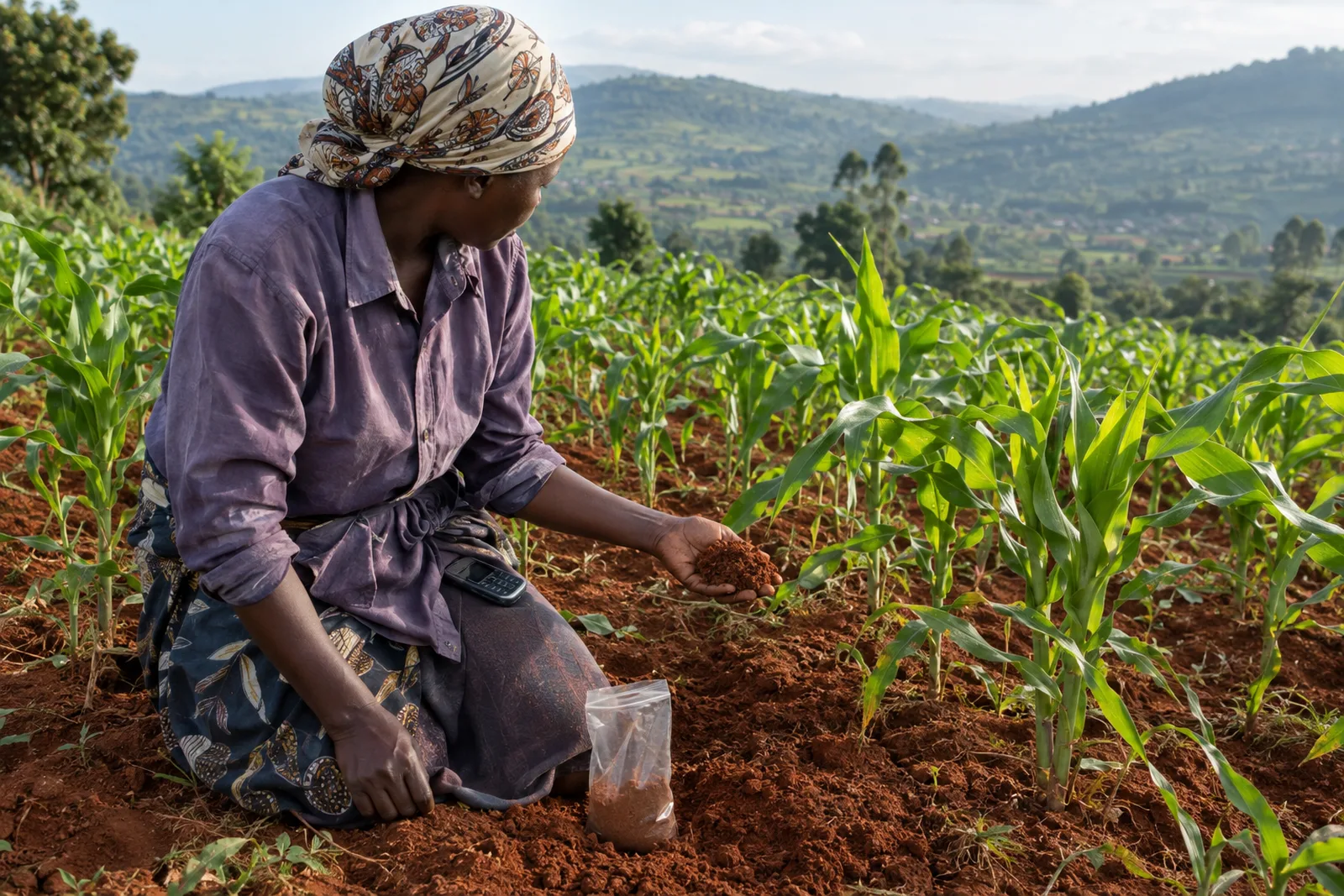
Kenya is building the most detailed picture of its farm soils it has ever had, and handing it back to farmers. Under the Soil Mapping for Resilient Agrifood Systems programme (SoilFER), more than 3,600 soil samples have been collected and mapped across 45 counties, feeding a digital soil map that gives farmers location-specific information about their land, UN News reported on 23 October. The samples are georeferenced, and the findings are sent directly to farmers’ mobile phones.
The programme is a partnership between the UN Food and Agriculture Organization (FAO) and the Kenya Agricultural and Livestock Research Organization (KALRO), with funding from the United States and Japan. At its national launch at KALRO Kabete, Kenya also set up three new structures to keep the work going, according to FAO: a Kenya Soil Partnership linking government, researchers, universities, farmer groups and companies; a Kenya Soil Laboratory Network to harmonise testing standards; and the national rollout of the Global Soil Doctors Programme. FAO says the national sampling campaign is complete, with 3,672 samples, and more than 100 technicians and experts have been trained in soil surveys, lab analysis and digital mapping.
Why it matters
Most Kenyan farmers buy fertiliser without knowing what their soil lacks. That wastes money and can harm the land. About 63% of Kenya’s arable land is acidic, and close to seven million acres are strongly acidic, the Ministry of Agriculture says, The Eastleigh Voice reports. On acidic soils, the wrong fertiliser can do little for yields. Agriculture Cabinet Secretary Mutahi Kagwe put it bluntly at the launch: “A bag of the wrong fertilizer, delivered on time, at half the price, to the wrong soil, is still the wrong fertilizer,” he said, as quoted by FAO.
For farmers, the change is already practical. “Farmers would use excessive chemicals, sometimes even more fertilizers in an attempt to get more yields. Now we know better,” Agness Munialo, a farmer and trained soil doctor from Kakamega County, told UN News. Soil doctors are farmers trained to diagnose and fix soil problems, who then teach their neighbours. In Kakamega, training has already reached 30 extension officers and more than 150 farmers, and the first phase aims to reach 2,000 farmers across five counties, FAO says.
For a hundred years we have asked our soils what they can give us. Today we begin, at last, to ask them what they need.
Mutahi Kagwe, Cabinet Secretary for Agriculture and Livestock Development
The wider picture
The labs matter as much as the maps. Kagwe handed over KALRO’s refurbished soil chemistry laboratories in Kabete, an investment of KSh 220 million, which should shorten the time it takes to return results to farmers, the Kenya News Agency reports. He directed KALRO to keep analysing about 77,000 soil samples from 45 counties and to publish county-level soil fertility maps for public use. The ministry and KALRO also plan to link soil test results to KIAMIS, the national farmer registration system, so that over time a farmer’s subsidy support can reflect what their soil actually needs. Kagwe urged county governments to co-finance soil testing and bring it closer to farmers.
Young people are paying attention too. “I’d love to do farming more, now that I have the information that you can actually test your soils to know what nutrients it requires,” Jackline Kioko, a KALRO intern, told UN News.
Could it work elsewhere?
It is designed to. SoilFER also runs in Ghana, Guatemala, Honduras, Mozambique, Tunisia and Zambia, and FAO describes it as a cycle that links soil data, laboratories, digital maps and advice to farmers, so that the systems outlast the programme itself, which runs until May 2027, according to FAO’s Kenya programme page. In GGND’s view, the most transferable part is the cheapest: farmers teaching farmers. A soil map is only useful when someone in the village can explain what it means for this season’s maize.
What remains unresolved
- Two different sample counts. FAO reports 3,672 samples from the SoilFER sampling campaign, while the ministry speaks of about 77,000 samples being analysed across 45 counties. The larger figure appears to include KALRO’s wider testing work, but the launch materials we reviewed do not explain how the two relate.
- Reaching every smallholder. The first phase of the Soil Doctors programme targets 2,000 farmers. Kenya’s farmer registry lists more than eight million farmers, VAN POLDER notes, so scaling up will take time and money.
- Who pays for testing. The minister asked counties to co-finance soil testing. If tests are not cheap and close by, many farmers may keep guessing.
- Subsidies that follow the soil. Linking test results to fertiliser subsidies is a stated aim, not yet a working system.
What happens next
KALRO is due to publish county-level soil fertility maps for public use, and soil doctors will keep training their neighbours in the first five counties. “I want to urge Kenyans that before thinking about what to plant or the fertilizer to use, think about soil testing,” Kagwe said, as reported by UN News. GGND will follow whether the maps reach farmers’ phones, and whether yields and incomes follow.
Sources
- UN News Soil mapping aims to boost agricultural production in Kenya (23 October 2026)
- FAO Kenya Kenya launches its National Soil Partnership & Soil Laboratory Network & rolls out the Soil Doctors Programme under SoilFER (29 September 2026)
- FAO SoilFER programme: Kenya country page
- Kenya News Agency Kenyan farmers urged to prioritize soil health for better fertilizer choices (October 2026)
- The Eastleigh Voice Farmers urged to test soil before buying fertiliser as 63 per cent of Kenya’s arable land is acidic (October 2026)
- VAN POLDER Soil testing in Kenya: 63% of farmland is acidic (October 2026)
Analysis and context are by The GGND Team. Where we draw our own conclusions, we say so. To report an error, contact us.