What happened
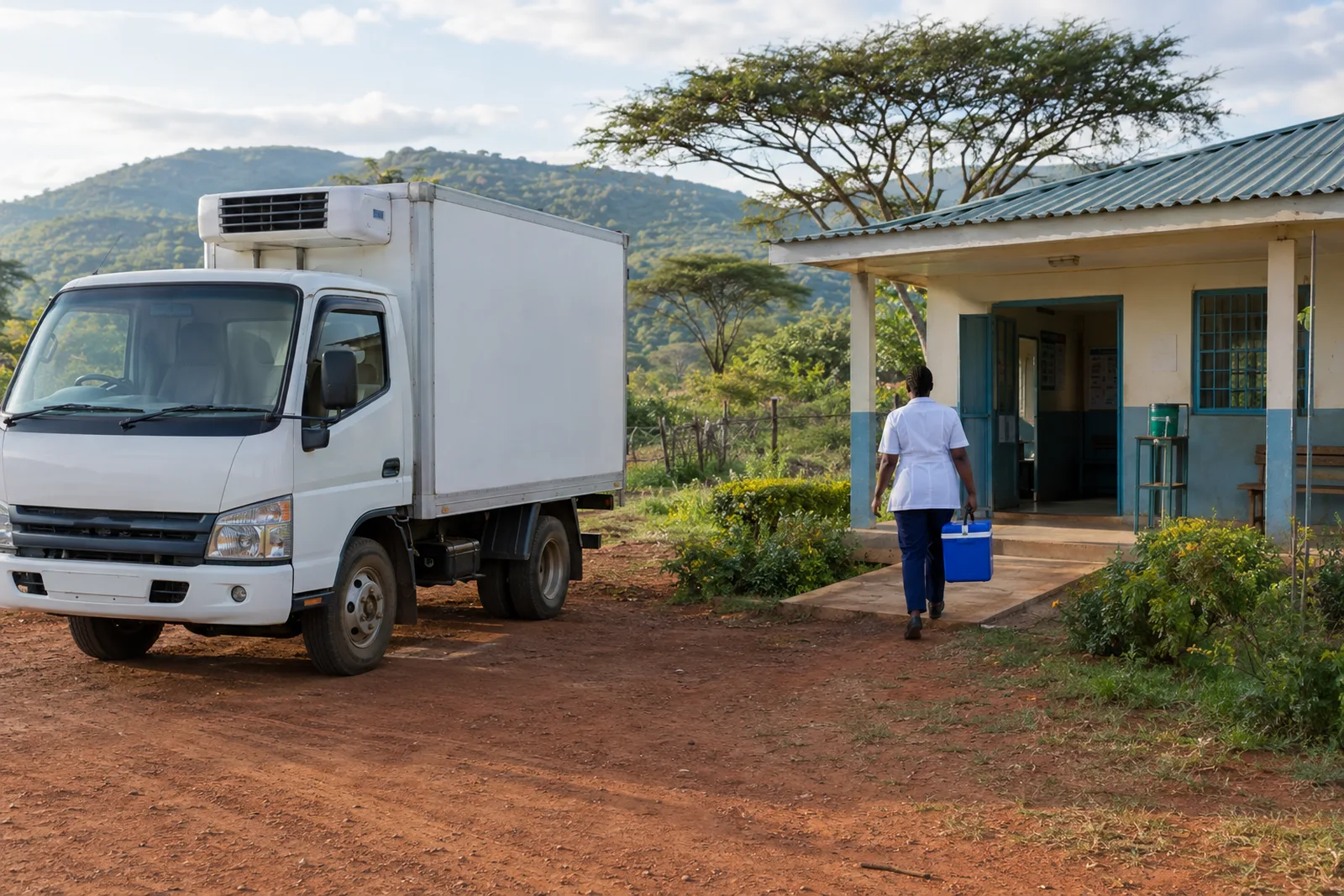
Kenya’s state postal service has a new job: carrying medicines that must be kept cold. On 2 November the Communications Authority of Kenya (CA) launched the Post4Health project, which gives the Postal Corporation of Kenya (PCK, known as Posta) a fleet of temperature-controlled trucks to deliver health products to underserved communities.
According to The Star, the first phase is six refrigerated trucks worth about Sh64.93 million. The Universal Postal Union (UPU), the United Nations agency for postal services, contributed Sh22 million, and Kenya’s Universal Service Fund (USF), which the CA manages, added Sh42.93 million. Techweez put the cost at roughly KES 10.8 million per truck and said the vehicles are meant for products such as vaccines and insulin.
The project grows out of a partnership Kenya signed with the UPU in April 2025, the Kenya News Agency reported at the time. The UPU described Kenya as the first national roll-out of Post4Health in its magazine Union Postale.
Why it matters
Vaccines and many medicines lose their potency if they get too warm. Information and Communications Cabinet Secretary William Kabogo said at the launch that the cold chain often breaks on the final stretch, between a regional store and the clinic, Techweez reported. Posta already has a national network: the Kiambu Observer reported that it runs more than 600 postal outlets, and that the trucks will help move supplies from the Kenya Medical Supplies Authority (KEMSA) to health facilities.
It also matters for the post office itself. Posta handled 577,694 domestic letters in the April to June 2026 quarter, down 70.2 per cent on a year earlier, The Star reported, citing CA data. Over the same quarter, private couriers moved 14.4 million parcels. In GGND’s view, turning an under-used public network into health infrastructure is a practical way to keep both the network and the service alive.
The Post is not disappearing; it is evolving.
David Mugonyi, Director General, Communications Authority of Kenya
The wider picture
Mugonyi anticipated the obvious question. “Many people will be wondering why we are having to buy trucks for Postal Corporation of Kenya. Why can’t they buy them themselves? We have an obligation as a regulator, and through the guidance of the Universal Postal Union, to assist on one thing called last mile delivery,” he said, the Kiambu Observer reported.
Post4Health is part of a wider push. Techweez reported that KES 3.1 billion of the Universal Service Fund is going into post office modernisation, with the aim of putting a postal outlet within 22 kilometres of 99 per cent of Kenyans, down from 30 kilometres. The Star reported that RFID tracking is now in use in 30 post offices. Posta has also been reclassified as a Government-Owned Enterprise, and new Postal and Courier Services Regulations are under review, according to Techweez.
Postmaster General John Tanui set out how the project should be judged. “The success of the Post for Health project will be measured by reliable service delivery, effective cold chain management and continued collaboration with healthcare stakeholders,” he said, according to the Kiambu Observer.
Could it work elsewhere?
Many countries have a struggling postal service and a health system that finds the last mile hard. The UPU’s Post4Health programme is designed to link the two, and Kenya is its first national test. In GGND’s view, the model depends less on the trucks than on the planning around them: agreed routes, reliable temperature monitoring and contracts with the health bodies that pay for deliveries. If Kenya can show those working, the approach could be copied by other postal operators across Africa.
What remains unresolved
- How big is the fleet? The Star and Techweez reported six refrigerated trucks. The Kiambu Observer reported 11 temperature-controlled vehicles worth about Sh100 million, including support from the Government of Japan, and Ghetto Radio reported 11 vehicles, six of them refrigerated. The figures have not been reconciled publicly.
- Will it pay? Techweez noted that sustainability will depend on commercial discipline, fixed route schedules and agreements with county health departments. Posta’s parcel volumes fell 33.2 per cent in 2025/26, The Star reported.
- Who is served first? No public list of routes, counties or clinics had been published at the launch.
- Proof of quality. There is no public information yet on how temperatures will be logged or independently checked during deliveries.
What happens next
The trucks are now with Posta, and the CA’s wider Universal Service Fund work includes new post offices in underserved counties, Techweez reported. The real test will be whether the vehicles run on regular schedules and whether clinics report fewer spoiled vaccines and fewer stock-outs. GGND will watch for the first published delivery figures.
Sources
- Communications Authority of Kenya Post4Health Project Launched to Strengthen Delivery of Essential Health Products to Underserved Communities (2 November 2026)
- The Star (Kenya) Posta turns to medical deliveries in cold-chain trucks to stay afloat (2 November 2026)
- Techweez CA launches Post4Health to turn struggling post office into a cold-chain medical delivery arm (2 November 2026)
- Kiambu Observer Posta Kenya unveils Sh100m cold-chain fleet in healthcare logistics push (November 2026)
- Ghetto Radio Postal Corporation of Kenya shifts focus to cold-chain logistics (November 2026)
- Kenya News Agency Kenya signs partnership with UPU on Post4Health project (April 2025)
- Universal Postal Union Union Postale, Summer 2025
Analysis and context are by The GGND Team. Where we draw our own conclusions, we say so. To report an error, contact us.