What happened
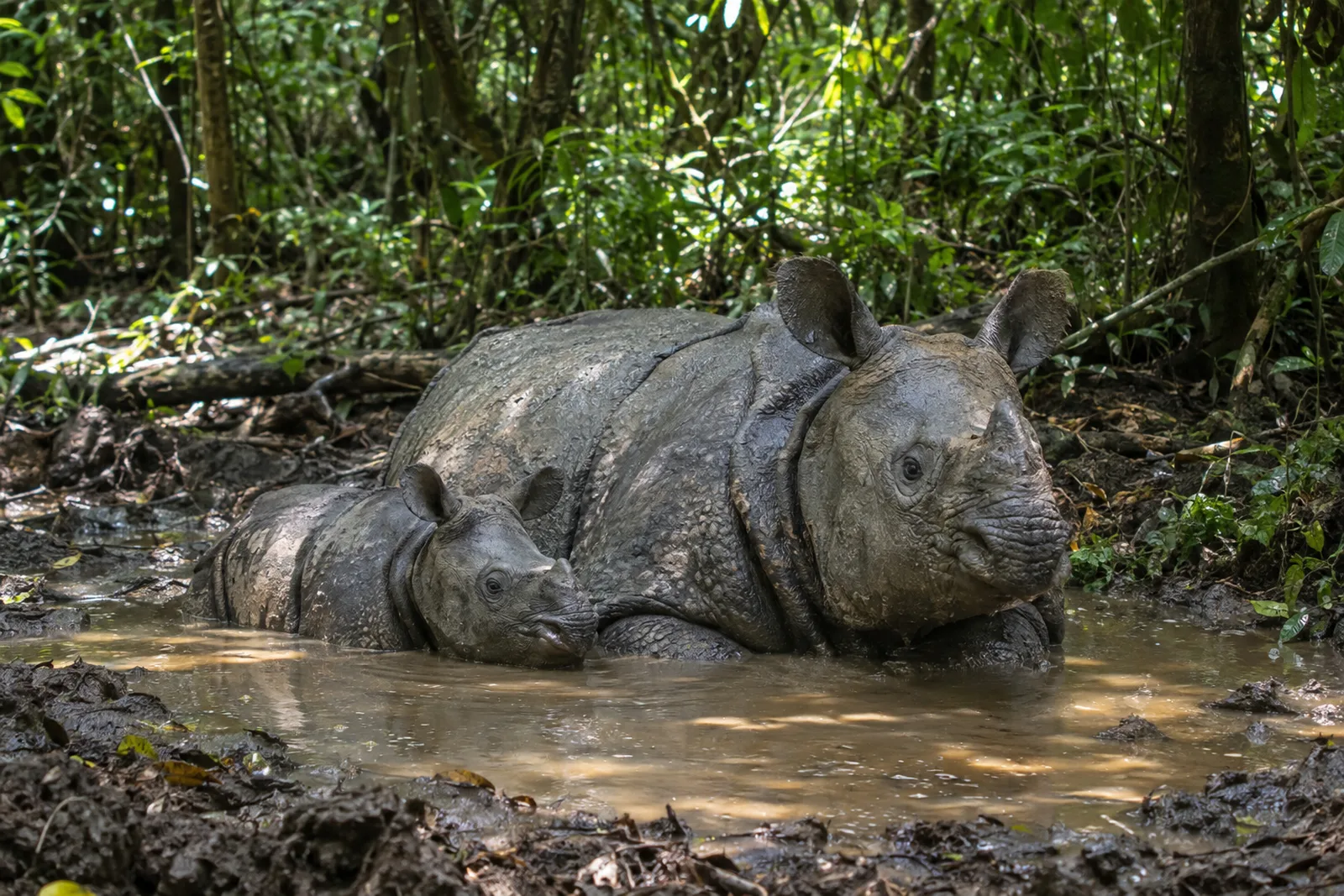
A new Javan rhino calf has been filmed in Ujung Kulon National Park in Indonesia. In a press release dated 2 November, the Ministry of Forestry said a camera trap recorded the calf at 21:35 local time on 10 October, wallowing in mud with its mother, a female called Desy. Officials estimate the calf was one to two months old.
It is Desy’s fifth recorded calf, after Arjuna in 2013, Arum in 2015, Hawa in 2018 and Syauki in 2024, according to the ministry. The father is strongly suspected to be a male called Musofa, which would make this Desy’s third calf with him. The news was also reported by Koran Jakarta on 3 November.
“Alhamdulillah, this is a blessing and a great source of hope for the conservation of the Javan rhinoceros, the rarest species in the world, found only in Indonesia,” said Mahfudz, Acting Director General of KSDAE, the ministry’s conservation directorate.
Why it matters
There are very few Javan rhinos left, and all of them live in this one park. A 2025 report by the International Union for Conservation of Nature found the population had fallen from 76 to about 50, after up to 26 animals were poached between 2019 and 2023, most of them males, Mongabay reported.
For a species this small, each calf that survives is a real gain. A healthy, experienced mother improves the odds. Park head Ardi Andono said in the ministry release that his team would keep monitoring the area closely to keep mother and calf safe without disturbing them. The ministry said the area is patrolled by the park’s special protection unit (UKP).
Desy herself has been observed in excellent condition and is experienced in caring for her offspring.
Ardi Andono, Head of Ujung Kulon National Park
The wider picture
The birth comes a year after a painful setback. In November 2025 Musofa, the suspected father, became the first Javan rhino ever moved under Indonesia’s conservation programme. He was taken to the Javan Rhino Study and Conservation Area (JRSCA), a protected breeding area inside the park, and died days later, Mongabay reported. A necropsy blamed a long-standing parasitic infection, though some experts questioned how the move and monitoring were handled. In GGND’s view, if Musofa is confirmed as the father, the calf carries genes from a male the population has already lost.
Genetics is the bigger worry. Research by IPB University shows all remaining Javan rhinos come from just two genetic lines, one of them already highly inbred, Mongabay reported. The ministry said it wants to strengthen protection, including habitat work through the JRSCA.
Could it work elsewhere?
Ujung Kulon’s approach, with intensive camera-trap monitoring, ranger patrols and a managed breeding area, is the standard toolkit for very small populations. Its weakness is that there is nowhere else for Javan rhinos to go yet. The park sits in the shadow of the Anak Krakatau volcano and is vulnerable to tsunamis, Mongabay noted, so one disaster could hit the entire species. Conservationists have long argued for a second population elsewhere. In GGND’s view, every healthy calf makes that future option more realistic.
What remains unresolved
- Sex and survival. The calf’s sex has not been announced, and young calves are vulnerable in their first years.
- Trust in the numbers. Population counts have been questioned before. In 2025 Mongabay reported on a poaching scandal and doubts raised about official data.
- Poaching. The losses of 2019 to 2023 showed that patrols can fail. The announcement does not set out how protection has changed since.
- Next steps on breeding. After Musofa’s death, it is unclear when or how further moves into the JRSCA will be attempted.
What happens next
Park teams will keep watching Desy and her calf with camera traps and patrols, the ministry said. The next population count will show whether births like this one are starting to outpace losses. For now, one more young rhino in the forest of Ujung Kulon is genuinely good news for a species with almost no margin left.
Sources
- Ministry of Forestry, Republic of Indonesia (Ujung Kulon National Park) Press release SP.661/HKLN/11/2026: A Javan rhino calf born in Ujung Kulon (2 November 2026)
- Kementerian Kehutanan (Indonesian version) Siaran pers: anak badak jawa lahir di Ujung Kulon (2 November 2026)
- Koran Jakarta Dirjen KSDAE: Seekor Anak Badak Jawa Lahir di Ujung Kulon (3 November 2026)
- Mongabay Indonesia’s 1st Javan rhino translocation ends in death, in conservation setback (16 December 2025)
- Mongabay Javan rhino numbers plunge, Sumatran rhinos remain near extinction: report (August 2025)
- Mongabay Indonesia convicts trafficking accomplice in a Javan rhino poaching scandal (May 2025)
Analysis and context are by The GGND Team. Where we draw our own conclusions, we say so. To report an error, contact us.