What happened
India’s estimated death rate from tuberculosis fell by 38 per cent between 2015 and 2025, according to the World Health Organization’s Global Tuberculosis Report 2026, released on 12 November. Over the same period, TB deaths fell by 35 per cent worldwide, WHO said.
In India, the estimated mortality rate dropped from 28 to 18 deaths per 100,000 people, India’s Ministry of Health and Family Welfare said, citing the report. The report also recorded a treatment success rate of 94 per cent among patients with drug-susceptible TB. The ministry said 96 per cent of the TB programme’s funding requirements are now met from domestic resources.
The figures draw on several sources, including the Registrar General of India’s Sample Registration System, community verbal autopsies and programme data from the government’s Ni-kshay platform, the ministry said.
Why it matters
TB is the world’s leading cause of death from a single infectious agent. In 2025 an estimated 10.6 million people developed the disease and 1.1 million died, according to WHO. India carries the largest share: 25 per cent of all cases worldwide, ahead of Indonesia, the Philippines and China, the report says, as quoted by The New Indian Express. Progress in India therefore moves the global numbers.
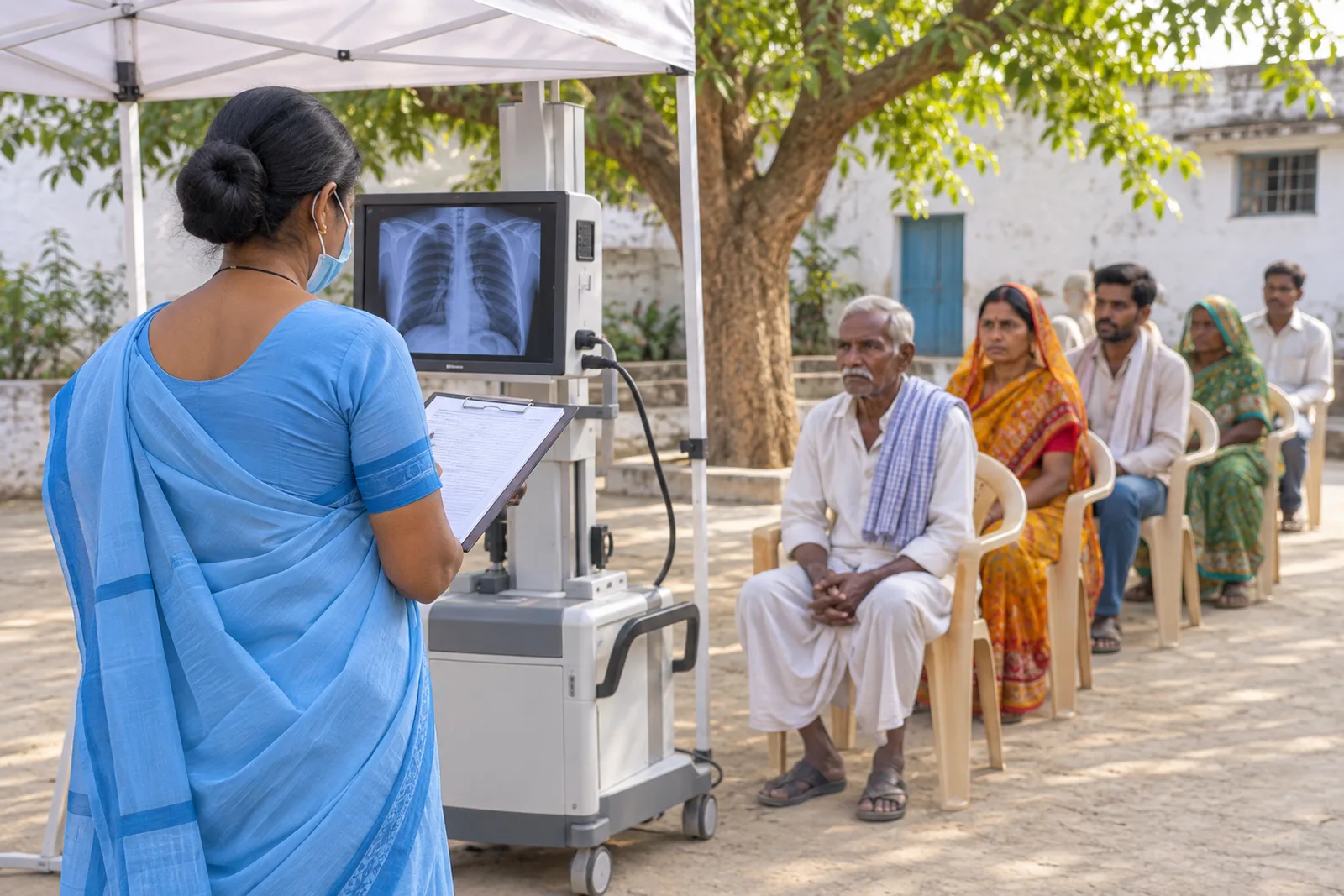
The ministry credits intensified case-finding. Under the TB Mukt Bharat Abhiyaan campaign, launched in December 2024, more than 25 crore people (250 million) were brought under TB screening by 8 November 2026. More than 11 crore chest X-rays and over 3 crore rapid molecular tests were carried out, and 48.64 lakh new TB cases were found, including 14.97 lakh people with no symptoms, the ministry said. Finding people before they feel ill means they can be treated sooner and are less likely to pass the infection on.
Portable AI-enabled X-ray machines, rapid tests and nutritional support also play a part. Through the Ni-kshay Poshan Yojana scheme, eligible patients receive money towards food during treatment, and the Ni-kshay Mitra initiative asks individuals and organisations to support patients directly. TB screening is also being combined with checks for diabetes and undernutrition, which raise the risk of falling ill. At village level, 67,933 panchayats, or local councils, were declared TB-free in 2025, the ministry said.
The continued decline in TB cases and deaths is very encouraging, especially given the challenges many countries have faced from funding cuts.
Dr Tedros Adhanom Ghebreyesus, WHO Director-General
The wider picture
Globally, the report is a mix of good and bad news. Treatment has saved an estimated 86 million lives since 2000, and the world has reached the first mortality milestone of WHO’s End TB Strategy, “although five years later than planned”, WHO said. Domestic funding for TB rose by 14 per cent to US$5.6 billion between 2024 and 2025, partly offsetting a similar fall in international funding.
But new cases are falling slowly. Since 2015 the global TB incidence rate has dropped by only 14 per cent, far short of the 50 per cent milestone for 2025. Of the 10.6 million people who fell ill in 2025, an estimated 2.2 million were not diagnosed or not reported. Only 42 per cent of people with rifampicin-resistant TB received treatment, according to WHO.
India also remains one of four countries that together accounted for more than half of global multidrug-resistant TB cases in 2025, though both WHO and the ministry say incidence of this form is gradually declining, Business Standard reported.
Could it work elsewhere?
In GGND’s view, India’s approach offers lessons for other high-burden countries, especially active screening of people without symptoms and paying for patients’ food during treatment. Both are labour-intensive and depend on a large public health workforce. India’s shift to funding its programme almost entirely from its own budget is also notable at a time when international aid for health is shrinking, a trend WHO says other countries are following.
What remains unresolved
- Revised estimates. WHO says India’s TB incidence estimates are under review. A national prevalence survey from 2025 has been shared with WHO, and updated trends are expected in early 2027, Business Standard reported.
- Cases, not just deaths. Fewer people are dying, but India still has a quarter of the world’s cases. Ending TB requires far fewer people falling ill.
- Drug resistance. India is among the countries with the largest share of multidrug-resistant TB, which is harder and costlier to treat.
- Official framing. Much of the detail on screening comes from the government’s own statement, which has not been independently assessed.
What happens next
WHO will publish an updated country profile for India once it has reviewed the new survey and surveillance data with India’s Central TB Division and the Indian Council of Medical Research. The government says it will continue intensified screening, preventive treatment and nutritional support. GGND will report on the revised estimates when they appear in 2027.
Sources
- World Health Organization Amid challenges, countries increase domestic investment to protect progress against tuberculosis (news release, 12 November 2026)
- Press Information Bureau, Government of India India makes major strides towards TB elimination: 38% decline in TB mortality, 94% treatment success rate (12 November 2026)
- Business Standard India records 38% drop in TB deaths since 2015, outpaces global rate: WHO (13 November 2026)
- The New Indian Express India records 38 per cent drop in TB mortality since 2015, remains among top eight for cases (12 November 2026)
Analysis and context are by The GGND Team. Where we draw our own conclusions, we say so. To report an error, contact us.