What happened
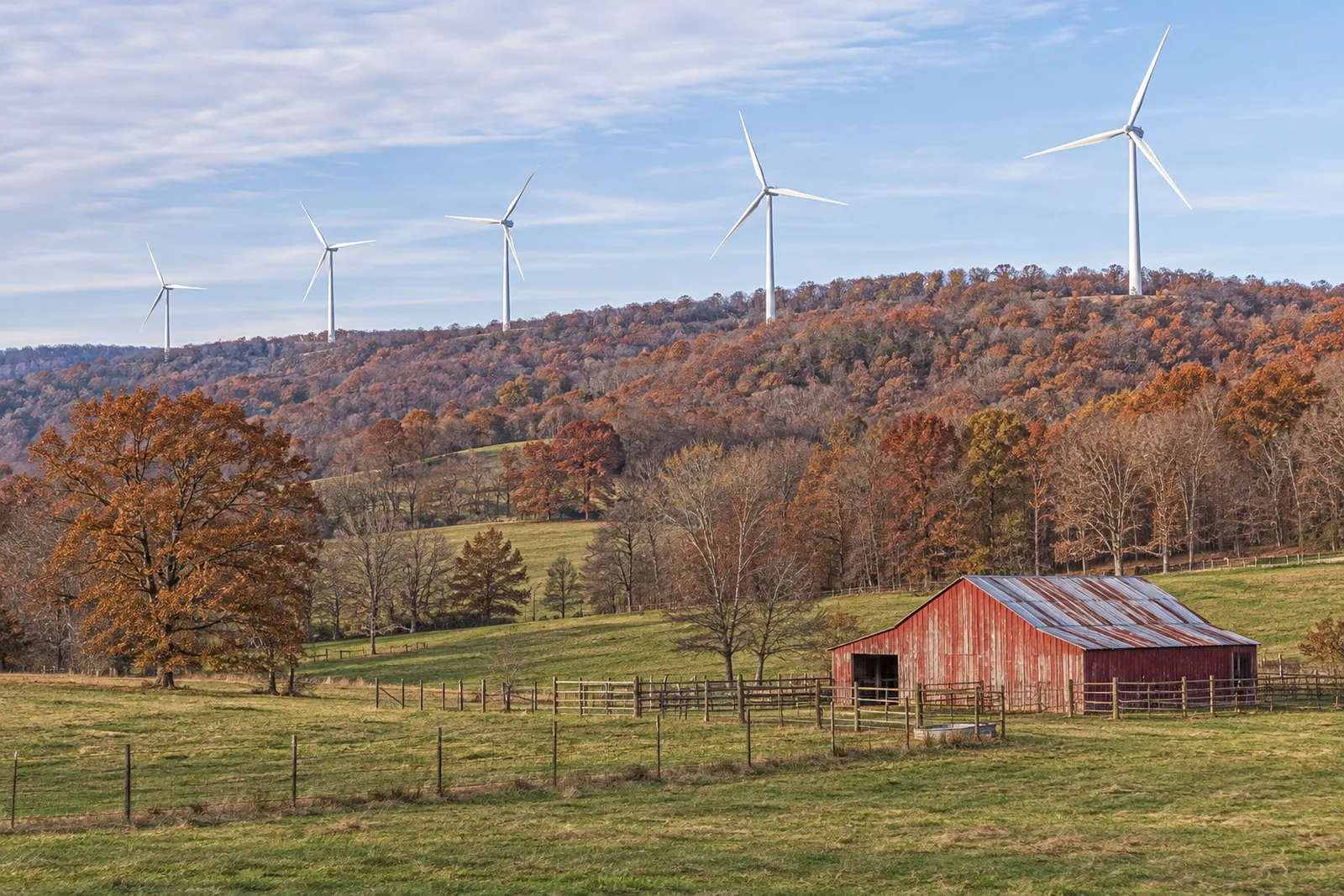
Arkansas’s largest wind farm is now producing electricity. Scout Clean Energy said on 5 November that its 183-megawatt Nimbus Wind Farm in Carroll County, north-west Arkansas, is commercially operational after two years of construction, generating enough electricity for more than 40,000 homes a year, according to the company’s press release.
The project has 30 turbines placed along ridgetops. Twenty-six of them reach 644 feet at the tip of the blade and four reach 590 feet, Talk Business & Politics reported, putting the cost at about US$400 million. Scout worked with more than 50 landowners and carried out geotechnical studies to site the turbines. MasTec was the main contractor, and construction began in late 2024.
Microsoft has signed a power purchase agreement for the project’s output. Scout, which is owned by Brookfield, will run the farm with an on-site team and remote monitoring from its 24-hour operations centre in Boulder, Colorado. The company says it has developed about 2,000 megawatts of renewable projects in the United States that are operating or under construction, and owns and operates 1,200 megawatts of them.
Why it matters
Arkansas has little wind power. Nimbus is only the state’s second operational utility-scale wind project, after Crossover Wind in Cross County began delivering power in November 2025, according to the Southeastern Wind Coalition, a non-profit that promotes wind energy. In 2025 natural gas produced 38 per cent of the state’s electricity and coal 29 per cent, the coalition said.
The state also relies on electricity from elsewhere. “Arkansas uses nearly 60% more power than it produces, importing a large share of its power supply from out of state,” said Madelyn Smith, senior programme manager at the coalition. Because wind turbines burn no fuel, the coalition argues, they can help shield customers from swings in gas prices.
The money matters locally too. Scout says the project will pay about US$31 million in property taxes to Carroll County over its operating life. The coalition estimates around US$15 million in lease payments to landowners over 30 years, and says the taxes will help fund schools and public services.
Each megawatt-hour that Nimbus Wind generates is more homegrown power that Arkansas doesn’t have to buy from somewhere else.
Madelyn Smith, Southeastern Wind Coalition
The wider picture
Nimbus was one of the first projects Scout worked on when the company was founded. “Nimbus is a project close to our heart,” said Michael Rucker, Scout’s chief executive, in the release. The coalition says the project had been under development since 2016.
Height is part of the story. The coalition says Nimbus uses some of the tallest turbines in the United States, with tips reaching nearly 700 feet, to capture more energy from the region’s available wind. It sees the project as part of a wider rise in wind development across the south-east as states look for ways to meet growing electricity demand.
Not everyone welcomed it. Several groups, including Concerned Citizens of the Ozarks, opposed the project over its effect on the natural beauty, views and water aquifers of the Ozarks, Talk Business & Politics reported. A petition urging officials to stop further commercial and industrial projects on the region’s ridges gathered 1,549 signatures.
Could it work elsewhere?
In GGND’s view, the model is clear: a large technology company buys the power, local landowners lease the land and the county gains a long-term tax base. It could be repeated in other states with modest wind resources now that taller turbines are available. But it works best where developers earn local trust early, because ridgetop sites are highly visible and opposition can delay projects for years.
What remains unresolved
- Local jobs. Figures differ. Scout says more than 280 people worked on construction and at least five full-time staff will run the farm; the coalition says about 200 construction jobs and eight permanent posts; Talk Business reported up to seven full-time workers in the coming months.
- Who benefits from the power. The output is contracted to Microsoft. How much it changes what Arkansas households pay for electricity is not clear.
- Landscape and water. Opponents’ concerns about views and aquifers have not gone away, and the state’s debate about ridgetop development continues.
- Wildlife. The announcements reviewed by GGND say nothing about effects on birds and bats, which monitoring will need to show.
What happens next
Scout expects the farm to run for about 30 years. The company says it is developing more than 22,000 megawatts of wind, solar and storage projects across 23 states. GGND will watch whether Arkansas approves further wind projects, and how the debate over the Ozark ridges develops.
Sources
- Scout Clean Energy (GlobeNewswire) Scout Clean Energy’s Nimbus Wind Farm achieves commercial operations, supporting Microsoft’s clean energy portfolio (press release, 5 November 2026)
- Talk Business & Politics Scout Clean Energy begins operating $400 million wind farm (11 November 2026)
- Southeastern Wind Coalition Arkansas’ largest wind project, Nimbus Wind, begins delivering power (press release, 11 November 2026)
Analysis and context are by The GGND Team. Where we draw our own conclusions, we say so. To report an error, contact us.