What happened
The World Health Organization has validated Guyana’s elimination of mother-to-child transmission of HIV and syphilis as public health problems, the country’s Health Ministry announced on Thursday 19 November 2026. In a letter dated 16 November, WHO Director-General Dr Tedros Adhanom Ghebreyesus told Health Minister Dr Frank Anthony that Guyana had met the international requirements, following a review by WHO’s Global Validation Advisory Committee on 5 November, Demerara Waves reported, publishing the ministry’s statement.
“I commend the Government of Guyana for its sustained commitment to a strong EMTCT programme that safeguards the health of pregnant women and their infants,” Dr Tedros wrote. The validation covers 2022–2025, and WHO will review Guyana again in 2030, covering 2026–2029, the Jamaica Observer reported via the Caribbean Media Corporation.
Why it matters
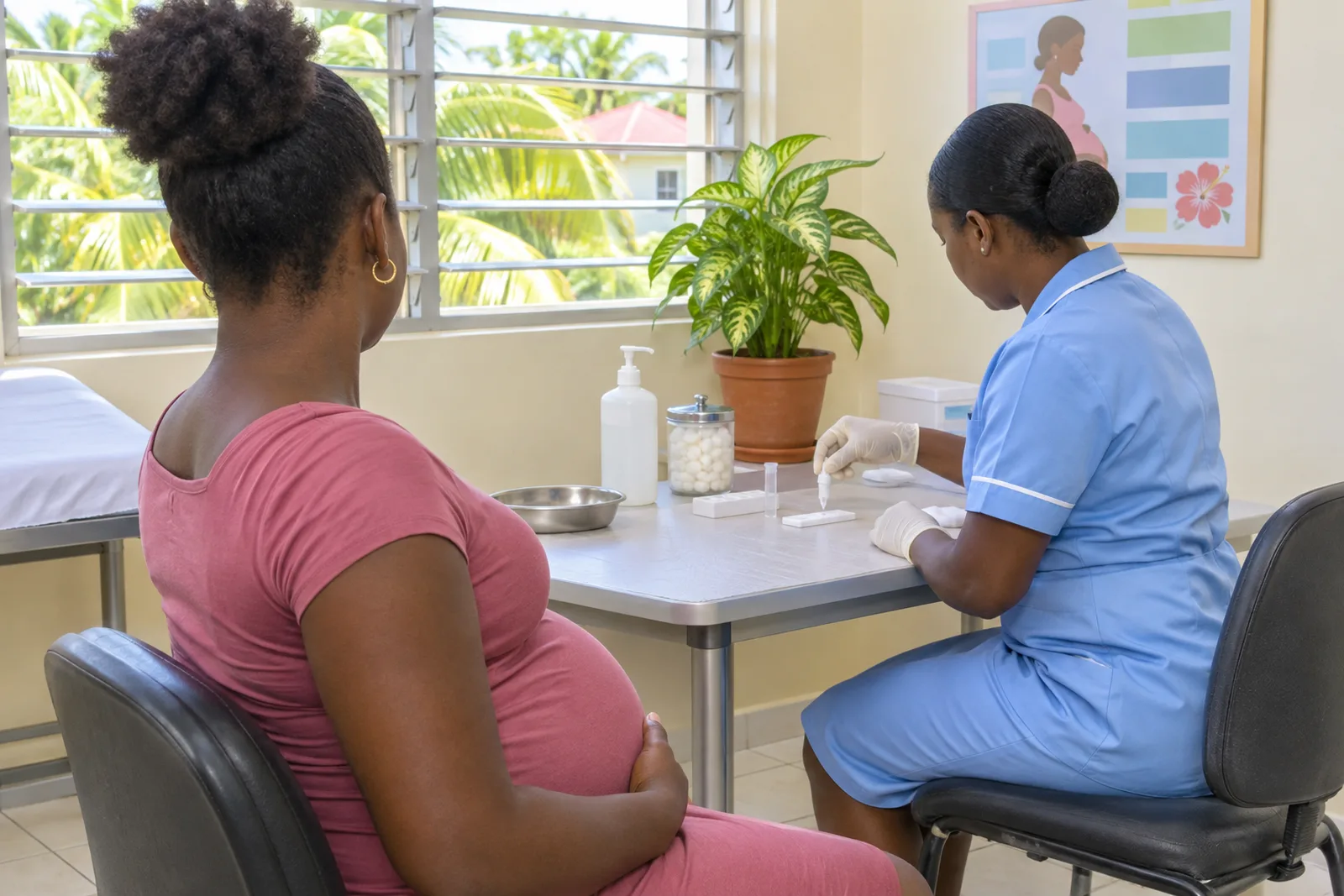
When HIV or syphilis passes from mother to baby, the result can be lifelong infection, stillbirth or the death of a newborn. These outcomes are largely preventable through early screening, timely treatment and good antenatal care. Validation means Guyana has shown, to international standards, that it has pushed transmission below the levels WHO sets for elimination.
The check was thorough. The Pan American Health Organization (PAHO) coordinated a virtual review from 1 to 5 June 2026 and an in-country mission from 7 to 13 June. A regional team led by Dr Jodie Dionne examined programmes, health services, laboratories, data, community engagement, and human rights and gender considerations, before presenting its findings to Guyana’s National Validation Team on 12 June.
Guyana has been validated as having achieved the elimination of mother-to-child transmission (EMTCT) of HIV and syphilis for the period 2022-2025.
Dr Tedros Adhanom Ghebreyesus, WHO Director-General
The wider picture
Guyana joins a small group of countries in Latin America and the Caribbean with this status. PAHO lists Cuba (2015), six Caribbean countries and territories in 2017, and Belize, Jamaica and Saint Vincent and the Grenadines in 2024 among those validated for the dual elimination. The achievement also feeds PAHO’s Disease Elimination Initiative, which aims to eliminate more than 30 communicable diseases and related conditions as public health problems by 2030.
Dr Anthony credited doctors, nurses, midwives, laboratory staff, public health officers and community health workers. “This is more than an international certificate. It represents lives protected, infections prevented, and children given a healthier start in life,” he said. The ministry said the government will now work towards triple elimination, adding hepatitis B.
Not everyone liked the framing. The ministry’s statement credited government investment and President Irfaan Ali’s leadership. A CaribDirect commentary called the news the best public health story Guyana has had in years, but argued that results like this rest on decades of work by midwives, nurses and outreach workers, not four years of hospital-building.
Could it work elsewhere?
The method is not new or costly: test every pregnant woman early, treat quickly, run laboratories that return results on time and follow up the babies. In GGND’s view, Guyana’s case is useful because it shows this can be done in a country with large hinterland and riverine areas, not only on small islands.
What remains unresolved
- Not eradication. The ministry itself stressed that HIV and syphilis still circulate in Guyana. Validation covers transmission from mother to child.
- The figures. The announcement did not publish the underlying data, such as testing coverage or the number of infant infections, region by region.
- Keeping it. Validation must be renewed. That depends on staff staying, test kits not running out and women in remote areas reaching a clinic early in pregnancy, CaribDirect noted.
What happens next
Guyana will be reviewed again in 2030 for 2026–2029, and is working towards adding hepatitis B. GGND will look for published data behind the validation and for progress on triple elimination.
Sources
- Demerara Waves (Ministry of Health statement) WHO validates Guyana’s elimination of HIV mother-to-child transmission, syphilis (19 November 2026)
- Jamaica Observer (CMC) Guyana validated for eliminating mother-to-child HIV, syphilis transmission (19 November 2026)
- PAHO Elimination of mother-to-child transmission of HIV, syphilis, hepatitis B and Chagas (2026)
- CaribDirect Guyana has stopped mothers passing HIV to their babies (19 November 2026)
Analysis and context are by The GGND Team. Where we draw our own conclusions, we say so. To report an error, contact us.