What happened
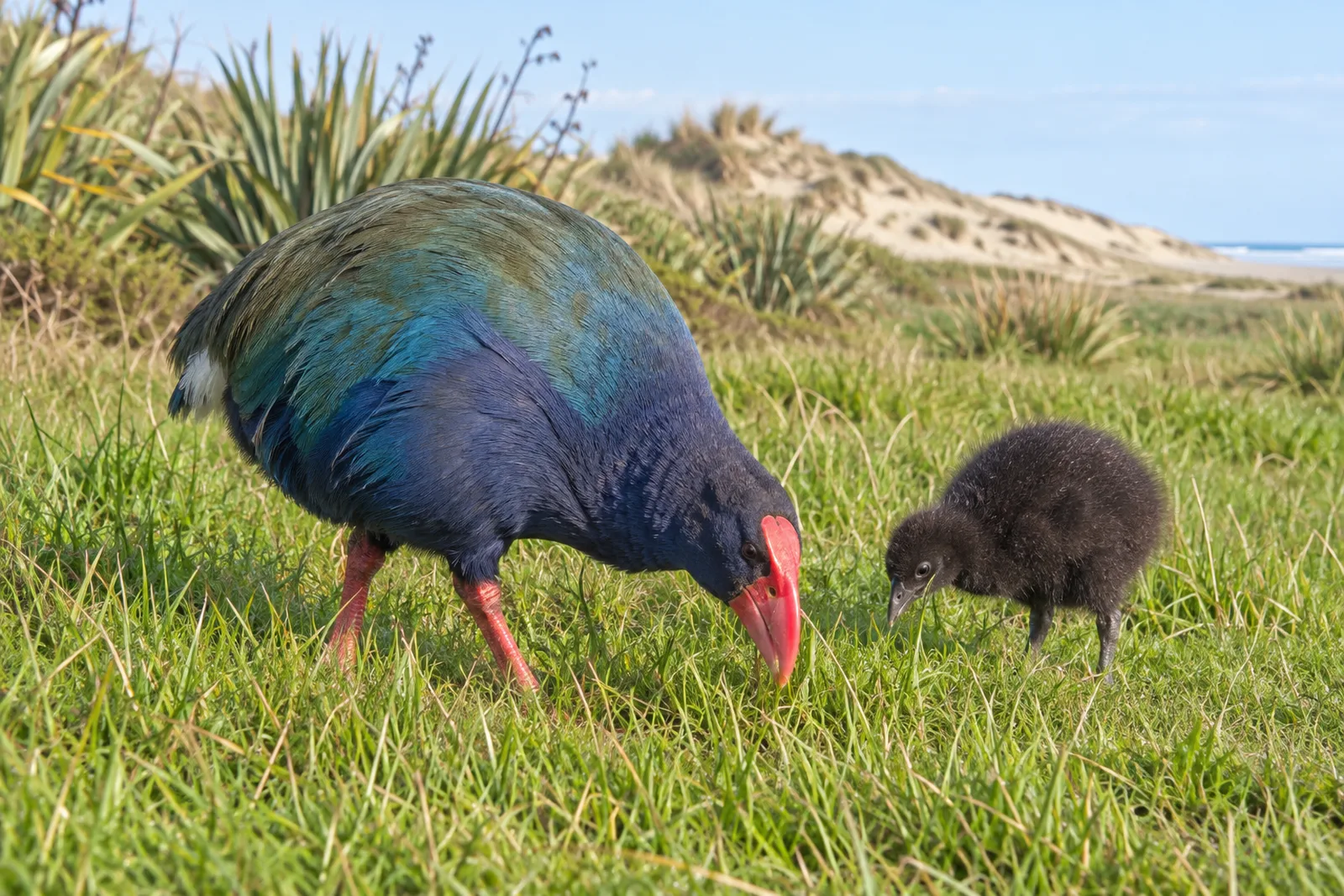
A takahē chick has hatched at Pūponga, on Onetahua/Farewell Spit at the northern tip of New Zealand’s South Island, the first born there since the birds returned this year, the Department of Conservation (DOC) announced on 18 November 2026. The chick hatched in early October.
Its parents were among eight takahē moved from Gouland Downs, on the Heaphy Track, and released on 27 May 2026. They were not an established pair when they arrived. They found each other and formed a new pair, DOC said.
“It’s pretty special. There’s been a huge amount of work put into getting this place ready for takahē, so to see two birds pair up here and hatch a chick just a few months after arriving is fantastic,” said Corey Mosen of Pest Free Onetahua. “We’re all super excited, but we know it’s early days.”
Why it matters
Takahē are the world’s largest living rail, a heavy, flightless bird. They were thought to be extinct for nearly 50 years until they were rediscovered in the Murchison Mountains in 1948, DOC said in May. There are just over 500 today and the species is classed as Nationally Vulnerable.
The birds had been absent from this part of Golden Bay for about 100 years, RNZ reported. Their return depends on a $400,000, four-kilometre predator fence that runs from the Tasman Sea to Golden Bay and shelters about 2,000 hectares, including 50 kilometres of coastline, from rats, stoats and cats. The fence protects part of the wider Onetahua Restoration project, which covers about 12,000 hectares.
For Manawhenua ki Mohua, the local iwi partner, the chick has cultural as well as ecological meaning. “Its presence restores the wairua and mauri of the taonga species to Onetahua,” said chair Margie Little, according to DOC.
It’s pretty special. There’s been a huge amount of work put into getting this place ready for takahē.
Corey Mosen, Pest Free Onetahua
The wider picture
The project is a partnership between Manawhenua ki Mohua, HealthPost Nature Trust, Pest Free Onetahua and DOC. Lucy Butler of HealthPost Nature Trust said a public crowdfund paid to finish the fence, and volunteers spent hundreds of hours getting the site ready, including changing water troughs so they are safe for the birds, DOC said. Stoat control is underway inside the fence and feral cat control is planned.
The birds’ previous home shows why caution is needed. Takahē were first released at Gouland Downs in 2018, but that trial was wound down because food was poorer than expected, adult survival was lower and the birds struggled to breed, DOC said. Farewell Spit is described as a “trial sanctuary site”, alongside new trial sites in the Greenstone and Rees valleys.
In GGND’s view, a chick within months of release is an early sign that the habitat suits the birds, but one chick is not yet a population.
Could it work elsewhere?
Farewell Spit uses a narrow neck of land, a single fence and community money to create a large safe area. In GGND’s view, that model, a short fence across a peninsula with local iwi and volunteers sharing the work, could suit other coastal sites in New Zealand and elsewhere where introduced predators are the main threat.
What remains unresolved
- A vulnerable chick. “The young chick is still in a vulnerable phase, so it’s important people do what they can to help,” said DOC’s Golden Bay operations manager Ross Trotter. With the busy summer season starting, DOC is asking visitors to enjoy any takahē sightings from a distance so the birds are not disturbed.
- Cats. Feral cat control is planned but has not yet begun, according to DOC.
- A trial, not a home yet. The site is officially a trial. Whether food and conditions can support a breeding population over years is still unknown, as Gouland Downs showed.
- Fence upkeep. The fence is “predator-resistant”, not a guarantee. Its long-term maintenance costs and funding were not set out in the reports we read.
What happens next
Ranger Shane Ricketts, volunteers and DOC will keep watching the family and the other released birds, and continue predator control. If the trial goes well, more takahē could be moved to the site. GGND will report on whether more pairs breed next season.
Sources
- Department of Conservation New takahē chick a boost for conservation at Onetahua/Farewell Spit (18 November 2026)
- Department of Conservation Takahē move into Golden Bay (28 May 2026)
- RNZ Takahē return to part of Golden Bay after predator-proof fence completed (30 May 2026)
Analysis and context are by The GGND Team. Where we draw our own conclusions, we say so. To report an error, contact us.