What happened
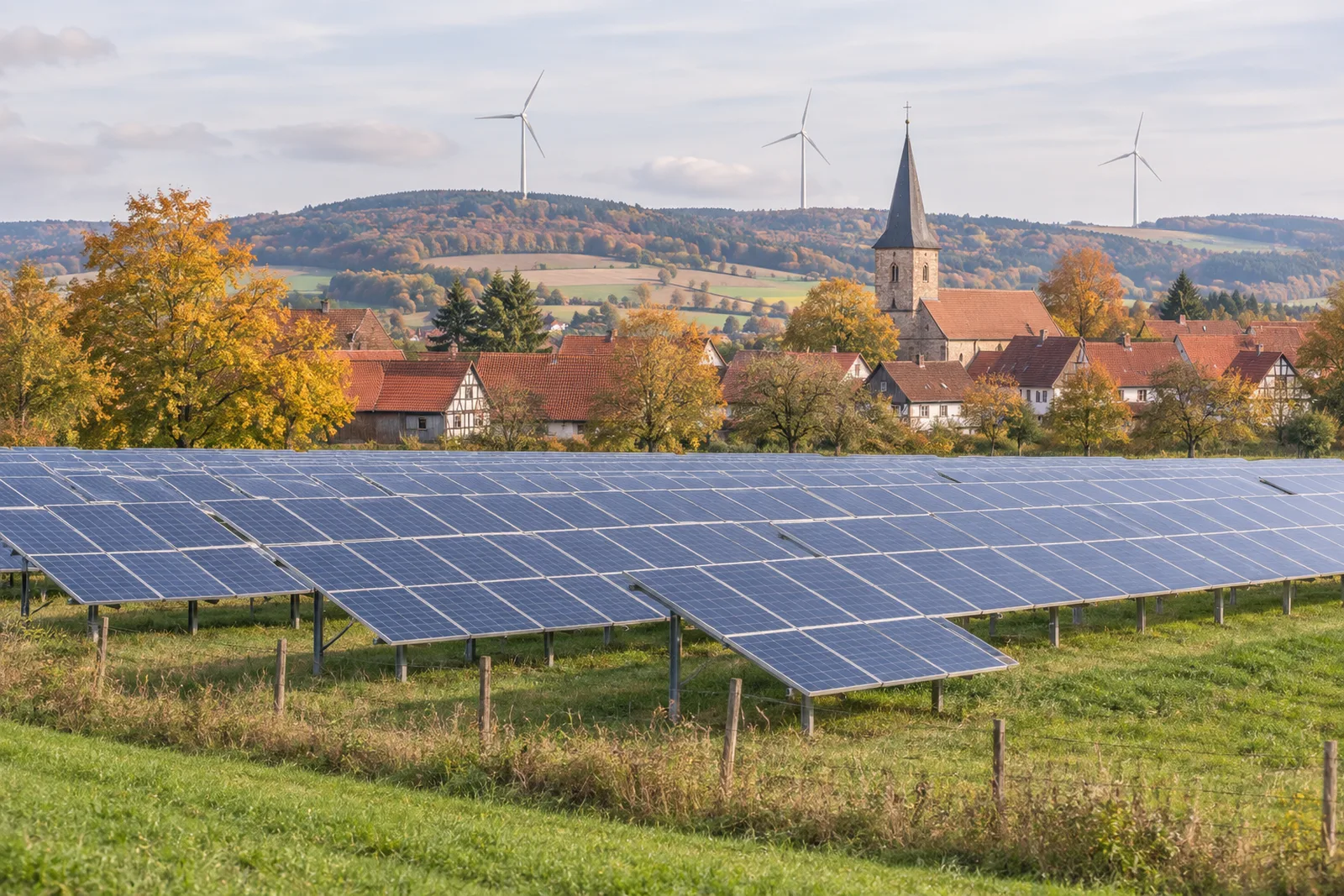
Germany is about to generate more than 100 terawatt-hours (100 billion kilowatt-hours) of solar electricity in a single calendar year for the first time. The German Solar Association, BSW-Solar, said on 14 November that the mark is likely to be reached in the coming days, based on data from the Fraunhofer Institute for Solar Energy Systems’ Energy-Charts, in a press release. Twenty years ago, solar produced just 2.2 TWh in a whole year.
By 27 September, solar output had already reached 90.2 TWh, more than the 90 TWh generated in all of 2025, DW reported, citing BSW-Solar. DW said 100 TWh is almost ten times the electricity a major city like Hamburg uses in a year, and put the record down to an above-average number of sunshine hours and the growing number of solar installations.
Why it matters
Solar has become a mainstay of Germany’s power supply. In the first three quarters of 2026, almost one in four kilowatt-hours generated in Germany, 24.1 per cent of gross electricity generation, came from solar panels, according to BSW-Solar, citing preliminary calculations by the energy industry association BDEW and the research institute ZSW.
Official statistics show the wider shift. In the first half of 2026, renewables supplied 59.1 per cent of the electricity produced and fed into the grid in Germany, up from 58.0 per cent a year earlier, the federal statistics office Destatis reported. Wind was the biggest source at 29.4 per cent, followed by coal at 21.4 per cent and solar at 17.8 per cent. Electricity from conventional sources has almost halved since the first half of 2018.
“Photovoltaics has developed from a niche technology into a cornerstone of our electricity supply. Society as a whole benefits from this: through cheaper electricity, fewer energy imports and significantly lower climate-related damages,” said Carsten Körnig, managing director of BSW-Solar.
Photovoltaics has developed from a niche technology into a cornerstone of our electricity supply.
Carsten Körnig, managing director, German Solar Association (BSW-Solar)
The wider picture
The industry points to large savings. A study by the consultancy Enervis, commissioned by BSW-Solar, found that wholesale power prices in 2025 would have been around 20 per cent higher on average without the solar already installed, cutting electricity costs for consumers and businesses by €15.7 billion. For a typical household, it calculated an indirect saving of almost €100 in 2025, even for people without their own panels. BSW-Solar also estimates that solar avoided around 270 million tonnes of greenhouse gases between 2020 and 2025.
These figures come from the solar industry and its commissioned research, so they should be read as an advocacy case, not an independent audit. The association itself uses the milestone to warn against new barriers. It wants faster grid connections, simple rules for small rooftop systems, no new cost risks for solar parks and action to prevent a gap in support payments at the turn of 2026 to 2027. “Germany has proven that a rapid expansion of solar energy is possible,” Körnig said, calling on the government not to endanger that success.
Germany is part of a global trend. According to the International Energy Agency, quoted by BSW-Solar, about 690 gigawatts of solar capacity was installed worldwide in 2025 alone.
Could it work elsewhere?
In GGND’s view, Germany’s story is encouraging precisely because it is not a sunny country. If solar can supply almost a quarter of electricity at Germany’s latitude, it can do far more in most of the world. What made it possible, a long run of stable support, millions of rooftop systems and a strong grid, can be copied, but it took two decades to build.
What remains unresolved
- Timing. Solar produces most of its power at midday in summer. Germany still needs storage, flexible demand and wind to cover winter evenings. A Fraunhofer IEE analysis cited by BSW-Solar says 20 GW of extra battery flexibility could cut power costs by about €3.9 billion a year.
- Grids. Slow grid connections are already a bottleneck, according to the industry.
- Policy. Reforms to the Renewable Energy Sources Act and grid rules are under way, and the industry fears a gap in support from January 2027.
- Weather. Part of this year’s record is due to unusual sunshine. A duller year would show a smaller rise.
What happens next
BSW-Solar expects the 100 TWh mark to be crossed within days. Final figures for 2026 will be published early next year, and the numbers for the current year may still be revised, the association notes. The bigger question is political: whether the reforms now being negotiated in Berlin speed up or slow down the next phase of solar and battery growth.
Sources
- German Solar Association (BSW-Solar) via presseportal Deutschland steht vor historischem Solarstrom-Rekord: 100 Milliarden Kilowattstunden in Sicht (14 November 2026)
- DW Germany news: Solar power production approaches record high (14 November 2026)
- Destatis (Federal Statistical Office) Stromerzeugung im 1. Halbjahr 2026: 6,5 % mehr Strom aus erneuerbaren Energien (press release 317, 8 September 2026)
Analysis and context are by The GGND Team. Where we draw our own conclusions, we say so. To report an error, contact us.