What happened
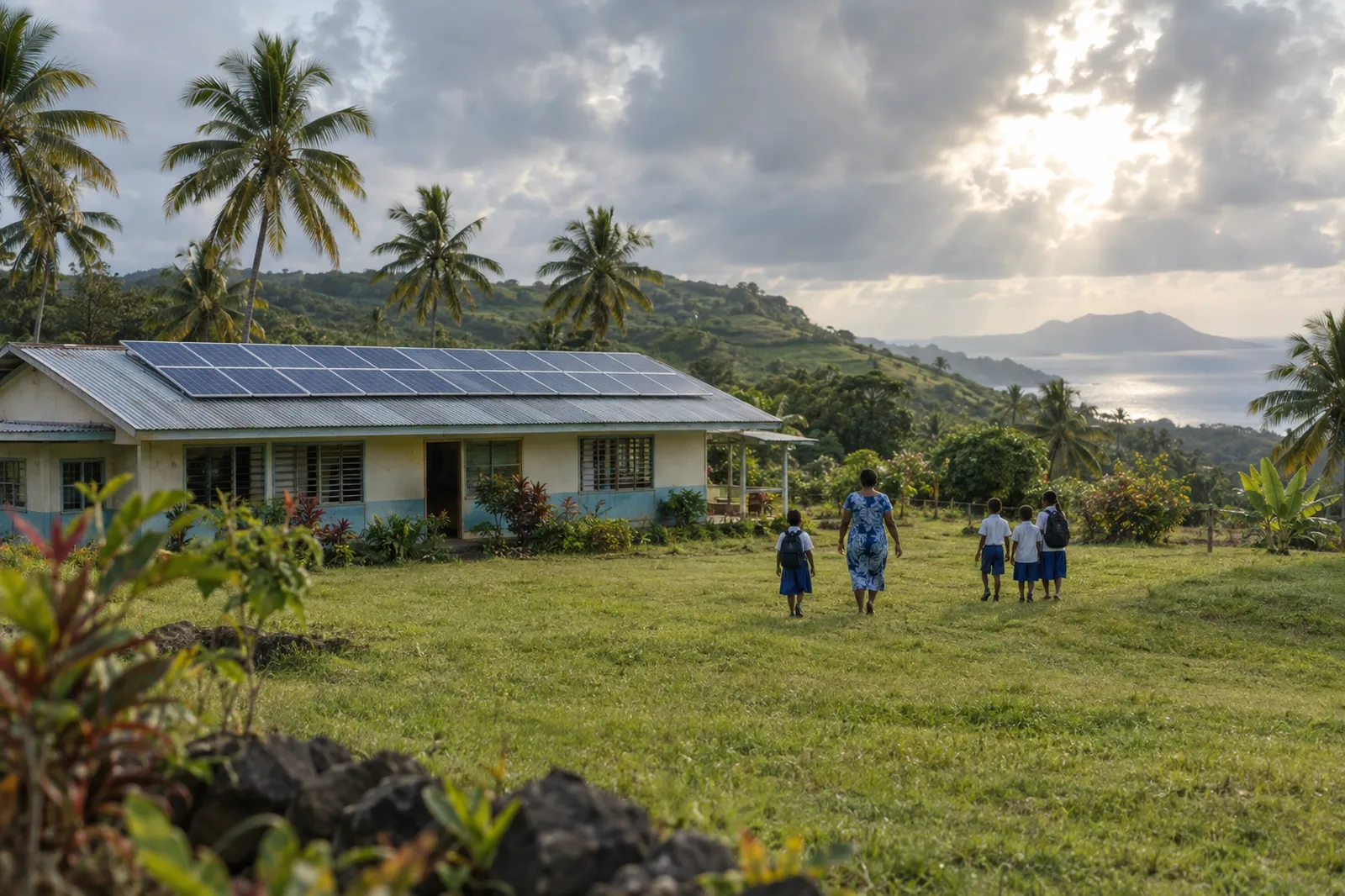
A new round of Australia’s REnew Pacific programme will bring 24-hour solar power to 13 remote schools and their teachers’ homes across Vanua Levu, Viti Levu, Taveuni and the Yasawa Islands. Led by It’s Time Foundation with Fiji’s Ministry of Education, the project installs off-grid solar systems with battery storage at nine new schools and upgrades four older ones. Each school also receives Starlink internet, between four and ten laptops and smart TVs.
The project is expected to benefit more than 1,200 students, around 325 teachers and family members living in 80 school homes, and an estimated 7,500 people in nearby villages. It builds on the foundation’s first REnew Pacific project, which reached more than 30 remote schools.
Why it matters
Many remote Fijian schools run on petrol or diesel generators that they can afford to run for only a few hours a day. Without reliable power, students go without the computers, digital resources and internet access that modern schooling depends on, widening the gap with grid-connected urban schools. Poor living conditions also make remote teaching posts harder to fill.
The savings are real. At Buakonikai Primary School on Rabi Island, where a 2024 pilot installed solar power, the school reported better classroom engagement, more digital learning and fuel savings of more than A$6,000 a year within six months. The money is reinvested in education.
It’s truly a game changer for these communities.
Rob Edwards OAM, founder, It’s Time Foundation
The wider picture
The most revealing detail in the project description is a failure. The combined Yasawa High and Naviti District schools had a solar system that has sat dormant since it failed in 2025 without a maintenance plan. It is one of the four systems now being upgraded. Off-grid solar works, the programme notes, but systems often fail early without good equipment and long-term care.
That is why every school joins The Solar Fund (Fiji), a maintenance model funded partly by the fuel each school no longer buys, which covers upkeep across each system’s 20-year lifespan. The foundation’s systems at Lavena and Bouma schools on Taveuni have already run for 14 and 11 years respectively.
The project also trains people. After what the programme describes as the Pacific’s first all-women solar installation in March 2026, a crew of female students and qualified women technicians will install the system at Waibogi Wainadiro Primary. The foundation is also developing a Disabilities Support Catalogue with the ministry.
Could it work elsewhere?
The model suits any off-grid school, from the Pacific to the Sahel. The lesson it carries is not about solar panels, which are now widely available. It is about using fuel savings to pay for maintenance before something breaks.
What remains unresolved
- Measured learning. Reported benefits so far, such as engagement and digital learning, are early and self-reported. Effects on test results or attendance have not been published.
- Twenty years is a long time. The maintenance fund has to cover batteries, equipment and repairs for two decades. In our assessment, recurring costs such as internet service and replacement laptops are also open questions.
- Coverage. Thirteen schools is meaningful, but the programme describes a wider need across Fiji’s remote and maritime communities.
What happens next
Installation will roll out across the 13 schools. Among them is Nalauwaki Primary on Waya Island, a new school opening in 2027 that will spare children a five-kilometre daily round trip to their nearest school.
Sources
- REnew Pacific Scaling a sustainable solar model for Fiji’s remote schools
- REnew Pacific Powering a sustainable solar energy model for Fiji’s remote school communities
Analysis and context are by The GGND Team. Where we draw our own conclusions, we say so. To report an error, contact us.