What happened
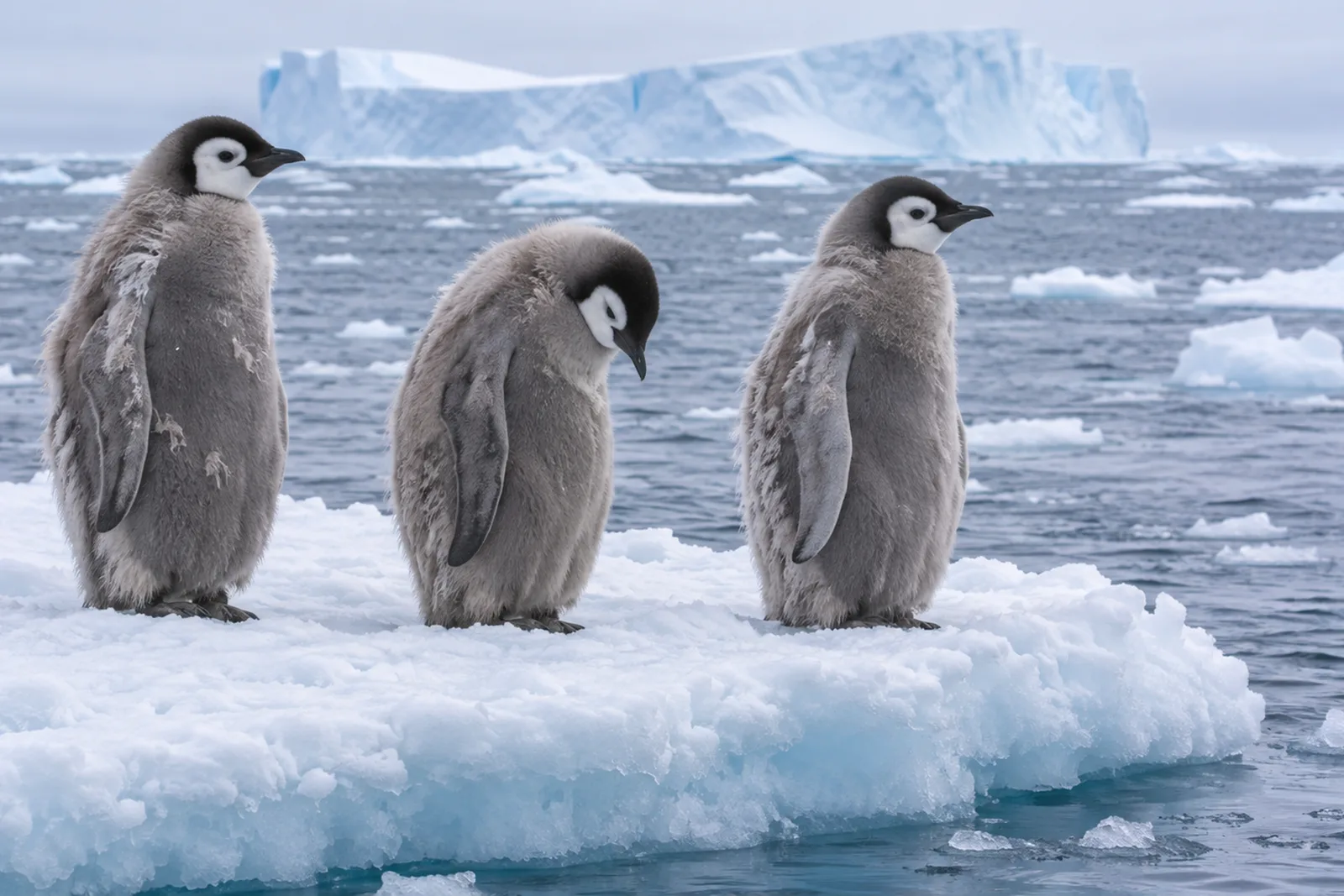
An international team has tracked 48 young emperor penguins through their first year at sea and found that they follow remarkably predictable routes, the Woods Hole Oceanographic Institution (WHOI) announced on 17 November 2026. The birds came from three colonies around the Weddell Sea: Snow Hill Island, Jason Peninsula and Atka Bay. The study, published the same day in the journal Biological Conservation, was co-led by France’s CNRS, the Centre Scientifique de Monaco and WHOI, with funding from sources including WWF-Australia.
The researchers fitted satellite tags to 20 penguins at Snow Hill Island and Jason Peninsula in December 2023 and January 2024, the first time juveniles from these two western colonies had been tracked. They added three years of tracking data from Atka Bay, on the other side of the Weddell Sea. Young emperor penguins leave their colonies at about five months old and only about a third survive to adulthood, WHOI said. The tags showed the same pattern at all three colonies: leaving in March, travelling north to the productive Polar Front, heading south, then following the growing winter sea ice north again before returning to the continent as the ice melts. Some travelled more than 1,500 kilometres.
“We were struck by the remarkable consistency of the penguins’ movements,” said the first author, Émile Brisson-Curadeau.
Why it matters
Predictable routes are good news for conservation, because they can be protected. Juveniles from Atka Bay spent 32 per cent of their first year inside proposed marine protected areas (MPAs), compared with 21 per cent for Snow Hill Island birds and 15 per cent for those from Jason Peninsula, WHOI said. The study also found that the western birds met heavy fishing, mostly for Antarctic krill, a key penguin food. Fishing pressure was highest near the Antarctic Peninsula and around South Georgia, and Jason Peninsula juveniles spent more than 60 per cent of their time in recently fished zones in February and March.
“Most marine protected areas in Antarctica are planned with penguin colonies in mind,” Daniel Zitterbart of WHOI said, as reported by Yahoo News Australia. “They protect the areas around the colonies, which is critical for adult penguins, but they fail to cover the sea areas where juveniles spend their vulnerable early years.” He told Yahoo that nets pose a particular danger to young birds still learning to dive: “An adult can stay underwater for 30 minutes, a juvenile certainly not.”
The emperor penguin was listed as endangered by the IUCN this year, and its populations are predicted to halve by the 2080s, according to WHOI. Yahoo News Australia reported that the main cause of the listing is climate change melting the sea ice early.
Our research shows these areas are predictable and used year after year, so their protection will remain relevant in the future.
Daniel Zitterbart, Woods Hole Oceanographic Institution
The wider picture
The study arrives in the middle of a long diplomatic stalemate. The Commission for the Conservation of Antarctic Marine Living Resources (CCAMLR), made up of 26 countries plus the EU, has been deadlocked for ten years over new MPAs that would together protect around 26 per cent of the Southern Ocean, Reuters reported on 11 November. There was no consensus again at this year’s meeting in Hobart, although nations agreed to meet before next October. Reuters also reported that the 620,000-tonne krill catch limit was reached about three months earlier than usual in both 2025 and 2026, closing the fishery in August. The industry says that limit is about one per cent of the estimated krill biomass.
The proposed Weddell Sea MPA would cover about 2.2 million square kilometres, WHOI said. “It’s time for CCAMLR to protect critical habitat in the Weddell Sea, which supports around one-third of the world’s emperor penguins,” said Emily Grilly of WWF-Australia. Céline Le Bohec, a co-author, said sustainable management of the timing and intensity of fishing in key foraging areas “is essential to securing the food emperor penguins need and limiting the risk of bycatch”.
The new data build on earlier work. A 2022 study in Royal Society Open Science, based on eight juveniles from Atka Bay, found they spent about 90 per cent of their time outside existing and proposed MPAs. In GGND’s view, both studies point the same way: even with the proposed MPAs, most of a young penguin’s year is spent outside them.
Could it work elsewhere?
The approach, tracking the youngest and most vulnerable animals rather than only breeding adults, applies to many seabirds and marine mammals. In GGND’s view, the key finding is repeatability. Zitterbart said “the critical thing in this research is the repeatability”, because it shows that protected areas drawn today should still be in the right place in future years.
What remains unresolved
- Still proposals. The Weddell Sea and Antarctic Peninsula MPAs need consensus at CCAMLR, which has not agreed a new MPA since 2016, Reuters reported.
- Partial cover. Juveniles spent only 15 to 32 per cent of their time inside the proposed areas, so protection would cover only part of their range.
- Proving harm. The study shows overlap with fishing, not how many young penguins are caught or go hungry because of it.
- Climate. The biggest threat to emperor penguins is sea-ice loss, which no protected area can stop.
What happens next
The researchers and WWF-Australia want CCAMLR members to use the new data when they meet again. “We keep collecting data in the hope it will be used, but we need to establish them finally,” Zitterbart told Yahoo. GGND will follow the next round of Antarctic talks.
Sources
- Woods Hole Oceanographic Institution Young emperor penguins encounter industrial krill fishing in first year of life (17 November 2026)
- Yahoo News Australia Devastating map reveals growing threat on remote coastline (17 November 2026)
- Reuters How aquaculture and a health supplement ingredient are holding up efforts to protect the Antarctic (11 November 2026)
- Royal Society Open Science Juvenile emperor penguin range calls for extended conservation measures in the Southern Ocean (2022)
Analysis and context are by The GGND Team. Where we draw our own conclusions, we say so. To report an error, contact us.