What happened
Ecuador has enlarged Podocarpus National Park, one of the most important protected areas in the south of the country. Ministerial Agreement MAE-MAE-2026-0110-AM, signed on 30 October 2026, takes the park from about 138,492.58 hectares to 153,600.856 hectares, adding 15,108.27 hectares, the Ministry of Environment and Energy announced on 11 November. That is an increase of about 11 per cent.
The park lies in the provinces of Loja and Zamora Chinchipe, which border Peru. The new land is in the cantons of Loja, Zamora and Palanda, and covers parts of ten parishes: Loja, Malacatos, San Pedro de Vilcabamba, Yangana, El Porvenir del Carmen, Valladolid, Zamora, Imbana, Sabanilla and Timbara, according to the ministry. The full legal text and maps are set out in the ministerial agreement.
Why it matters
Two of the new blocks stand out. The Abra de Zamora, a mountain pass on the park’s northern edge, is a place where 14 amphibian species new to science have been recorded. The Numbala river valley, to the south, holds important remnants of podocarpus, the native conifer that gives the park its name, the ministry said. The news agency EFE reported the same details.
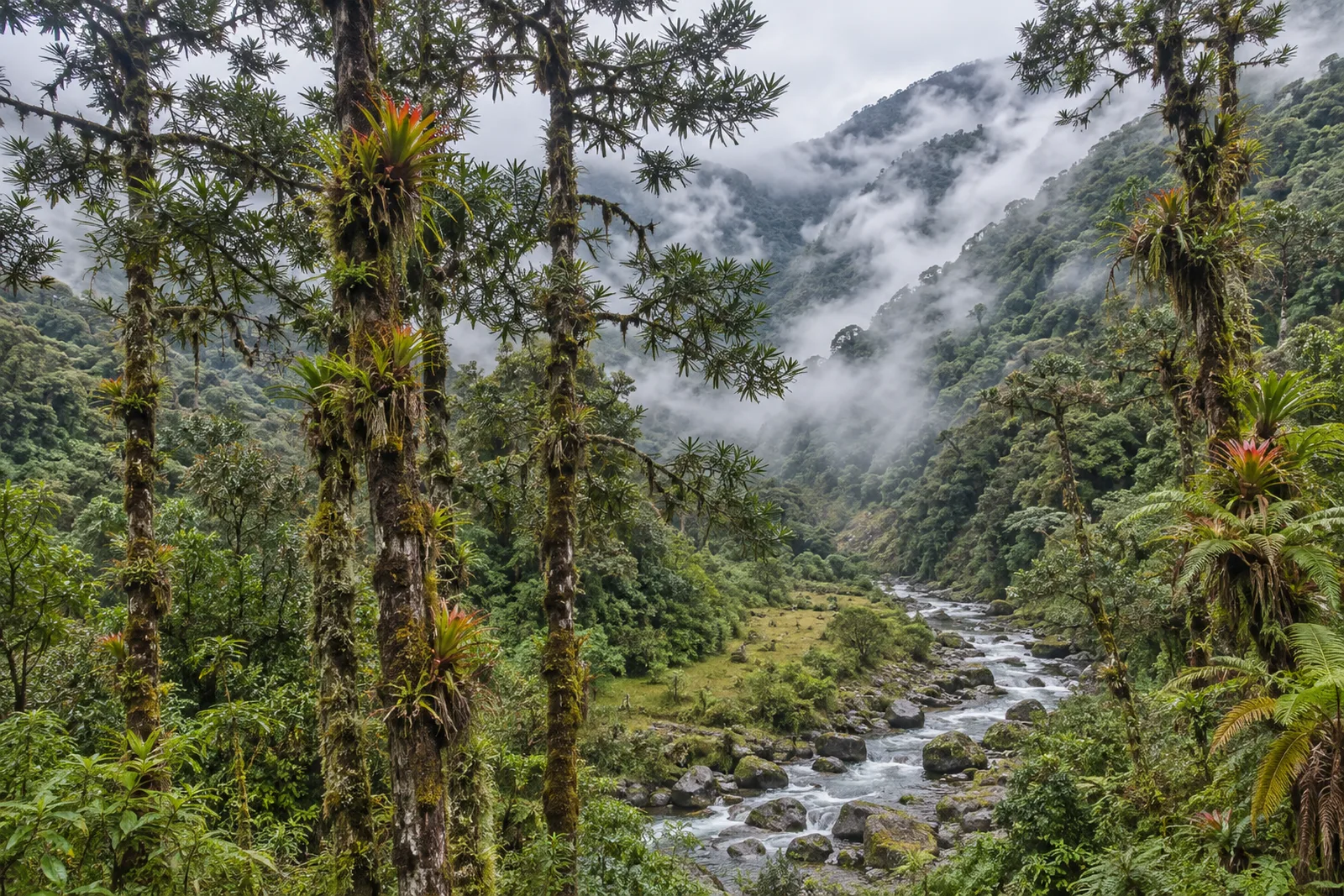
The park is also a water tower. Its forests, scrub and high grasslands hold sources of water that are vital for the people of Loja and Zamora Chinchipe, Ecuavisa reported. The ministry says the larger boundary will protect more of these water sources, as well as forests, scrubland and páramo grasslands, and will improve ecological connectivity in the southern Andes, where mountain ecosystems are often cut into fragments.
Minister Juan Carlos Blum said the process strengthens the conservation of forests, water sources and biodiversity in the south of the country. The expansion was led by the ministry’s protected areas department and the park administration, with support from the non-governmental organisation Naturaleza y Cultura Internacional and two regional offices of the ministry.
We are working for an Ecuador that protects its natural heritage and guarantees its conservation, for the benefit of our citizens and future generations.
Juan Carlos Blum, Minister of Environment and Energy of Ecuador (translated by GGND)
The wider picture
Podocarpus covers a wide range of altitudes, from montane and cloud forests to scrub and high-mountain páramo. That variety supports many birds, mammals, amphibians and plants, some found nowhere else or under threat, according to Ecuavisa. Expanding a park in this kind of landscape gives species more room to move up and down the mountains as the climate changes.
The park is also under pressure. In March 2026, a seven-day operation by the ministry, the mining regulator ARCOM and the armed forces destroyed 94 illegal mine entrances and 129 camps inside the park, in an area where mining concessions are not allowed, the ministry said at the time. It found gold being processed on site, rubbish thrown down slopes and into streams, and warned of a risk that miners would return because of the area’s high economic value. Ecuavisa has reported further military operations against illegal mining in the park since then.
In GGND’s view, this is the key test for the expansion. Drawing a bigger line on the map is a real step, and the choice of areas, a hotspot of newly described frogs and a valley of rare native conifers, looks well judged. But the value of the new hectares depends on whether Ecuador can keep miners out of the park it already has.
Could it work elsewhere?
In GGND’s view, the approach is easy to copy: extend an existing park to take in nearby land with clear scientific value, rather than create a new reserve from scratch. That builds on staff and rules that already exist. It works best where the state owns the land, or where local communities agree, and where a partner such as an NGO can help with the surveys and maps that a legal boundary needs.
What remains unresolved
- Illegal mining. Gold miners have repeatedly entered the park. The ministry has not said how the new areas will be patrolled.
- Money and staff. No new budget or ranger numbers were announced with the expansion.
- Local people. The announcement does not say how farmers and communities living near the new boundary were consulted, or how their land use will change.
- Science. The 14 new amphibian species are a strong signal, but the ministry has not published which species they are or how threatened they may be.
What happens next
The new boundary now has legal force. The next steps are on the ground: marking the limits, updating the park’s management plan and extending patrols to the new areas. GGND will watch for news on enforcement against illegal mining, which will show whether the larger park is protected in practice.
Sources
- Ministry of Environment and Energy, Ecuador El Gobierno de Daniel Noboa fortalece la conservación del patrimonio natural con la ampliación del Parque Nacional Podocarpus (press bulletin 389, 11 November 2026)
- Ministry of Environment and Energy, Ecuador Acuerdo Ministerial Nro. MAE-MAE-2026-0110-AM (30 October 2026)
- EFE via Prensa Libre Ecuador amplía en más de 15 mil hectáreas el Parque Nacional Podocarpus, cerca de Perú (11 November 2026)
- Ecuavisa El Parque Nacional Podocarpus amplía su extensión a más de 153 600 hectáreas (11 November 2026)
- Ministry of Environment and Energy, Ecuador Gobierno Nacional eliminó 94 bocaminas y 129 campamentos ilegales en el Parque Nacional Podocarpus (press bulletin 227, 20 March 2026)
Analysis and context are by The GGND Team. Where we draw our own conclusions, we say so. To report an error, contact us.