What happened
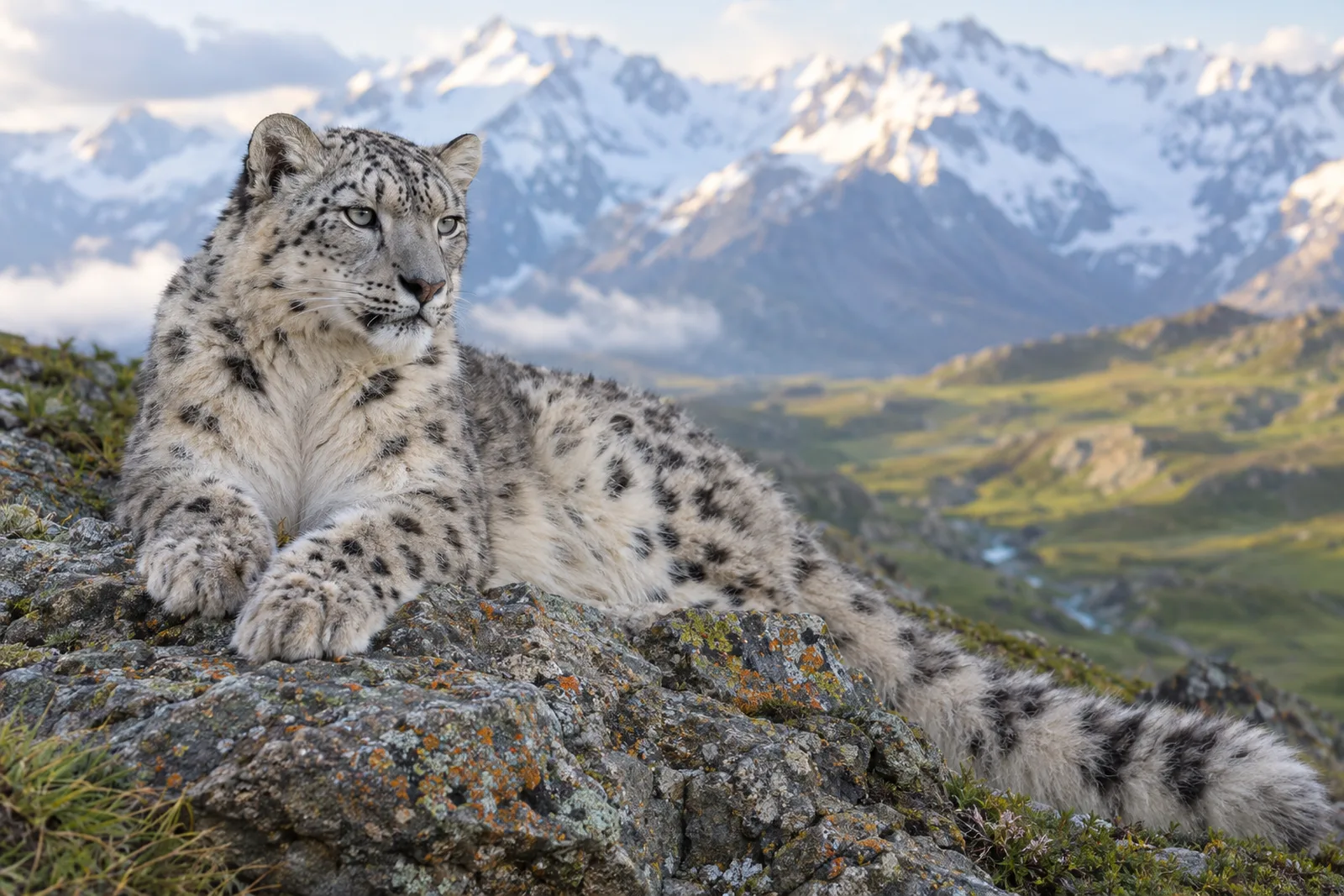
China’s snow leopard population has doubled to about 5,000 since systematic conservation work began in 2013, the National Forestry and Grassland Administration said in an update released for International Snow Leopard Day on 23 October 2026, China Daily reported. The administration put the 2013 figure at about 2,500, and said the species’ habitat in China now covers about 2.08 million square kilometres, more than 60 per cent of the global total, according to the agency’s own report.
Snow leopards live in eight provincial-level regions of China: Xinjiang, Tibet, Qinghai, Gansu, Sichuan, Yunnan, Inner Mongolia and Ningxia, mostly on bare rock, alpine meadow and desert mountains between 3,000 and 5,000 metres. The species is classed as Vulnerable on the IUCN Red List and has the highest level of legal protection in China, Xinhua noted.
Why it matters
Snow leopards are an umbrella species: protecting the large, quiet mountain areas they need also protects the wild sheep and goats they hunt, and the grasslands those animals graze. The administration says recovery has come from several directions at once. Two national parks and 78 other important protected areas now cover key habitat, more than 800,000 square kilometres is under strict protection and nearly 40 per cent of the species’ potential habitat is under standardised management, China Daily reported.
Prey has been helped too. The agency says restoring alpine vegetation through natural forest protection and grazing reduction programmes has allowed populations of blue sheep, Siberian ibex and argali to recover, filling a gap in the food chain, according to Guangming Daily’s account of the update. Herders are being recruited into patrols and monitoring, and compensation and insurance schemes pay for livestock killed by wildlife, which reduces the incentive for retaliation.
Despite the progress, conservation still faces challenges from climate change, habitat fragmentation and human-wildlife conflict.
China Daily, reporting the National Forestry and Grassland Administration’s update
The wider picture
The most striking detail concerns the Helan Mountains in north-west China, where snow leopards disappeared in the 1950s because of habitat destruction and human disturbance, Xinhua reported. Eight snow leopards have been released there so far, and together with animals that arrived on their own, several have settled into home ranges and hunt independently. Shi Kun, chief snow leopard expert at the administration’s Feline Research Center, said a camera this year captured an adult with a cub; individual identification showed the mother was a female released in 2024, and researchers estimate the cub was born in spring 2025, China Daily reported. The administration describes this as the first time a snow leopard reintroduction anywhere has produced cubs born and raised in the wild.
There are signs of range expansion elsewhere. Camera footage this year confirmed the first snow leopard sighting in Liangshan Yi Autonomous Prefecture in Sichuan, extending the known south-eastern edge of the species’ range, according to Xinhua. Monitoring now relies on networks of infrared cameras, satellite collars and DNA from droppings.
The headline number needs context. A 2025 genetic study, published on the Snow Leopard Trust’s website, put the global population at somewhere between 4,700 and 7,500 animals, and said little is known about current trends, the paper notes. Better survey methods have raised estimates of how many snow leopards exist, Rainforest Trust has pointed out, so some of China’s increase may reflect improved counting rather than more cats.
Could it work elsewhere?
Snow leopards are found in 12 Asian countries, according to the Snow Leopard Trust, so what works in China matters well beyond its borders. In GGND’s view, the combination China describes, protecting habitat at scale, bringing back wild prey and paying herders for losses, can be adapted by any range country. The Helan Mountains project is the part most worth watching: if reintroduction can rebuild a population where the species was wiped out, it offers a tool for other mountain ranges with empty habitat. It is slow and costly, though, and depends on enough wild prey and low poaching.
What remains unresolved
- How the number was reached. The update does not set out the survey methods, confidence ranges or data behind the 5,000 estimate, so independent scientists cannot yet check it.
- Real growth or better counting. The 2013 figure was also an estimate. How much of the doubling is recovery and how much is improved monitoring is not clear.
- Climate and conflict. Shi Kun warned that warming could reduce snow cover and open higher areas to grazing, putting livestock in the path of snow leopards and raising the risk of conflict.
- Fragmentation. Researchers still need to map core habitats and movement corridors and assess how roads, infrastructure and settlements divide them, the administration says.
What happens next
The administration says it will focus on reconnecting habitats, protecting genetic diversity and reducing human-wildlife conflict, Xinhua reported. GGND will watch for a published methodology behind the national estimate and for news of further births in the Helan Mountains.
Sources
- National Forestry and Grassland Administration (China) 我国雪豹种群数量实现倍增 (China’s snow leopard population doubles) (28 October 2026)
- China Daily China’s snow leopard population doubles (24 October 2026)
- Xinhua via People’s Daily Online China strengthens protection for growing snow leopard population (24 October 2026)
- Guangming Daily 中国成为全球雪豹种群数量最多国家 (China becomes the country with the most snow leopards) (28 October 2026)
- Solari et al., Snow Leopard Trust Exceedingly low genetic diversity in snow leopards due to persistently small population size (2025)
- Snow Leopard Trust Report for Zoo Basel (2020)
- Rainforest Trust Snow leopards are doing better, so conservation is even more important
Analysis and context are by The GGND Team. Where we draw our own conclusions, we say so. To report an error, contact us.