What happened
On 29 October 2026, at the UN Biodiversity Conference (COP17) in Yerevan, Armenia, the UN Environment Programme and the Food and Agriculture Organization named five initiatives in China, Colombia, Ethiopia, Italy and the United States as UN World Restoration Flagships, UNEP said. China’s entry was the Blue Bay Restoration Initiative, which the UN describes as a shift from localised projects to coordinated management of entire coastal areas, according to the UN Decade on Ecosystem Restoration.
The initiative is led by China’s Ministry of Natural Resources and Ministry of Finance. It is the second Chinese programme to win the title, after the Shan-Shui Initiative in 2022, making China the first country with two flagships, China Daily reported. It was chosen from more than 200 applications and over 80 government nominations, UNEP’s executive director Inger Andersen said, according to Xinhua.
Why it matters
Coasts are where the world’s restoration effort is weakest. A UN report launched the same day found that 252 million hectares across 149 countries are under restoration, creating more than one million green jobs. But only 5.7 million hectares of marine and coastal ecosystems in 46 countries are documented as under restoration, even though these ecosystems are among the fastest degrading, UNEP said.
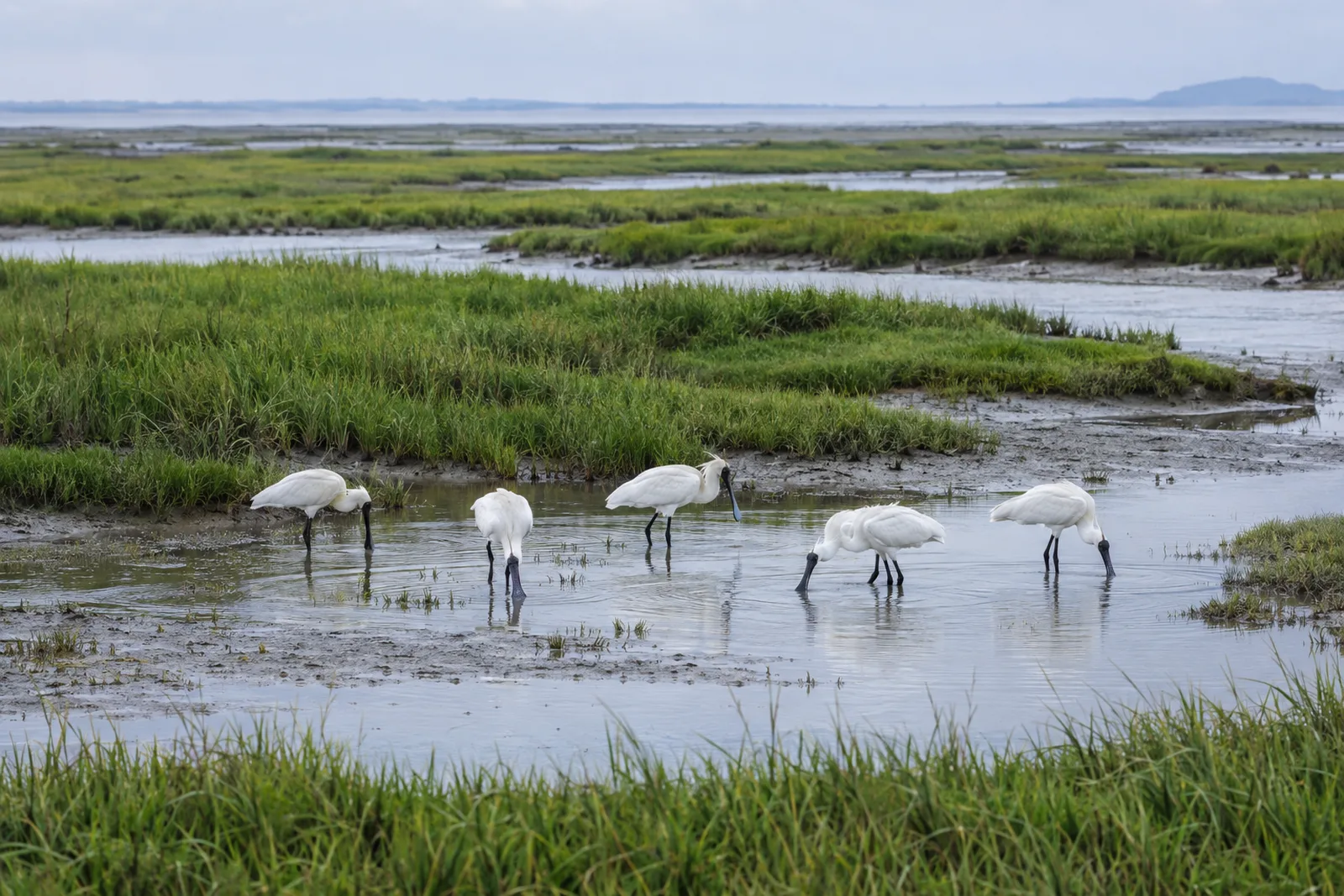
Against that, China’s programme is large. The UN Decade lists 150,000 hectares under restoration and 170,000 hectares to be restored by 2030, protecting habitat for more than 135 species on the IUCN Red List, including the endangered black-faced spoonbill, and sites for migratory birds, its profile says. Between 2016 and 2025, China’s central government allocated 36.63 billion yuan (about US$5.5 billion) to coastal provinces for 194 major marine restoration projects, restoring coastal wetlands, controlling the invasive cordgrass Spartina alterniflora and restoring more than 2,000 kilometres of coastline, China Daily reported.
The model grew out of the restoration of Yundang Lake in Xiamen, Fujian province, which other regions then built on by managing land and sea together.
China’s Blue Bay Initiative demonstrates the value of this integrated approach, bringing together ecological restoration, coordinated governance, and public investment.
Raimund Jehle, FAO Deputy Regional Representative for Europe and Central Asia
The wider picture
The UN report, Nature’s comeback, is the first global assessment of progress towards the target of putting 30 per cent of degraded ecosystems under effective restoration by 2030. Land restoration has reached nearly half that target, but annual restoration finance needs to rise more than fourfold, from US$64 billion to US$296 billion by 2030, with an estimated US$28 billion a year needed for seagrass restoration alone, UNEP said.
Asia accounts for 192.2 million of the 252 million hectares documented worldwide, and China reports the largest area of land under restoration, 127.4 million hectares. The report stresses that these regional differences reflect the scale of activity, land area and monitoring capacity rather than a ranking of performance. Documented successes among the flagships include the recovery of mountain gorillas in East Africa, jaguars in Brazil, snow leopards in Kyrgyzstan and Ganges River dolphins in India.
‘Five years into the UN Decade, the message is clear: restoration works,’ said FAO Director-General Qu Dongyu, UN News reported.
Could it work elsewhere?
The core lesson is about organisation rather than money. Blue Bay links habitat restoration with pollution prevention and flood-risk work along whole stretches of coast, instead of treating each beach or wetland separately. In GGND’s view, that coast-wide planning could be copied by countries with far smaller budgets, especially where several ministries now manage the same shoreline.
What remains unresolved
- Who measures it. The headline figures come from the Chinese government. The UN says flagships will be tracked through FAO’s Framework for Ecosystem Restoration Monitoring, but its website notes that implementers are voluntary contributors not monitored by UNEP.
- Mixed figures. Xinhua quoted the 150,000 hectares as a 2030 aim, while China Daily described it as already restored and the UN lists it as under restoration. Clear, independent reporting would help.
- Pressure on coasts. ‘We cannot expect to fix nature with one hand while we destroy it with the other one,’ warned Astrid Schomaker of the Convention on Biological Diversity, in UNEP’s release. Restoration only lasts if development, pollution and invasive species are kept in check.
- Durability. Restored wetlands and mangroves take years to mature, and storms and sea-level rise will test them.
What happens next
COP17 continues in Yerevan, where governments are negotiating how to speed up progress on the 2030 biodiversity targets. GGND will follow whether the flagship’s monitoring data are published and whether other countries adopt the coast-wide model.
Sources
- UN Environment Programme Nature is making a comeback, but the world must move faster to meet restoration targets – UN Report (29 October 2026)
- UN Decade on Ecosystem Restoration Blue Bay Restoration Initiative in China (October 2026)
- China Daily China’s Blue Bay Initiative Recognized as UN World Restoration Flagship for Marine Ecological Achievements (30 October 2026)
- Xinhua (via China.org.cn) China’s Blue Bay Restoration Initiative named UN World Restoration Flagship (31 October 2026)
- UN News Nature is making a comeback – now restoration funding must quadruple (29 October 2026)
Analysis and context are by The GGND Team. Where we draw our own conclusions, we say so. To report an error, contact us.