What happened
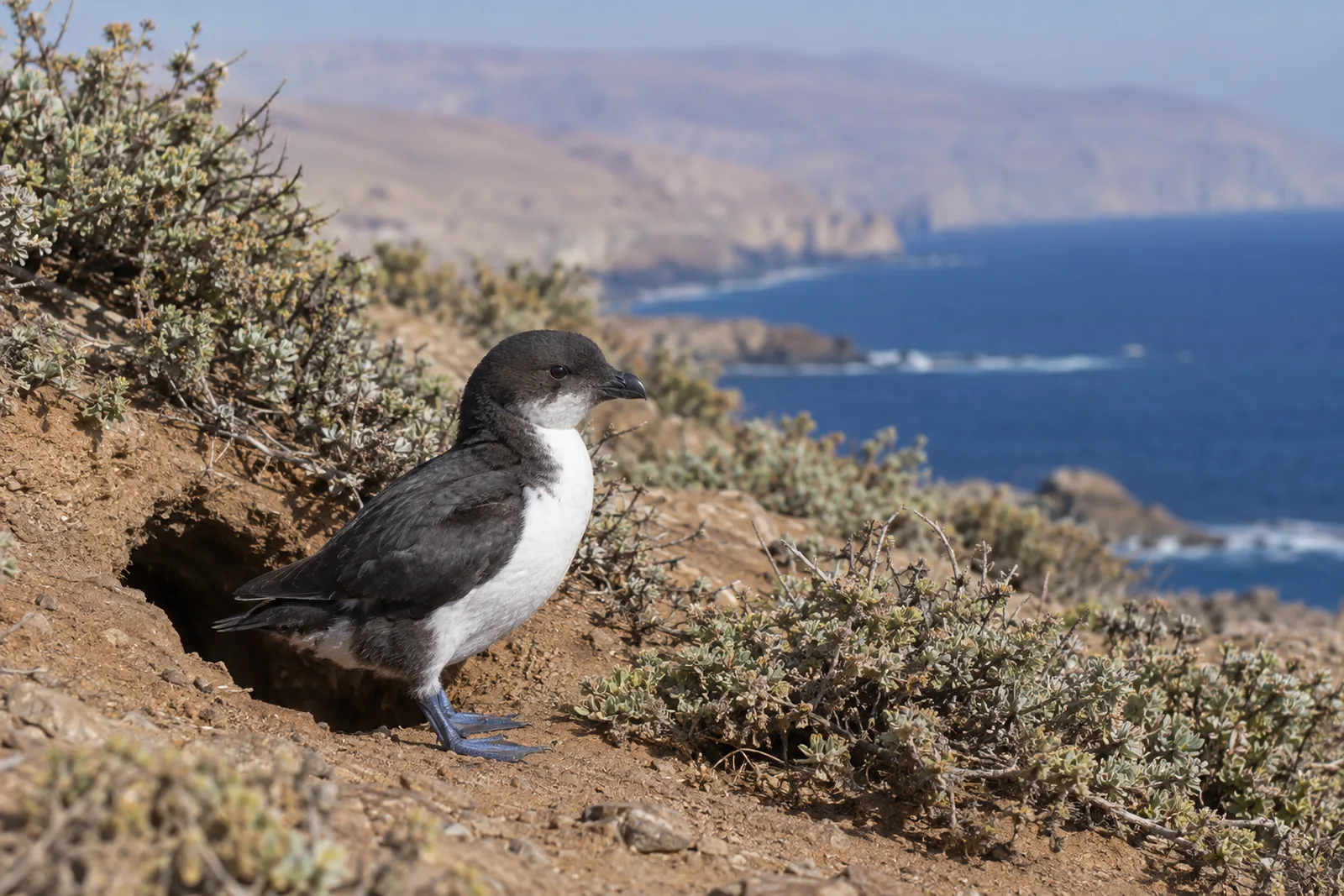
The Peruvian diving petrel is a small seabird that nests in burrows dug into the soil of dry islands off Peru and Chile. On Choros Island in northern Chile, its numbers have grown about 300-fold in 44 years, according to a study in Marine Ornithology by Marián Méndez, Nicolás Luna and Guillermo Luna-Jorquera.
The researchers counted burrows across the island between 8 and 12 November 2024 and estimated 89,876 breeding pairs (with a 95% confidence range of 80,952 to 98,800). That compares with about 300 pairs in 1980 and 11,934 pairs in 2013, the year invasive European rabbits were eradicated from the island. The population has therefore grown about 7.5-fold since the rabbits went.
The results were announced on 3 November by Island Conservation, the non-profit that removed the rabbits with partners. Choros forms part of the Humboldt Penguin National Reserve, which is managed by CONAF, Chile’s National Forestry Corporation.
Why it matters
Many seabirds around the world are in decline, so a clear recovery is unusual. The study estimates that the population grew by about 10.8% a year between 1980 and 2013, under protection, and by about 23.1% a year between 2013 and 2024, after the rabbits were removed. “For decades, rabbits occupied a substantial portion of the breeding colony, trampling and enlarging petrel burrows and degrading the nesting habitat,” co-author Nicolás Luna of Kiel University said in the press release. “With more burrows available, more petrels could breed, and we believe that this is the main driver of the remarkable population growth we see today.”
The nesting area grew from 3.2 hectares in 2010 to more than 10 hectares in 2024, Discover Wildlife reported. “Removing invasive rabbits was the game-changer,” María José Vilches of Island Conservation told the magazine. Earlier research found that about 95% of Chile’s breeding population nested on Choros, she added, so improvements there have an outsized effect on the species.
This recovery demonstrates the critical value of sustained, multi-decade conservation strategies for threatened seabird populations.
Méndez, Luna and Luna-Jorquera, writing in Marine Ornithology
The wider picture
The species once numbered far more. The study notes that there were about 100,000 pairs in the early 20th century, and that nearby Chañaral Island once held more than 100,000 pairs before the colony was wiped out. Island Conservation has used artificial burrows and recordings of bird calls on Chañaral to tempt the petrels back, Discover Wildlife reported. The recovery on Choros contributed to the species being moved from Endangered to Near Threatened on the IUCN Red List in 2020, Island Conservation says.
In GGND’s view, it is worth noting what the scientists say about their own numbers. There was no census between 2015 and 2022 because of funding gaps and the Covid pandemic, and the faster growth rate after 2013 is based on only four census years, so the authors urge caution. The 300-fold figure also reflects decades of protection, not only the work since 2013. “The 300-fold recovery reflects decades of on-going conservation effort, not just the work since 2013,” Vilches told Discover Wildlife.
Could it work elsewhere?
Removing invasive mammals from islands is one of the best-tested tools in conservation, and Choros adds strong evidence that seabirds can respond within a decade. “The big lesson is that if you restore an ecosystem, wildlife can recover remarkably quickly,” Vilches said. In GGND’s view, the method travels best to islands that are small enough to clear completely and protected well enough to stop the animals coming back. Recovery on one island also does not automatically help other colonies: a 2019 genetic study in Scientific Reports found that the species’ colonies are largely isolated from each other.
What remains unresolved
- Light pollution. The study names artificial light as the most immediate threat. Petrels attracted to coastal lights can collide with structures or become grounded, killing young birds and adults, and the problem is worse in January, when tourism peaks.
- A planned mining port. The proposed Dominga mining and port project nearby could bring more ships, the risk of spills, brine from desalination and yet more lights, the authors write.
- Fishing. The authors list accidental capture in fishing gear among the human pressures on seabirds such as this one.
- Too few homes. The species still breeds at relatively few sites, Island Conservation says, which leaves it vulnerable to a single disaster.
What happens next
The researchers say their findings will help guide new management plans and the update of existing ones to deal with these threats, according to Island Conservation. They also call for regular censuses so that gaps like the one between 2015 and 2022 do not happen again. “Despite these conservation gains, the recovery of the Peruvian Diving Petrel remains highly vulnerable to anthropogenic threats,” they write. In GGND’s view, the next test is whether the birds can recolonise Chañaral and other former sites, so that the species no longer depends so heavily on a single island.
Sources
- Marine Ornithology The Peruvian Diving Petrel Pelecanoides garnotii bounces back: A 300-fold population increase on Choros Island, Northern Chile (Méndez, Luna and Luna-Jorquera, vol. 54(2), 2026)
- Island Conservation New Study Reveals 300-Fold Recovery of Peruvian Diving-petrel Following Island Restoration in Chile (3 November 2026)
- Discover Wildlife Invasive rabbits were removed from an island in Chile - then something “extraordinary” happened (3 November 2026)
- Island Conservation Peruvian Diving-petrel downlisted: a case study in preventing extinctions
- Scientific Reports Genetic study of Peruvian diving petrel colonies (2019)
Analysis and context are by The GGND Team. Where we draw our own conclusions, we say so. To report an error, contact us.