What happened
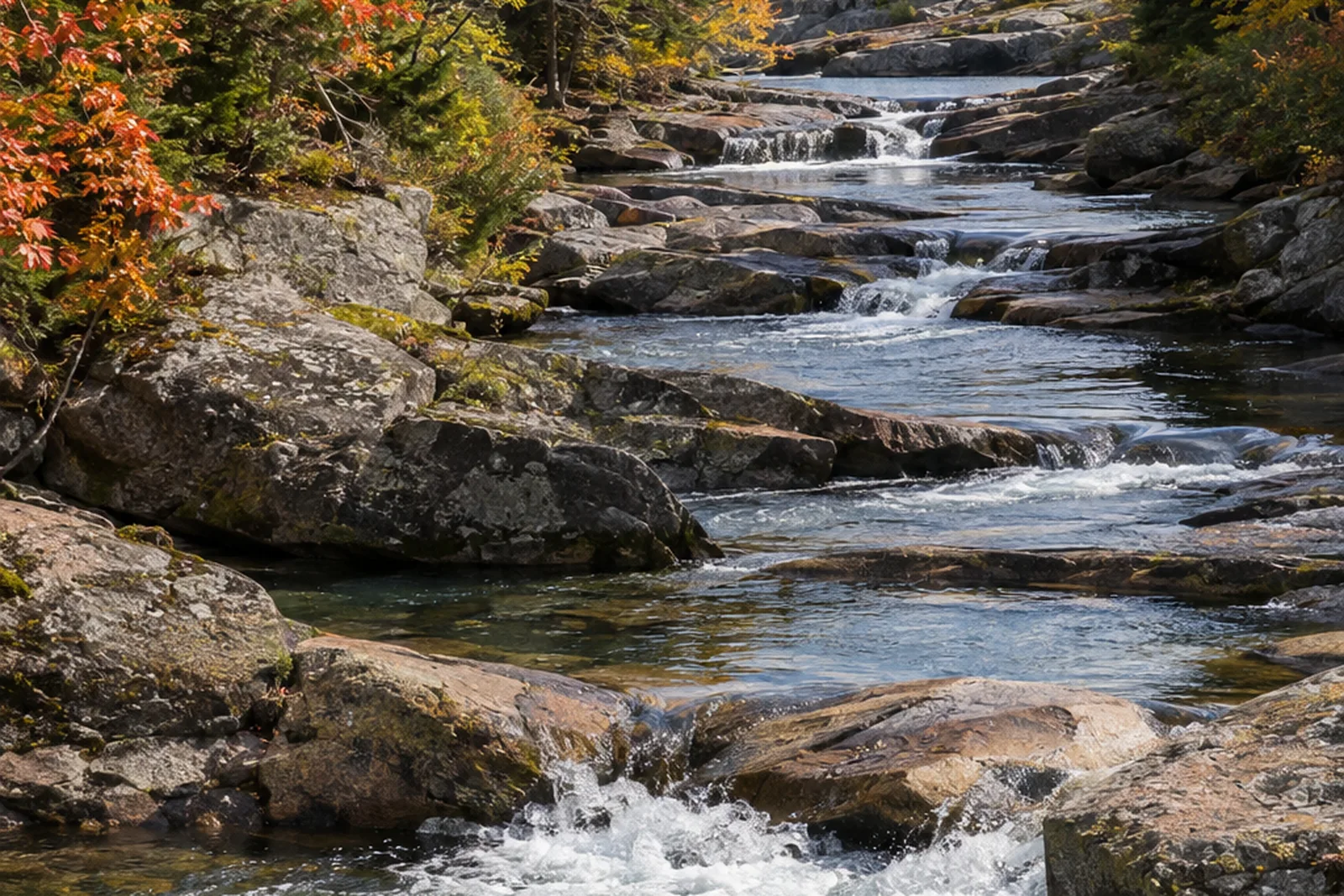
Crews removed the Cherryfield Ice Dam on Maine’s Narraguagus River this summer, allowing Atlantic salmon to swim farther upstream, WABI reported on 27 October 2026. In its place is a nature-like fishway: a series of boulder step-pools that climbs the same height as the old dam, but gradually, with resting pools along the way.
The dam was the last remaining mainstem barrier on the river. In-water demolition and construction ran from 15 July to 15 October, and the adjacent Cable Pool Park is due to reopen in December, with revegetation finished by June 2027, the Downeast Salmon Federation says. The project is entirely funded by a US$9.1 million grant from NOAA’s Restoration Center, at no cost to the town.
NOAA selected the project because the Narraguagus has ‘some of the highest quality habitat for Atlantic salmon’ in the Downeast Salmon Habitat Recovery Unit, one of three regions in Maine designated for salmon recovery, the agency says.
Why it matters
The US Army Corps of Engineers built the dam in 1961 to stop ice jams flooding Cherryfield. It had a fish ladder that alewives used well, but salmon were often seen schooling on the side without the ladder, unable to find their way, and few shad got through, The Maine Monitor reported. The ageing timbers had been treated with creosote, a hazardous material that was leaching into the river, according to the federation.
With the fishway in place, more than 500 miles of upstream habitat are open again to sea-run fish, including endangered Atlantic salmon, American shad and river herring, Maine Coast Heritage Trust said. The headpond stays at its old level, so the town keeps its protection from ice floods.
The way the decision was made matters too. Dam projects often divide towns, but Cherryfield residents voted unanimously at a special meeting in 2023 to take over the dam from the Army Corps and replace it, and Congress then de-authorised it. ‘It was unanimous. Nobody voted against it,’ selectman Corey Smith told The Maine Monitor. The local alewife harvest will continue.
There was video footage from the top of the dam where you could see salmon jumping, but they weren’t getting to the other side.
Ellie Mason, habitat restoration project manager, Downeast Salmon Federation, speaking to WABI
The wider picture
The fishway is the final piece of more than two decades of work. Since the early 2000s, Project SHARE, a coalition of landowners and conservationists, has replaced 61 culverts that blocked fish on the Narraguagus and worked with the state to drop large trees into the river to make it narrower, deeper and cooler, The Maine Monitor reported. The landowners, including large forestry and blueberry businesses, got involved before the salmon were listed as endangered in 1999, hoping to avoid a bitter conflict like the one over the spotted owl in the Pacific Northwest.
Ernie Atkinson, a fisheries biologist with the Maine Department of Marine Resources, said his agency is ‘in the connectivity business’: clearing the way for sea-run fish comes first, and rehabilitating the habitat they find comes next.
‘This wasn’t a dam removal. We just replaced the dam with a much better fish passage,’ said Jacob van de Sande of Maine Coast Heritage Trust during a public tour in September, The Maine Monitor reported. Ellie Mason of the federation, who oversees the work daily, said: ‘I cried a little this week. It all felt so unceremonious and yet so major.’
Could it work elsewhere?
Yes, and that is the point. Many small towns depend on old dams for flood or ice control and cannot simply remove them. In GGND’s view, Cherryfield shows a middle path: keep the function the town needs, rebuild the structure so fish can pass, and spend years listening to residents first.
What remains unresolved
- Very few salmon. Only about 25 wild adult salmon have returned to the Narraguagus each year in recent decades, and about 1,000 return to all of Maine, The Maine Monitor reported.
- Deaths at sea. NOAA biologist Rory Saunders said many theories for high salmon deaths at sea fall ‘under the broad brush of climate change’. A clear river cannot fix the ocean.
- Hatchery dependence. Hatcheries have kept Maine’s salmon from extinction but have not grown their numbers, according to NOAA scientist James Hawkes.
- Recovery targets. Reclassifying the salmon from endangered to threatened needs at least 1,500 wild adults returning for several years; full delisting needs 6,000.
What happens next
Landscaping continues this autumn, the park reopens in December, and planting resumes in spring. The first real test comes with next year’s spring runs of alewives, shad and salmon. GGND will report on how many fish pass the new pools.
Sources
- WABI Cherryfield dam removal opens path for Atlantic salmon (27 October 2026)
- Downeast Salmon Federation Cherryfield Fish Passage Improvement Project (updated October 2026)
- NOAA Fisheries Fish Passage Projects Selected for Funding (2026)
- The Maine Monitor Endangered salmon may soon swim freely up a downeast river. But as the climate changes, a comeback isn’t guaranteed (15 September 2026)
- The Maine Monitor Locals get behind-the-scenes tours of Cherryfield dam reconstruction as project nears completion (1 October 2026)
- Maine Coast Heritage Trust Nature Connects: Fish Passage, Flood Control, and a Town United (May 2026)
Analysis and context are by The GGND Team. Where we draw our own conclusions, we say so. To report an error, contact us.