What happened
On 7 October, the federal court in Juína, Mato Grosso, ordered illegal occupants and their cattle out of the Piripkura Indigenous Territory, the Federal Public Defender’s Office (DPU) announced. The territory, in the municipalities of Colniza and Rondolândia, is home to Indigenous people living in voluntary isolation.
The ruling, in a civil action filed by the Federal Public Prosecutor’s Office (MPF) in May 2021, separates occupants into two groups, the MPF said. Those who moved in after Funai, Brazil’s Indigenous affairs agency, first restricted use of the area in 2008 must leave within 120 days, taking their workers, animals, machinery and other belongings, and may not return without Funai’s permission. Those who were there before 2008 may stay, but must remove their cattle within 120 days and stop all new deforestation and use of natural resources.
The orders take effect immediately, with a fine of R$500 a day for each defendant who does not comply. Funai must plan and oversee the removals, with support from the environmental agency IBAMA and the police where needed, in a way that avoids any direct or indirect contact with the Piripkura. According to the DPU, three occupants and any unidentified third parties must leave, while six others are bound by the restrictions.
Why it matters
The territory is home to at least two Piripkura people who live in voluntary isolation, and Funai has not ruled out that there are more, Mongabay reported. For people with no contact with the outside world, every chainsaw crew and cattle herd is a danger, because it can bring disease and violence and cut into the forest they hunt and gather in.
The ruling also reverses the same judge’s decision of February 2025. That decision relied on Article 9 of Law 14.701/2023, the so-called Marco Temporal law, which says that until a territory’s demarcation is complete and compensation is paid for good-faith improvements, non-Indigenous occupants keep the right to use the land. The judge has now accepted that the provision does not apply to the special protection regime for isolated peoples, the DPU said, without declaring it invalid in general.
Federal prosecutors Daniel Luis Dalberto and Guilherme Fernandes Ferreira Tavares told Mongabay that the ruling ‘represents a very important step forward for the protection of the Piripkura, both for its practical effects and for the recognition of the special legal regime applicable to Indigenous peoples in voluntary isolation’.
Unwanted contact can lead to the transmission of diseases to which the Piripkura have no immunity, in addition to increasing the risks arising from violence associated with organized crime.
A spokesperson for Funai, Brazil’s Indigenous affairs agency, speaking to Mongabay
The wider picture
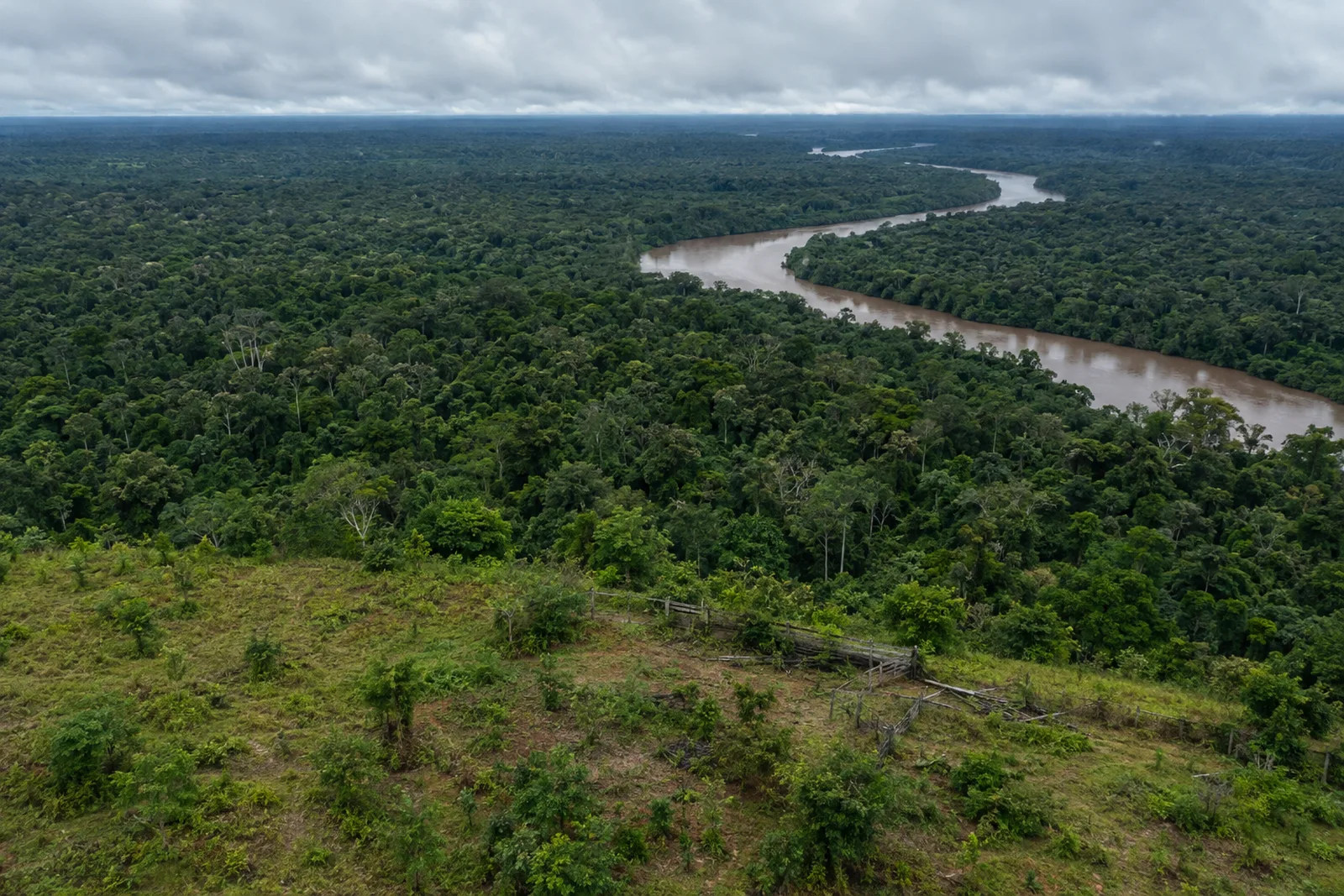
The forest has been under heavy pressure. In 2020 the Piripkura territory was the most deforested of the territories with isolated peoples monitored by the Instituto Socioambiental, losing 962 hectares, g1 reported. In 2021 it lost 1,769 hectares of tree cover, Mongabay reported. Government crackdowns have since cut deforestation, but in June 2026 an IBAMA inspection found that about 37 hectares of native vegetation had been destroyed with tractors and chains, the MPF said.
New threats have also appeared. A joint Funai and IBAMA inspection found clandestine airstrips allegedly used for drug trafficking, and a separate police operation in the Colniza region seized about 500 kilograms of marijuana, Mongabay reported. In June, authorities had told Mongabay that about 1,000 cattle left by invaders were still inside the territory.
Could it work elsewhere?
Brazil has several territories protected by Funai use-restriction orders for isolated peoples. In GGND’s view, the most transferable part of this ruling is its reasoning: the protection of isolated peoples cannot wait for a slow demarcation process, and their safety comes before claims to use the land. The MPF also argued that the protection of isolated people cannot depend on forcing contact to prove that they exist.
What remains unresolved
- Appeal. The decision can still be appealed to the Federal Regional Court of the First Region, the DPU said.
- Carrying it out. The prosecutors told Mongabay the main challenge will be removing people, cattle and machinery without any contact with the Piripkura, on poor roads and without causing further damage.
- Demarcation. ‘It has now been more than 40 years since the Piripkura Indigenous Territory was first put forward for demarcation, and the process is still in its early stages,’ Priscilla Oliveira of Survival International told Mongabay.
- Who stays. Occupants from before 2008 can remain under restrictions, so the risk of new clearing inside the territory does not disappear.
What happens next
‘The order has been given,’ Jair Candor, who coordinates Funai’s unit protecting isolated groups in the region, told Mongabay. ‘So, the next step is to file the formal submission with the court to notify these people and initiate the process for their removal.’ The prosecutors said voluntary departure remains the priority, but that Funai may use enforcement with police support if needed. In GGND’s view, the test will come when the 120 days run out and it is clear whether the cattle have actually left the forest.
Sources
- Ministério Público Federal (MPF) MPF obtém decisão que garante a proteção do território do povo Piripkura no MT (16 October 2026, in Portuguese)
- Defensoria Pública da União (DPU) Justiça acolhe argumentos da DPU e manda retirar ocupantes da Terra Indígena Piripkura (MT) (8 October 2026, in Portuguese)
- Mongabay Ranchers in Brazil ordered to leave home of Indigenous people living in voluntary isolation (2 November 2026)
- g1 Justiça dá 120 dias para que ocupantes deixem Terra Indígena Piripkura em MT (20 October 2026, in Portuguese)
- Mongabay Brazil curbs Amazon deforestation in Piripkura, but ranchers’ cattle linger (22 June 2026)
Analysis and context are by The GGND Team. Where we draw our own conclusions, we say so. To report an error, contact us.