What happened
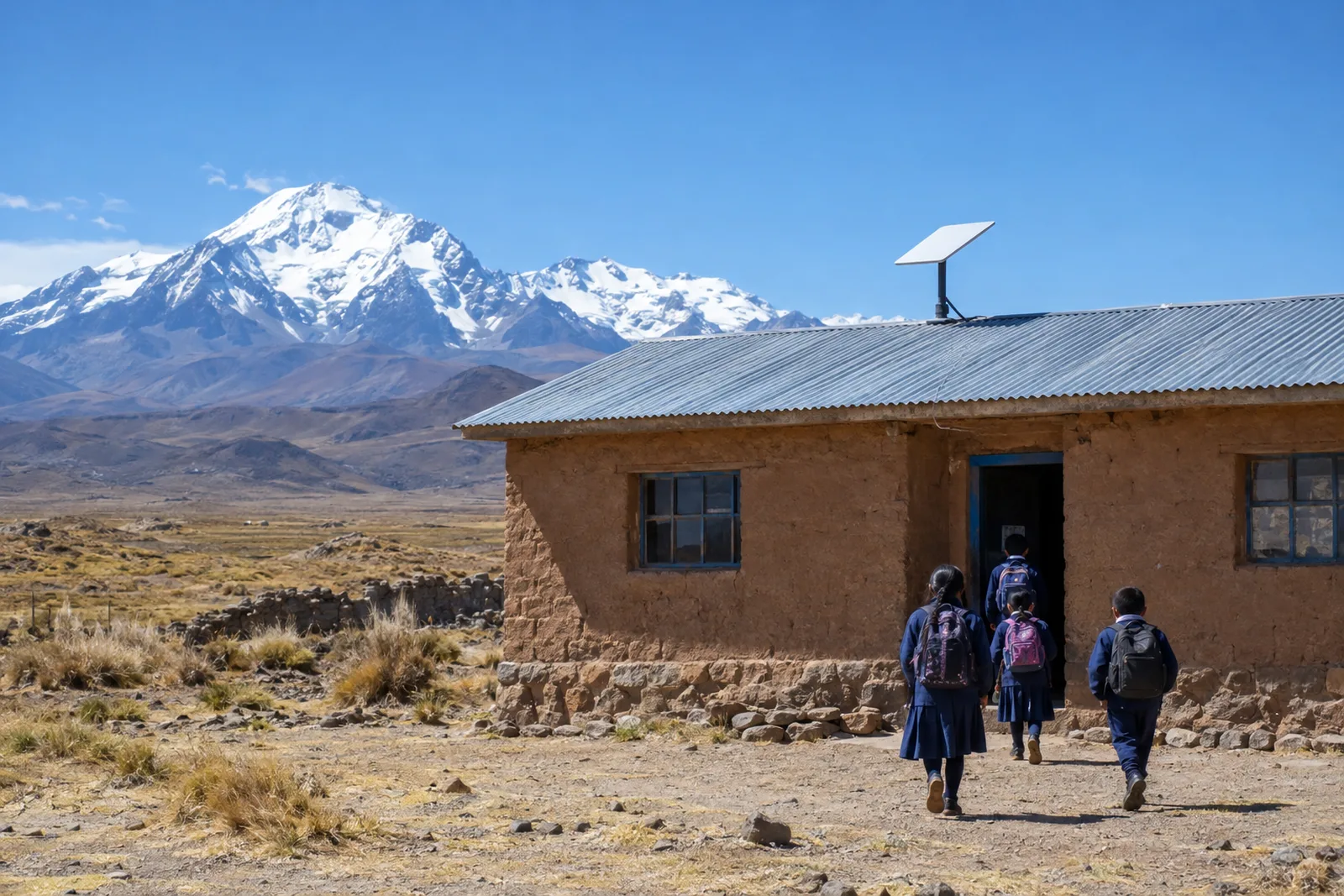
On 20 October 2026, Bolivia’s President Rodrigo Paz and Education Minister Erick Sanjinés handed agreements to the mayors of 85 municipalities in La Paz department to install satellite internet antennas in schools, the Ministry of Education announced. The scheme, called Aulas Conectadas (Connected Classrooms), is part of a national digital education strategy.
The first phase will reach more than 73,000 pupils at 307 schools, which operate in 288 buildings, according to the ministry. The ministry will choose and prioritise the schools, set technical and teaching guidelines and train teachers in digital literacy. Municipalities are responsible for the physical conditions, logistics and the long-term sustainability of the service. The programme began in La Paz and will be extended to Bolivia’s other eight departments.
Nationwide, the government plans more than 4,500 antennas from the SpaceX-owned Starlink network, with 24 months of free internet service for the schools, the Ministry of the Presidency says. Paz has described a pilot running in 2026 and 2027, with the full strategy rolled out between 2027 and 2030, The Rio Times reports.
Why it matters
Bolivia’s mountains, high plains and Amazon lowlands make it hard and expensive to lay fibre or build mobile masts in remote areas. An Ookla study released in November 2025 ranked Bolivia last in South America for both mobile and fixed broadband speed, Latin Times reports. For a child in an isolated village, a working connection can mean access to digital libraries, learning platforms and resources their school could never otherwise afford.
The ministry stresses teaching, not just hardware. “This work requires shared responsibility,” Sanjinés said: the ministry will train teachers to make the best use of the technology, while municipalities provide the physical conditions and support, the ministry reports (GGND’s translation). Paz has said that “the teacher decides when and how to use digital tools”, according to Latin Times.
This strategy seeks to move from simply handing out equipment to a comprehensive and sustainable digital education ecosystem.
Rodrigo Paz, President of Bolivia (translated from Spanish by GGND)
The wider picture
Satellite internet became possible in Bolivia after a decree of 22 December 2025 allowed low-orbit providers such as Starlink, OneWeb and Amazon’s Kuiper to operate, The Rio Times reports. The previous government had refused Starlink a licence, Latin Times notes. Bolivia is following neighbours: Paraguay agreed a deal for 1,600 Starlink kits for rural schools, and Argentina has announced a plan to connect 6,000 rural schools, Latin Times reports.
Some schools are already connected. In July 2026, El Alto, the large city next to La Paz, signed up for 312 school antennas, with the state paying for two years of internet and the city paying afterwards, and Bolivia’s telecoms regulator counted 40,000 Starlink connections in the country between February and May 2026, through the state company Entel, The Rio Times reports.
Paz contrasted the low cost of antennas with Bolivia’s state-owned Túpac Katari satellite, launched in 2013, which he said cost more than US$250 million, The Rio Times reports. “With very little we can do a lot if we take advantage of technology,” he said, as quoted by the ministry (GGND’s translation).
Could it work elsewhere?
In GGND’s view, satellite links are now the quickest way to connect remote schools in many mountainous or sparsely populated countries, and Bolivia’s split of duties, with the ministry training teachers and municipalities looking after equipment, is a sensible template. But connection alone rarely improves learning; teacher training, devices, electricity and a plan for running costs decide whether it lasts.
What remains unresolved
- Who pays later. After 24 free months, municipalities must cover the costs. Luis Valle of the NGO Fundetic called the programme positive in its goals but “incomplete in its design”, noting that no costs, tariffs or contract details have been published, Latin Times reports.
- A warning from health. Valle compared it with Bolivia’s Telesalud satellite programme for rural clinics, which collapsed when municipalities could not absorb recurring costs.
- Numbers vary. Official figures range from at least 4,500 to about 4,700 antennas, and the government has not published a full installation schedule or total cost, The Rio Times notes.
- Measuring learning. The stated aim is better reading, writing and maths. It is not yet clear how results will be tracked.
What happens next
The ministry says the programme will be replicated in the remaining eight departments, with Cochabamba and Santa Cruz expected next, according to Latin Times. In GGND’s view, the real test comes when the two free years end and municipalities start paying. GGND will report on how the first La Paz schools are getting on.
Sources
- Ministerio de Educación de Bolivia Presidente entrega convenios a municipios de La Paz para instalar antenas Starlink en unidades educativas (20 October 2026)
- Ministerio de la Presidencia de Bolivia Bolivia revoluciona su educación rural con Starlink (22 October 2026)
- Latin Times Bolivia bets on Starlink for rural schools as Latin America’s satellite education race accelerates (21 October 2026)
- The Rio Times Bolivia Starlink plan targets 4,700 antennas (21 October 2026)
Analysis and context are by The GGND Team. Where we draw our own conclusions, we say so. To report an error, contact us.