What happened
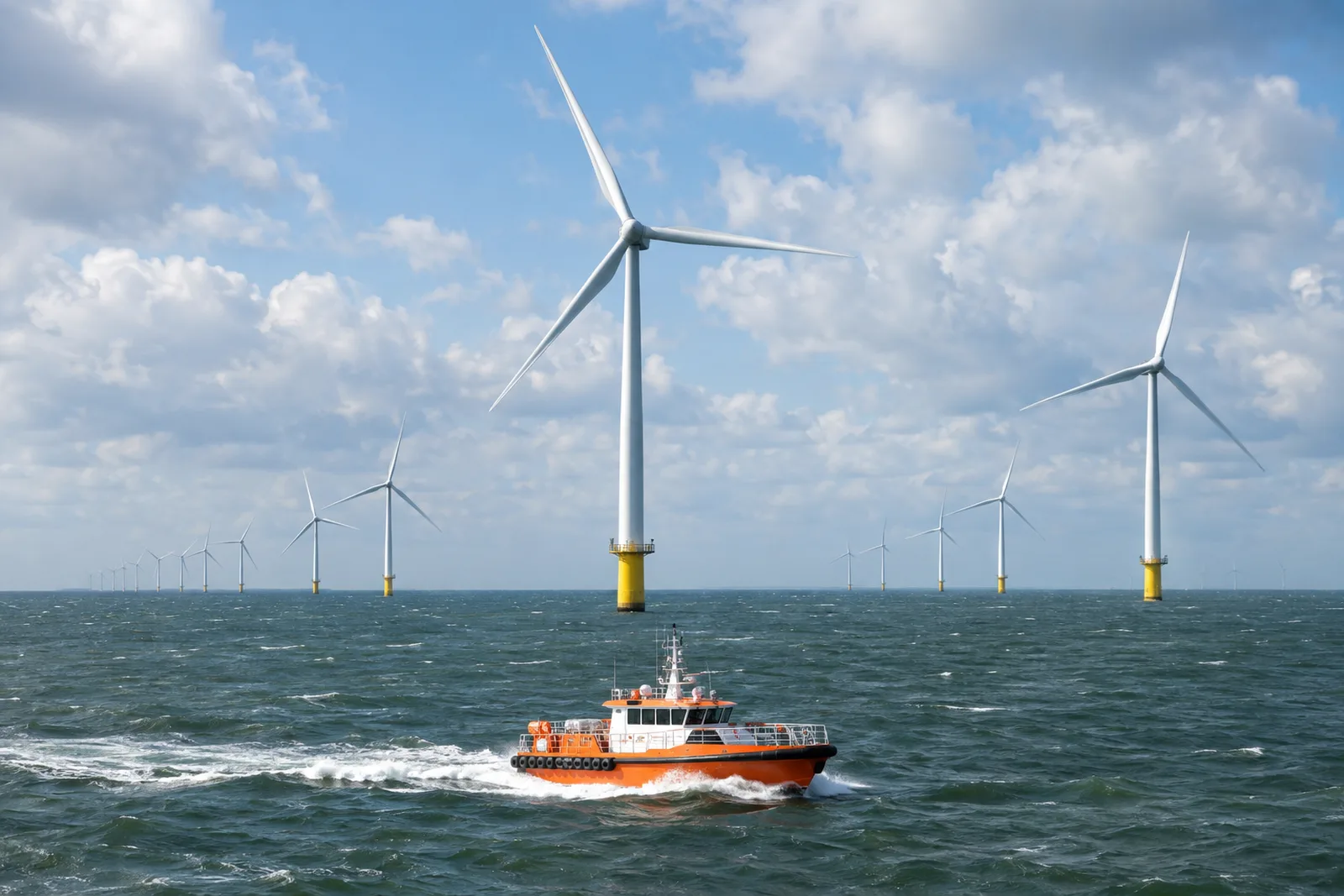
Belgium’s next big offshore wind farm is back on track. On 10 November, the European Commission approved a €2.04 billion Belgian scheme to support the construction and operation of the first wind farm, known as lot 1, in the Princess Elisabeth Zone in the North Sea. The farm will have a capacity of up to 735 megawatts and is expected to generate up to 2.6 terawatt hours of electricity a year, Energy Global reported.
Support will last 20 years and will be awarded through a competitive tender, with the result expected in the fourth quarter of 2027. The winner will receive a two-way contract for difference: the state tops up income when market prices fall below an agreed level and recovers money when prices rise above it, The Brussels Times reported. Unusually, payments will be based on the farm’s theoretical capacity rather than the power it actually delivers, which is meant to avoid subsidising production when prices are negative.
The tender will also include prequalification criteria under the EU’s Net-Zero Industry Act, designed to diversify supply chains for turbines and components and reduce reliance on non-European imports, Energy Global said.
Why it matters
This is a second attempt. The Commission had approved €682 million in aid for the same project in 2024 under a temporary framework linked to the war in Ukraine, but that money had to be granted by 31 December 2025. Belgium suspended the tender because the cost of grid infrastructure rose sharply, so the deadline passed, The Brussels Times reported. The new approval uses the EU’s Clean Industrial Deal State Aid Framework, adopted in June 2025.
Belgium currently has about 2.3 gigawatts of offshore wind, and the Princess Elisabeth Zone is meant to more than double that, according to Engineering News-Record. The delays are costly. The research institute VITO estimated that holding back the zone would add 200 to 400 million euros to Belgian electricity bills in 2030, as gas fills the gap, New Mobility reported.
The energy we produce at home is energy we don’t need to import.
Teresa Ribera, Executive Vice-President of the European Commission, as reported by Energy Global
The wider picture
“The Belgium €2.04 billion scheme for lot 1 of the Princess Elisabeth offshore zone will deliver up to 2.6 TWh of clean electricity a year strengthening our energy independence while making progress towards a more competitive, decarbonised European economy,” said Teresa Ribera, the Commission’s Executive Vice-President for the clean transition, according to Energy Global.
The wind farm will connect to the Princess Elisabeth Island, an artificial energy hub nearly 50 kilometres off the coast that the grid operator Elia is building. In August, contractors placed the last of 23 huge concrete caissons forming the island’s outer wall, ENR reported. But the cost remains a sore point. Elia said in September that the first phase would cost €3.6 billion, but that the final price of the whole project was confidential, The Brussels Times reported. Earlier estimates ran from €7 billion to at least €9 billion.
Could it work elsewhere?
Two-way contracts for difference are now the EU’s preferred tool for supporting renewable power, and other North Sea countries use them. The capability-based design, paying for what a farm could produce rather than what it does, is less common. In GGND’s view, it is worth watching: if it keeps costs predictable and stops farms running when power is worthless, other countries with crowded grids may copy it. The supply-chain criteria will be a test of whether Europe can favour its own manufacturers without making projects much dearer.
What remains unresolved
- The tender. No developer has yet bid. The result is not expected until late 2027, and the eventual strike price will show how much support is really needed.
- The island’s cost. Elia has not disclosed the full price, and a revised second phase still awaits government approval.
- Timing. The wind farm depends on the island and its cables being ready. Further delays would push back the clean power and add to bills.
- Supply chains. Requiring more European components could raise costs or slow delivery if manufacturers cannot meet demand.
What happens next
Belgium can now relaunch the tender for lot 1, with the winner due to be chosen in the fourth quarter of 2027. Energy Minister Mathieu Bihet must also decide on Elia’s lighter plan for the island’s second phase. GGND will follow the tender.
Sources
- European Commission Commission approves €2 billion Belgian State aid to support offshore wind energy (10 November 2026)
- Energy Global Commission approves €2 billion Belgian State aid to support offshore wind energy (10 November 2026)
- The Brussels Times EU approves €2 billion Belgian support scheme for offshore wind turbines (10 November 2026)
- The Brussels Times Princess Elisabeth Island’s total cost remains confidential (7 September 2026)
- Engineering News-Record World’s first ‘energy island’ open-sea power hub hits key milestone (13 October 2026)
- New Mobility VITO: delays at offshore wind farms will cost families hundreds of millions (15 May 2026)
Analysis and context are by The GGND Team. Where we draw our own conclusions, we say so. To report an error, contact us.