What happened
Leaders of the 11 members of the Association of Southeast Asian Nations (ASEAN) have adopted a declaration backing a regional push to grow one billion trees, restore damaged ecosystems and protect primary forests. The Leaders’ Declaration on the One Billion Trees Growing Initiative was adopted on 12 November and issued on Sunday 15 November 2026 at the opening of the 49th ASEAN Summit in Pasay City, the Philippine News Agency reported. It brings together Brunei, Cambodia, Indonesia, Laos, Malaysia, Myanmar, the Philippines, Singapore, Thailand, Timor-Leste and Vietnam.
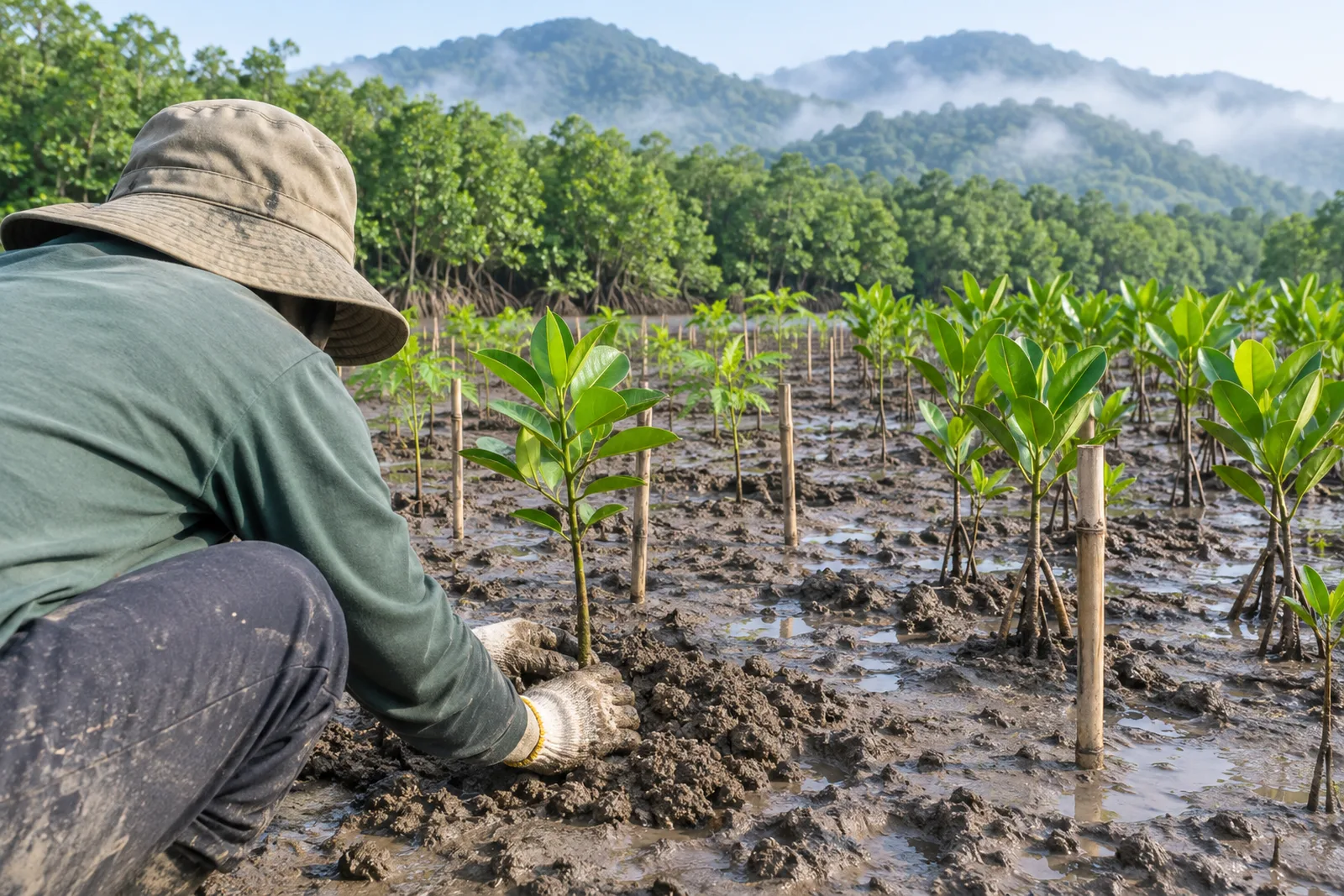
Members pledged to “contribute to the initiative through voluntary tree-growing efforts, ecosystem restoration, and sustainable land management practices, in accordance with their national circumstances, national laws, domestic policies, capacities and development priorities.” The declaration calls for restoring degraded landscapes, including mangroves, peatlands and watersheds, using native and climate-resilient species, and aligning the work with each country’s national climate plan, ANTARA reported.
Why it matters
The declaration goes beyond a planting target. Leaders agreed to strengthen cooperation on primary forests, recognising their role in biodiversity, climate resilience, livelihoods and culture. They also backed community-based forest management and social forestry, with women, young people and local communities involved, and the use of digital tools to make forest monitoring more transparent.
The idea did not arrive overnight. ASEAN agriculture and forestry ministers endorsed a concept note in October 2025 and, at their 48th meeting in October 2026, endorsed an implementation plan, according to their joint statement. The ministers called for the work to go “beyond counting trees”, with priority on ecological suitability, survival and the quality of restoration.
Recognizing that forests are vital assets that sustain biodiversity, support livelihoods, enhance ecosystem services, and contribute significantly to climate change mitigation as major carbon sinks
ASEAN Leaders’ Declaration on the One Billion Trees Growing Initiative
The wider picture
A regional workshop in Bali in May 2026, supported by the International Tropical Timber Organization, focused on what makes restoration last: community incentives and empowerment, ITTO reported. The declaration reflects that, tying forest management to green jobs, training and fair access to forest resources.
The timing matters. The summit came as the region faced El Niño-related climate threats, BusinessMirror noted. The declaration was one of more than 150 documents the summit approved or noted, the Philippine News Agency reported.
Could it work elsewhere?
Many countries and blocs have announced tree targets. In GGND’s view, the useful parts of ASEAN’s version are the emphasis on native species and existing forests, and the ministers’ own warning against simply counting trees. Those lessons apply anywhere: a billion seedlings that die in their first dry season would achieve little.
What remains unresolved
- Voluntary. There are no binding national quotas, so the billion is a shared aim rather than a commitment any one country must meet.
- Money. Leaders called on dialogue partners, financial institutions, the private sector and NGOs for funding. How much will arrive is unknown.
- Survival. The declaration does not set public targets for how many trees must survive, or how this will be reported.
- Losses elsewhere. New planting can be outweighed by forest lost to fires and clearing. In GGND’s view, the protection of primary forests will matter as much as the planting.
What happens next
The ASEAN Secretariat and regional bodies will help members share practice and align national strategies under the implementation plan. GGND will look for the first public progress figures, especially on survival rates and finance.
Sources
- Philippine News Agency ASEAN leaders adopt 1-Billion Trees declaration (15 November 2026)
- ANTARA ASEAN adopts One Billion Trees Initiative (16 November 2026)
- ASEAN Joint Press Statement of the 48th Meeting of the ASEAN Ministers on Agriculture and Forestry (October 2026)
- BusinessMirror ASEAN leaders launch one-billion-tree initiative amid El Niño climate threats (November 2026)
- ITTO Community incentives and empowerment key to successful forest landscape restoration (1 June 2026)
- Philippine News Agency ASEAN leaders approve, note over 150 documents in productive 49th Summit (November 2026)
Analysis and context are by The GGND Team. Where we draw our own conclusions, we say so. To report an error, contact us.