What happened
An international team of researchers has produced the first continent-wide assessment of how well Antarctica’s plant life is protected, and a list of places where protection could do the most good. The study, published in the journal Biological Conservation, found that only 21.4% of the continent’s satellite-detected vegetation lies inside the current network of Antarctic Specially Protected Areas, the British Antarctic Survey (BAS) said.
Using satellite and modelled vegetation data, the team identified 92 candidate sites to inform future protection. Notable examples include the Fildes Peninsula on the north-west Antarctic Peninsula, Taylor Valley in South Victoria Land and the Vestfold Hills in East Antarctica, according to the paper’s abstract. The lead author is Charlotte Walshaw of the University of Edinburgh and BAS.
Why it matters
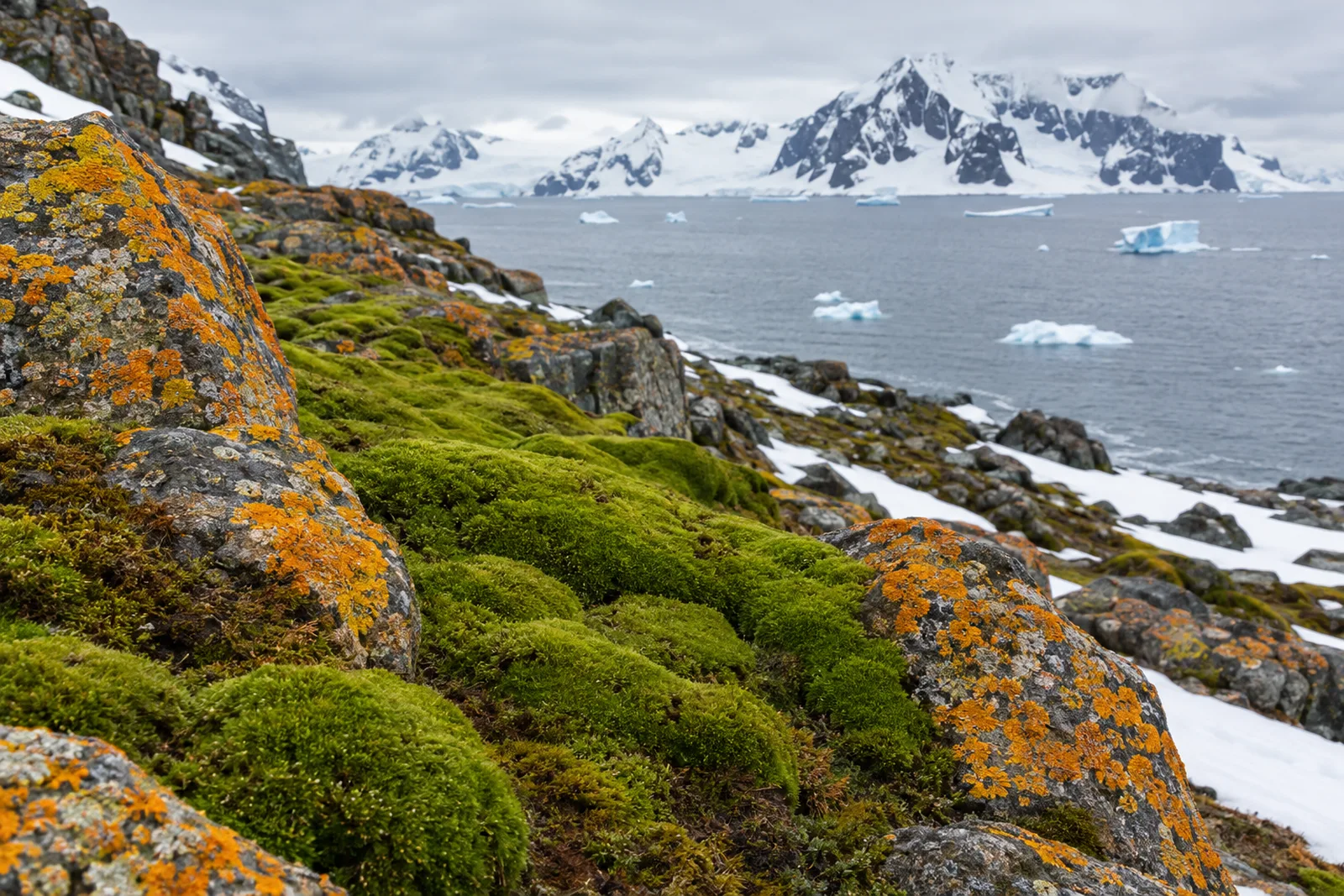
Antarctica is not only ice. Vegetation covers only about 44 square kilometres of the continent, around 0.00031% of its land surface, yet it supports biodiversity, stores carbon and influences local water cycles, BAS explained. Only two flowering plants are native: Antarctic hair grass and Antarctic pearlwort. Most of the diversity is in mosses, liverworts and lichens, some found nowhere else on Earth. More than 150 species of mosses and liverworts and around 400 lichens have been recorded, according to CREAF, the Catalan research centre involved in the study. Some, such as the moss Schistidium antarctici and the lichen Usnea antarctica, occur nowhere else in the world, and all provide food and shelter for insects and microorganisms.
These plants face pressure from climate change, human activity and the arrival of non-native species, the abstract notes. One example is annual meadow grass, Poa annua, which has already become established in Antarctica and can harm native flora, CREAF said. Protection is also uneven. Most of the 16 recognised Antarctic Conservation Biogeographic Regions have less than 10% of their vegetation protected; only one, the north-west Antarctic Peninsula, reaches 27.2%.
The plants are also useful early-warning systems. ‘One interesting feature of bryophytes is that they balance their water content with the surrounding environment,’ said co-author Mariana García Criado, now at Trinity College Dublin and affiliated with CREAF, in the BAS release. That, she explained, makes them very useful for studying climate change. García Criado, who has also worked in Lapland, Svalbard and Greenland, described such places as ‘outdoor laboratories for studying the effects of climate change on biodiversity’, CREAF reported.
Antarctica’s terrestrial vegetation may be sparse and scattered compared with vegetation in other parts of the world, but it plays a fundamental role in sustaining life on land.
Charlotte Walshaw, lead author, University of Edinburgh and British Antarctic Survey
The wider picture
To choose the priority sites, the team weighed several factors: unique or irreplaceable plant communities, places vulnerable to invasive species, locations close to research stations and other infrastructure where human activity poses a risk, and areas important for future conservation targets, BAS said. A slightly higher proportion of the sites lie in continental Antarctica than in the milder maritime Antarctic, the abstract states.
The authors say the findings could contribute to the goal, set in the Kunming-Montreal Global Biodiversity Framework, of protecting at least 30% of the world’s land and sea by 2030, CREAF noted. García Criado said the work is designed to support decision-makers in the Antarctic Treaty System, and EFE Verde reported that the proposal has been put to the Treaty’s Committee for Environmental Protection. It is unusual for the continent’s land plants to get this attention: in GGND’s view, Antarctic conservation debates have long focused on penguins, seals and krill, while these small plant communities have been easy to overlook. The research involved scientists from BAS, the University of Edinburgh, Trinity College Dublin, CREAF, the University of Johannesburg, Chile’s Millennium Institute BASE, the University of Birmingham, the Norwegian Institute for Nature Research and Monash University’s SAEF programme.
Could it work elsewhere?
In GGND’s view, the method travels well. Combining high-resolution satellite maps with systematic conservation planning lets scientists look at an entire, hard-to-reach region at once, rather than relying on scattered field surveys. The same approach could help in other remote places with fragile, patchy habitats, such as high mountains or the Arctic, where decisions are often made with little data.
What remains unresolved
- What satellites miss. The authors acknowledge that some sparse and patchy plant communities may not have been detected, so the true picture could differ.
- Field checks. The 92 sites are candidates. The next stage is to combine satellite data with field surveys to confirm the vegetation at priority locations.
- Political agreement. New Antarctic Specially Protected Areas need agreement among Antarctic Treaty parties, a process that often takes years.
- Busy places. Several priority areas, such as the Fildes Peninsula, are near research stations, where protection must be balanced with science and logistics.
What happens next
The team plans to pair satellite observations with field expeditions to provide the evidence needed for future protection, BAS said. The findings are now available to the Antarctic Treaty’s environmental advisers as they consider where new protected areas could be designated.
Sources
- British Antarctic Survey Antarctica’s tiny plant life gets a conservation boost (29 October 2026)
- Biological Conservation Walshaw et al., Identifying priorities for systematic Antarctic vegetation protection at the continental scale (2026)
- NERC Open Research Archive Identifying priorities for systematic Antarctic vegetation protection at the continental scale, abstract (October 2026)
- EFE Verde Solo una quinta parte de la vegetación de la Antártida está protegida (27 October 2026)
- CREAF Only one-fifth of Antarctica’s vegetation is protected, and a study identifies priority areas for expanding protection (27 October 2026)
Analysis and context are by The GGND Team. Where we draw our own conclusions, we say so. To report an error, contact us.