What happened
On Monday 23 November, Tanzania’s President Samia Suluhu Hassan launched the African Union’s roadmap on reproductive, maternal, newborn, child and adolescent health for 2026 to 2030, at the opening of the Fifth International Conference on Public Health in Africa (CPHIA 2026) in Addis Ababa, The Citizen reported. The conference runs until 27 November and is co-hosted by the Africa Centres for Disease Control and Prevention (Africa CDC) and Ethiopia’s government, Africa CDC said.
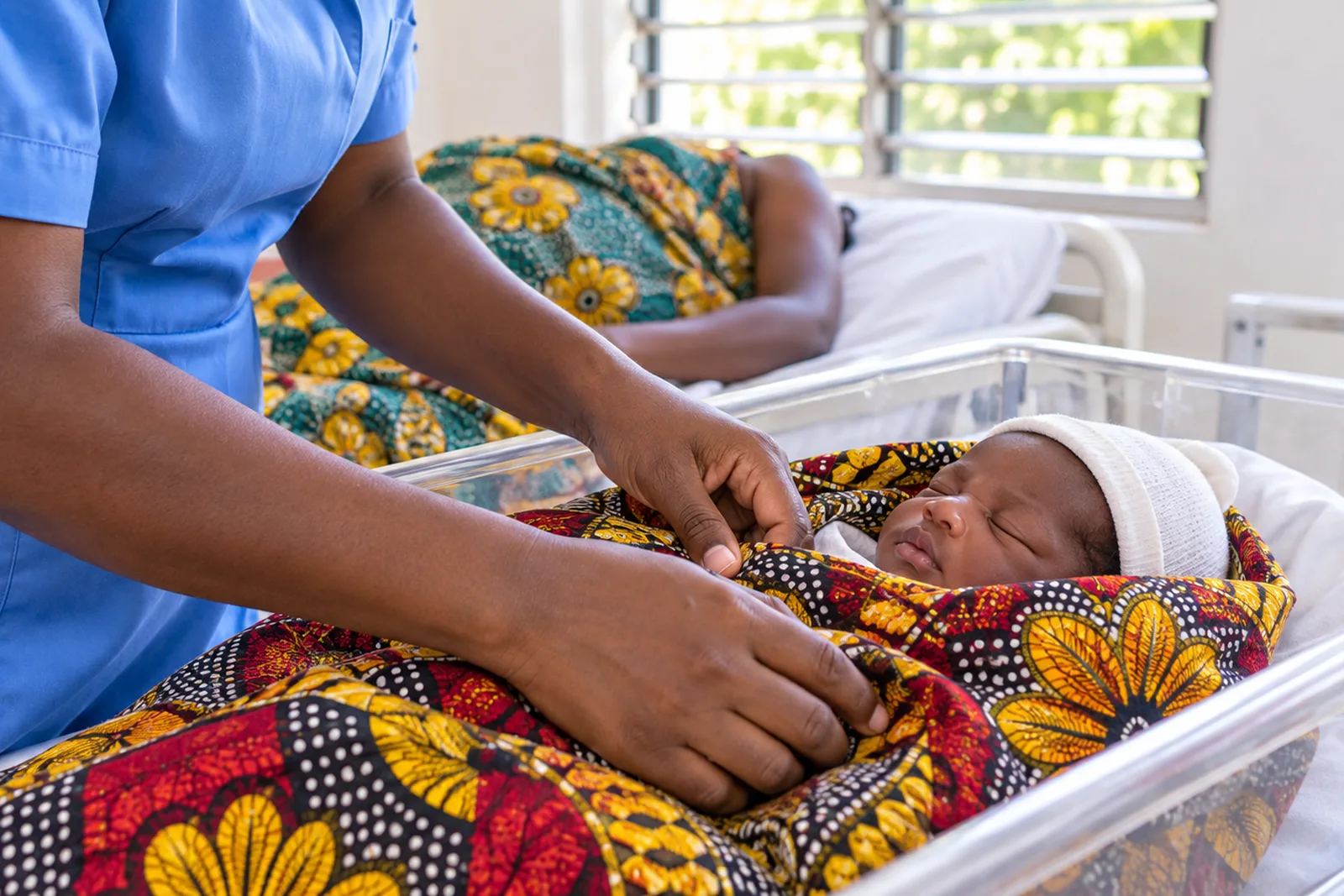
The plan is built around what it calls the “Three Zeros”: zero home delivery, with every birth managed by skilled staff in an equipped facility; zero preventable maternal and newborn deaths; and zero unvaccinated children, with a focus on “zero-dose” children who have never had a routine vaccine, according to the roadmap’s executive summary. Hassan was appointed AU Champion for Maternal and Child Health in February 2026.
At the launch, Hassan announced an initial 60 scholarships to train specialists in midwifery, anaesthesia, obstetrics and gynaecology and newborn care, and urged member states to appoint national focal points and write the roadmap’s goals into their health strategies, Nile Post reported.
Why it matters
Africa accounts for about 70% of the world’s maternal deaths and more than half of its zero-dose children, the roadmap says. A continental report cited at the launch put maternal deaths in AU member states at about 178,600 in 2023, alongside about 1.18 million newborn deaths, Nile Post reported. Most are preventable.
The roadmap describes itself as “a continental political and delivery-acceleration framework that strengthens national plans and continental commitments rather than creating a new policy or parallel implementation system”. Progress is to be tracked with a seven-indicator Presidential RMNCAH Scorecard. In September, at a side event during the UN General Assembly, African leaders agreed a biennial heads-of-state review and raised concern about declining aid (Africa CDC).
Safeguarding mothers, protecting children and investing in young people are fundamental responsibilities of our leadership.
Samia Suluhu Hassan, President of Tanzania and AU Champion for Maternal and Child Health
The wider picture
Hassan used the launch to point to progress at home. She said a new survey had put Tanzania’s maternal mortality ratio at about 75 deaths per 100,000 live births, down from 104, and that the findings would be launched in Dar es Salaam on 26 November, The Citizen reported. The earlier figure of 104 comes from Tanzania’s 2022 Demographic and Health Survey.
That figure needs care. A study in the Bulletin of the World Health Organization notes that the 2022 survey estimate was based on 30 reported deaths, with a 95% confidence range of 59 to 149, while the most recent UN estimate for Tanzania in 2023 was 276 per 100,000. The authors say such differences are expected because maternal deaths are under-reported everywhere and estimates rest on limited data. In GGND’s view, the direction of travel in Tanzania looks real, but the exact level is uncertain, and the new number should be judged when the survey is published.
Could it work elsewhere?
The tools are known: skilled birth attendants, emergency referral, blood, vaccines and functioning clinics. What the roadmap adds is political pressure from the top, with a head of state tracking a short list of numbers and leaders reviewing progress every two years. In GGND’s view, this kind of named, public accountability can work, as Africa’s push on malaria and polio showed, but only if national budgets follow.
What remains unresolved
- Who pays. The roadmap relies on countries raising domestic health spending at a time of falling aid and tight budgets, which leaders themselves listed as a concern in September.
- Unpublished data. Tanzania’s new figure of about 75 deaths per 100,000 comes from a survey that has not yet been released. We have not seen its methods.
- Measurement. Survey and UN estimates for the same country can differ several-fold. Without better death registration, progress towards “zero preventable deaths” will be hard to prove.
- “Zero home deliveries”. The goal depends on women being able to reach a staffed, equipped facility in time. In remote areas, that means roads, transport and staff that do not yet exist.
What happens next
Africa CDC and the AU Champion’s Secretariat were due to hold a high-level dialogue in Addis Ababa on 24 November on putting the roadmap into practice, Nile Post reported, and Tanzania’s survey results are due on 26 November. GGND will look at the new survey’s methods, and at whether member states name focal points and report against the scorecard.
Sources
- Africa CDC (via ReliefWeb) Continental Roadmap on Reproductive, Maternal, Newborn, Child and Adolescent Health (2026–2030) (8 October 2026)
- Africa CDC CPHIA 2026: African Leaders to Convene in Addis Ababa to Advance Health Security and Sovereignty (November 2026)
- Africa CDC High-Level Communiqué, AU Champion for Maternal and Child Health side event at UNGA81 (23 September 2026)
- The Citizen (Tanzania) Samia launches continental roadmap to end preventable maternal, newborn deaths (23 November 2026)
- Nile Post President Samia Launches African Maternal and Child Health Roadmap to End Preventable Deaths (23 November 2026)
- Citizen Digital President Samia launches African maternal and child health roadmap (23 November 2026)
- Bulletin of the World Health Organization Measurement of maternal mortality, United Republic of Tanzania (July 2026)
Analysis and context are by The GGND Team. Where we draw our own conclusions, we say so. To report an error, contact us.