What happened
When a species falls to a few dozen animals, a common assumption is that it is probably finished: too inbred, too fragile, too expensive to save. A new study tests that idea against the record. Published in Proceedings of the Royal Society B on 4 November, it looks at all 147 bird and mammal species known to have been below 50 individuals in the wild at any point since 1950. Of these, 141 had enough time since their low point for an outcome to be judged.
The authors, from Monash University in Australia and the Zoological Society of London (ZSL), recorded what conservation action, if any, each species received. They then used statistical modelling to see how that action related to what happened next. The paper is part of a special feature marking 200 years of ZSL.
The results are striking. Of the 51 species that received direct conservation action, such as control of invasive predators, habitat restoration, captive breeding or moving animals to safer sites, 61 per cent recovered to at least 100 individuals, Monash University said. Of the species that received no direct support, 37 per cent went extinct and only 2 per cent reached 100 individuals.
Why it matters
Conservation money is limited, and some experts argue for “triage”: concentrating effort where success seems likely and letting the rarest species go. Small numbers are often treated as a reason in themselves. The paper’s abstract describes its findings as “an empirically grounded counterpoint to advocates of abandonment of such species under a conservation triage framework.”
“For decades, conservation decisions have been influenced by the idea that once a population drops below a certain threshold, recovery is severely inhibited by smallness itself due to genetic or demographic factors,” lead author Dr Donal Smith said, Phys.org reported. “When we actively tackle the external pressures driving their decline and directly support their numbers, small populations show a striking capability to recover.”
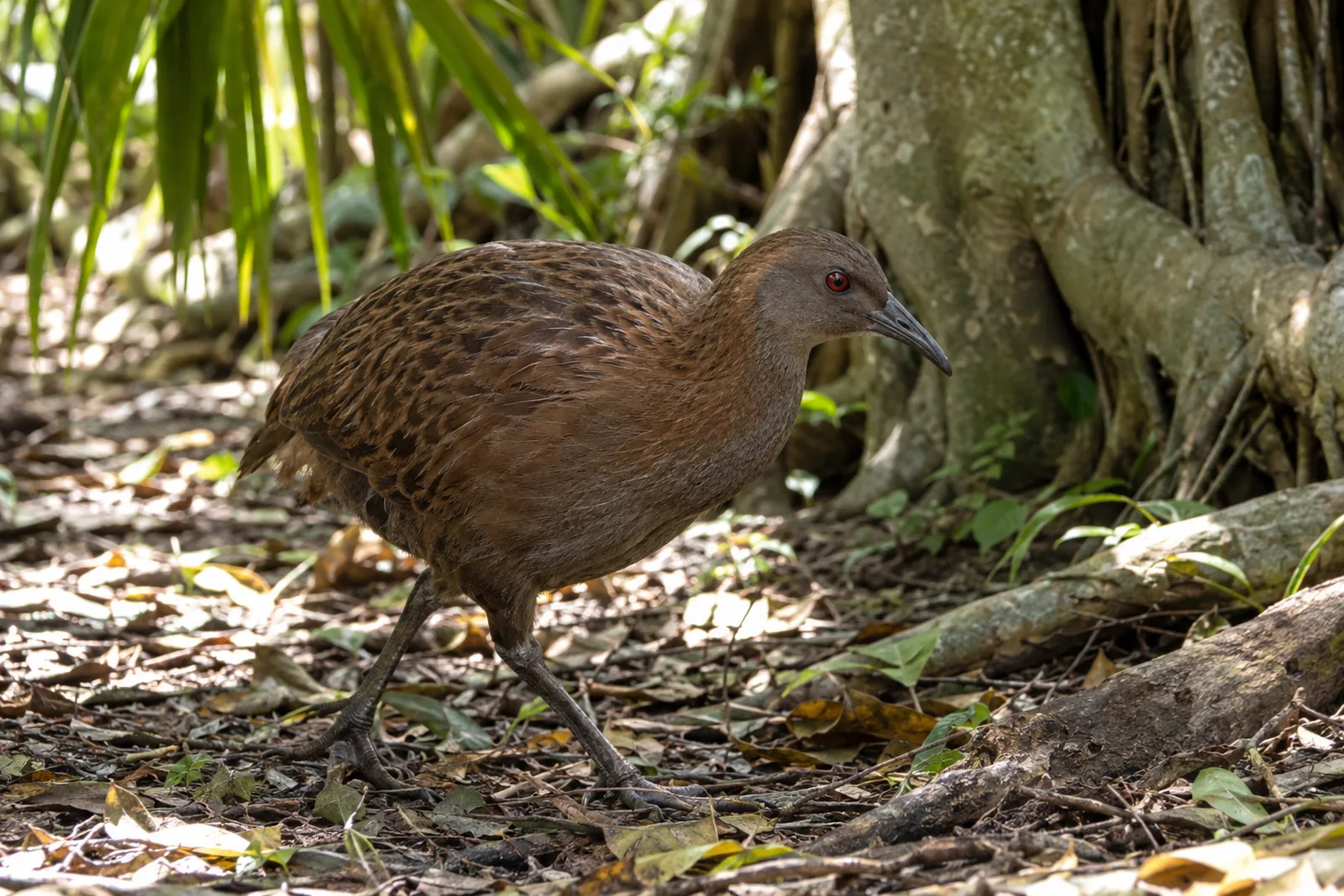
The highest modelled chances of recovery came when two kinds of action were combined: removing what was driving the decline, and directly managing the population itself. Australia’s Lord Howe woodhen is one example. It rebounded from just 23 birds in the late 1970s to more than 1,600 today, Xinhua reported, citing the study.
Our work shows that population size alone shouldn’t determine whether we give up on a species.
Dr Donal Smith, lead author, Monash University
The wider picture
Accounts of dramatic recoveries seem to challenge the pessimistic view, the authors write, but without looking at all actions and outcomes, “the representativeness of success stories alone is unclear.” This study’s strength is that it examines every species that fell this low, whatever happened to them, so the successes are not cherry-picked.
“Abandoning critically endangered species because their numbers look too low is a mistake,” said co-author Professor Rohan Clarke of Monash. “While genetic risks are real, our history shows that human intervention works.” In GGND’s view, the finding is less about any one species than about a habit of thought. A low count describes how much work is needed. It does not, by itself, tell you the work is hopeless.
Could it work elsewhere?
The tools named in the study, such as predator control, habitat restoration, captive breeding and translocation, are already used worldwide, from island bird projects in the Pacific and Indian oceans to mammal recovery programmes on several continents. What the study adds is evidence that these tools have worked across a wide range of species at the very lowest numbers. It also suggests that the decision to act matters more than the starting count. That is useful for governments and funders deciding which recovery plans to back.
What remains unresolved
- Association, not proof. This is an observational study. Species that received help may have differed in other ways from those that did not, and the paper includes a section on how to interpret the link.
- Still dependent on people. Reaching 100 animals is a milestone, not safety. The authors discuss long-term viability and “conservation dependency”: many recovered species still need constant management.
- Genetic risks remain. Clarke says genetic risks “are real”. Recovery in numbers does not undo lost genetic diversity.
- Only birds and mammals. The review does not cover reptiles, amphibians, fish, insects or plants, where outcomes may differ.
What happens next
The paper is open access, and its data and code are available as supplementary material on Figshare, so other researchers can test and extend the analysis. For conservation agencies, the practical message is that species at the brink should be assessed for what is driving their decline and what action is possible, not written off because of their numbers alone. As Phys.org summed it up, the findings “offer an empirically grounded note of hope for global biodiversity.”
Sources
- Proceedings of the Royal Society B Inevitable fates? The recovery potential of small populations, Smith et al. (published online 4 November 2026)
- Monash University Small populations, big potential: New research overturns extinction assumptions (November 2026)
- Phys.org Tiny animal populations can recover, challenging assumptions about extinction risk (5 November 2026)
- Xinhua Tiny wildlife populations can recover from brink of extinction: study (5 November 2026)
Analysis and context are by The GGND Team. Where we draw our own conclusions, we say so. To report an error, contact us.