What happened
A new trial in England will test whether simple blood tests taken at the GP can help find several hard-to-spot cancers earlier. The government announced on 4 November that more than 20,000 NHS patients at at least 200 GP practices will take part in the trial, called STRIDE-RCT. It describes it as a world first.
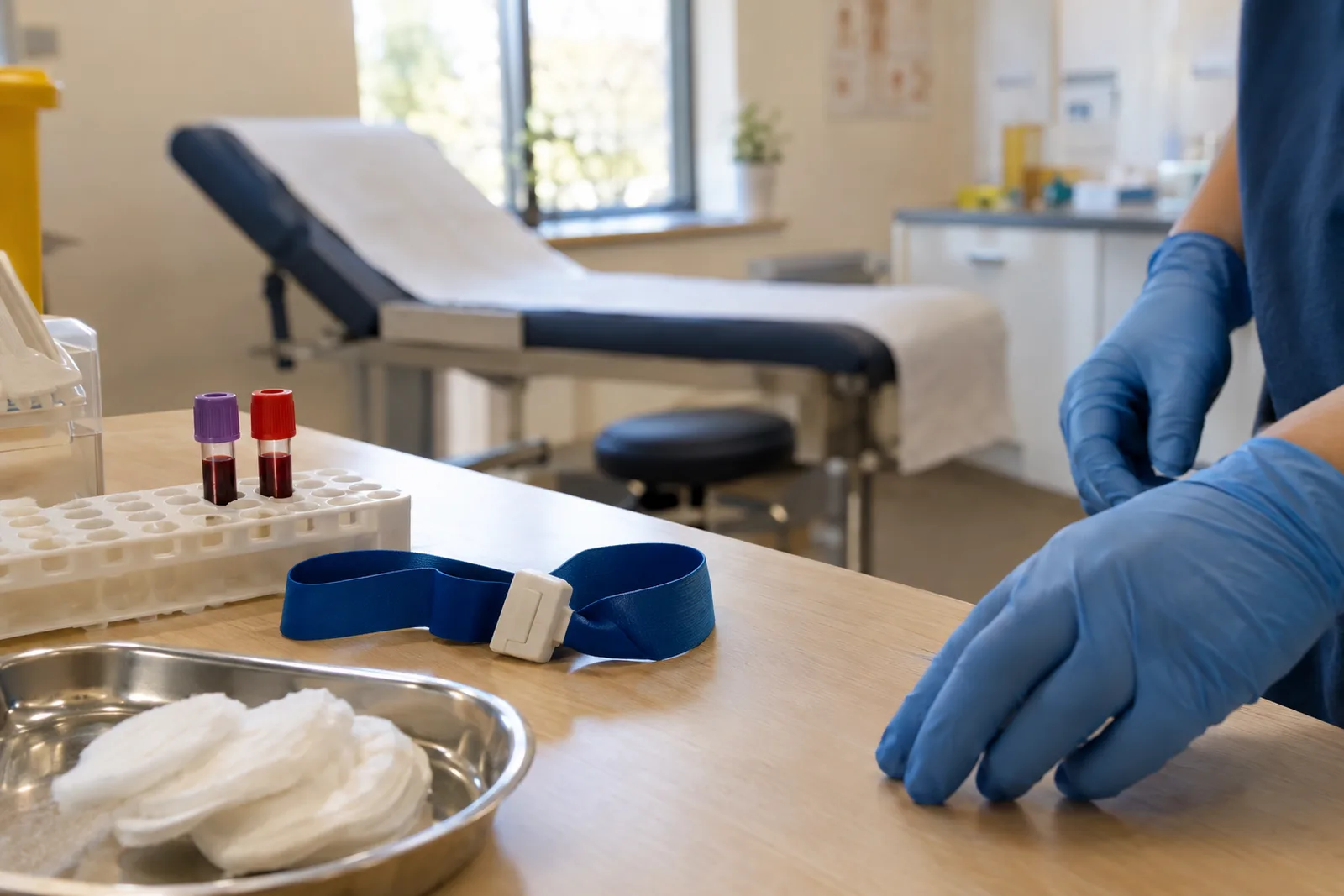
Patients aged 45 and over who visit their GP with abdominal symptoms, such as persistent bloating or discomfort, will be offered the chance to join. Most will give one or two tubes of blood alongside routine tests. The samples will be checked for signs of a range of cancers, including bowel, stomach, oesophageal, pancreatic, liver, ovarian, kidney, bladder and prostate cancer. The tests will also try to suggest where in the body a cancer is.
The trial is led by the University of Birmingham and funded with up to £8.49 million from the Office for Life Sciences through the National Institute for Health and Care Research (NIHR), the university said. The tests use several technologies, including artificial intelligence, tumour DNA detection and measurements of proteins in the blood, according to the NIHR.
Why it matters
Abdominal cancers are often found late because the early signs look like everyday complaints. Around 71,000 people are diagnosed with pancreatic, stomach, liver, ovarian or bowel cancer in England each year, and there are almost 35,000 deaths from these cancers, the government said. Timing makes an enormous difference. Around nine in ten people diagnosed with bowel cancer at stage 1 survive at least five years, compared with around one in ten at stage 4.
There is also a problem of too many referrals. Only 2 to 6 per cent of urgent cancer referrals lead to a cancer diagnosis, the government said. That means worry and hospital appointments for many people who turn out to be well, and longer waits for those who are ill. A better triage tool could help on both fronts.
“Too many patients with cancer reach me after months of vague symptoms that were hard to pin down,” said Professor Aneel Bhangu, a colorectal surgeon and the trial’s co-chief investigator. “At the same time, most people referred urgently do not have cancer, causing unnecessary worry and expense.”
These blood tests might help GPs tell the two apart, but we need to know for certain before they are used across the NHS, and this trial is designed to give that answer quickly.
Professor Aneel Bhangu, Co-Chief Investigator, University of Birmingham
The wider picture
The idea of a blood test that finds many cancers at once is not new, and the evidence so far is mixed. A separate NHS trial of a test called Galleri recently failed to meet its main goal of reducing late-stage cancer diagnoses, although researchers are still assessing its potential benefits, the BBC reported. STRIDE-RCT is different in an important way. It tests people who already have symptoms and are seeing their GP, rather than screening healthy people. It is also a platform trial, which allows several tests to be assessed within one study.
“GPs have long needed better tools to help them navigate that uncertainty by identifying which patients require further testing,” Michelle Mitchell of Cancer Research UK told the BBC, calling the trial “an important step”. The BMJ also reported the trial’s launch. In GGND’s view, the most encouraging thing here is the design: the NHS is testing the technology properly before rolling it out, rather than the other way round.
Could it work elsewhere?
If the tests prove accurate, the approach could suit any health system where family doctors act as gatekeepers to specialist care, from the rest of the UK to much of Europe. A blood draw in a GP surgery needs no scanner and little extra equipment. The trial deliberately covers inner-city, rural, coastal and deprived communities so that the results apply to everyone, the NIHR said. That matters for countries where cancer is often found late among poorer and more remote patients.
What remains unresolved
- Accuracy in real life. The whole point of the trial is that nobody yet knows how well these tests work in general practice. Bhangu says “we need to know for certain before they are used across the NHS.”
- Not a diagnosis. A positive result helps the GP decide on an urgent referral, but it is not a confirmed cancer diagnosis. A negative result is not a guaranteed all-clear, the BBC noted.
- Mixed track record. The Galleri result shows that promising multi-cancer tests can disappoint when tested at scale.
- Cost and capacity. If the tests work, the NHS will still have to decide whether they are affordable and whether hospitals can handle any extra referrals.
What happens next
The trial will assess how well the tests work alongside GPs’ own judgement before any decision on a nationwide rollout, the government said. It forms part of the National Cancer Plan for England, which aims to diagnose cancers earlier. “We are at the start of revolution in cancer diagnosis,” said Professor Peter Johnson, NHS National Clinical Director for Cancer, “and this trial will help us to find out whether blood tests can help GPs get the right patients to the right tests sooner.”
Sources
- GOV.UK (Department of Health and Social Care) New NHS blood test trial to help spot cancers earlier (4 November 2026)
- NIHR World-first NIHR-backed blood test trial launched to spot cancers earlier (4 November 2026)
- University of Birmingham New blood test-based clinical trial to help spot cancers earlier (4 November 2026)
- BBC News ‘Multi-cancer’ blood tests coming to some GP surgeries soon (November 2026)
- The BMJ Multi-cancer blood tests to be trialled at GP surgeries in England (November 2026)
Analysis and context are by The GGND Team. Where we draw our own conclusions, we say so. To report an error, contact us.