What happened
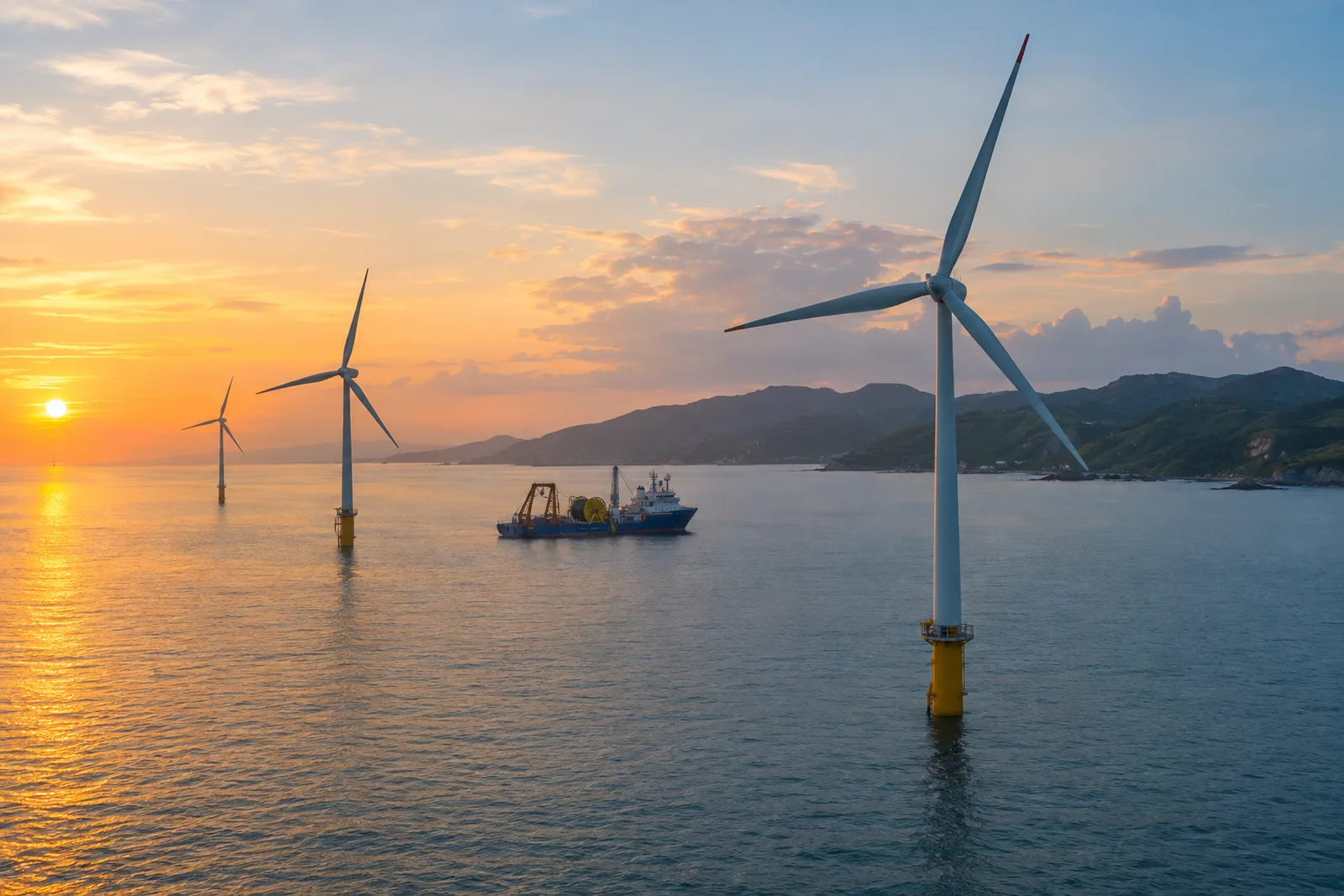
On 26 October 2026, Singapore’s Energy Market Authority (EMA) granted Conditional Approval to Sembcorp Utilities to import a total of 1.3 gigawatts (GW) of electricity. Sembcorp is working with MY Energy Consortium, made up of Malaysia’s Petronas and Tenaga Nasional Berhad (TNB), and with PetroVietnam Technical Services Corporation (PTSC), to source low-carbon electricity including offshore wind from Vietnam and solar power from Malaysia.
Under the proposed arrangement, power generated in Vietnam would be sent through Malaysia and supplied to both Malaysia and Singapore, with Malaysia acting as both buyer and transit country, the partners said in a joint media release published by Petronas. Battery storage in Malaysia is also part of the plan. The approval was presented at the opening of Singapore International Energy Week, witnessed by ministers from all three countries.
Why it matters
Singapore is small and densely built, with little room for solar farms or wind turbines. Low-carbon electricity imports “form a key part of Singapore’s strategy to decarbonise the power sector”, EMA says. It has already granted conditional approvals and licences to import projects from Australia, Cambodia, Indonesia, Malaysia and Vietnam.
What is new here is the route. Existing arrangements are bilateral, between Singapore and Indonesia or Singapore and Malaysia; PTSC’s chief executive Tran Ho Bac told Nhan Dan newspaper that a trilateral corridor crossing three countries’ waters is unprecedented in Southeast Asia, as reported by Vietnam.vn. Malaysia would gain too: about 30 per cent of the electricity from the Vietnamese wind arrangement would go to Peninsular Malaysia, Deputy Prime Minister Fadillah Yusof told Bernama, as reported by the New Straits Times. He said Malaysian contractors would also have opportunities to build transmission infrastructure, including undersea cables.
The project will form a backbone transmission network from Vietnam, not only for Vietnam, Malaysia, and Singapore, but also for other countries to connect to.
Tran Ho Bac, President and CEO of PTSC, speaking to Nhan Dan newspaper
The wider picture
The project is a step towards the long-planned ASEAN Power Grid, which would let countries in the region trade electricity according to their resources. “When there is a shortage, we can exchange across border. We can buy from our neighbours,” Fadillah said, citing Laos’s hydropower and Thailand’s solar as examples. He pointed to the Laos-Thailand-Malaysia-Singapore Power Integration Project as an existing working model of cross-border trading, the New Straits Times reports.
Fadillah said the existing four-country arrangement is being extended: Vietnam has agreed to take part, and further talks are needed with Cambodia. Indonesia already buys electricity from Sarawak through a link with West Kalimantan, and the Philippines has agreed in principle to connect to the regional grid through Sarawak, he added.
The partners signed a Joint Development Agreement in May 2025 on the sidelines of the 46th ASEAN Summit in Kuala Lumpur, EMA notes. According to Tran Ho Bac, the corridor could need investment of up to US$10 billion, with a final investment decision for its first phase expected in 2029 and generation expected to run for about 30 years, Vietnam.vn reports.
Could it work elsewhere?
In GGND’s view, the model matters most for places where demand is high but space for renewables is scarce, and where neighbours have wind, sun or water to spare. Similar ideas exist in Europe’s North Sea grid plans. The hard part is not the engineering but trust: long contracts, shared rules and certificates that prove the power is clean as it crosses borders.
What remains unresolved
- Only conditional. Over the next few years the consortium must obtain approvals in all relevant jurisdictions, sign power purchase agreements with buyers and secure enough financing, EMA says.
- A missing market tool. Fadillah said Vietnam has not yet developed a mechanism for exchanging renewable energy certificates, and that without one “the project will not be viable”.
- Treaty-level backing. Tran Ho Bac said an intergovernmental agreement between the three countries is needed, and that transmission infrastructure between them must be upgraded.
- A long wait. Imports are not expected until 2035. Large offshore wind farms and subsea cables also bring environmental and cost risks that have not yet been publicly assessed for this route.
What happens next
PTSC plans to begin surveys on the Vietnamese continental shelf in November, followed by technical designs and financial plans, Vietnam.vn reports. ASEAN members hope to firm up regional grid arrangements next year, moving beyond memoranda of understanding, Fadillah said. GGND will follow the project towards its 2029 investment decision.
Sources
- Energy Market Authority (Singapore) EMA grants Conditional Approval to Sembcorp Utilities for 1.3GW of electricity imports (26 October 2026)
- Petronas Vietnam-Malaysia-Singapore renewable electricity initiative reaches key milestone with conditional approval from Singapore’s Energy Market Authority (26 October 2026)
- New Straits Times (Bernama) Malaysia to benefit from cross-border electricity project with Vietnam, Singapore (26 October 2026)
- Vietnam.vn (Nhan Dan) Singapore officially grants conditional approval for the import of 1.3GW of electricity from Vietnam (26 October 2026)
Analysis and context are by The GGND Team. Where we draw our own conclusions, we say so. To report an error, contact us.