What happened
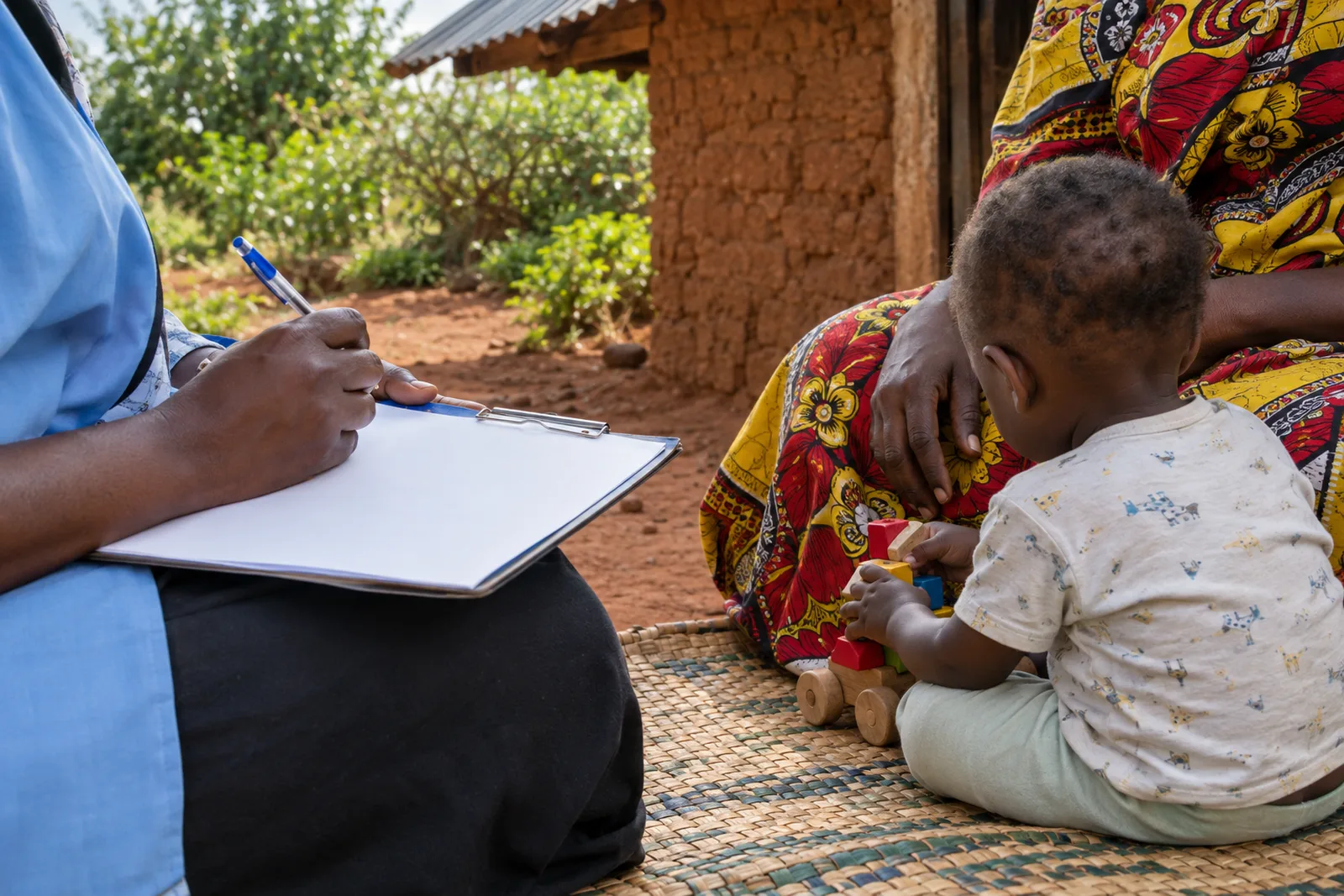
On 3 November, Kenya published the results of its 2025-26 Mini Demographic and Health Survey. For the first time, the national survey measured how the country’s youngest children are developing, from as young as three months old, according to the World Health Organization’s Africa office. Field teams used WHO’s Global Scales for Early Development to check whether babies and toddlers are reaching the milestones expected for their age in movement, language and thinking, and social skills. Older children were assessed with UNICEF’s Early Childhood Development Index 2030.
The headline result is encouraging. Overall, 85% of children aged 3 to 23 months and 83% of children aged 24 to 59 months are developmentally on track, WHO reported. Children whose mothers have more education are more likely to be on track.
The survey is the eighth demographic and health survey in Kenya since 1989 and the first “mini” version, designed to give an update between the full surveys that take place about every five years. It was led by the Kenya National Bureau of Statistics with the Ministry of Health and collected data from 5 November 2025 to 10 February 2026 from a nationally representative sample of 29,935 households, WHO said. The Nation reported that 21,231 women aged 15 to 49 were interviewed.
Why it matters
Survival has long been the main yardstick for child health. “For a long time, Kenya has tracked children’s survival and children’s growth. We have tracked mortality, immunization, height, and weight,” Prof. Amina Abubakar of the Aga Khan University’s Institute for Human Development told WHO. Now there are figures for how children are actually developing, county by county. In GGND’s view, that matters because the first two years of life shape so much of what follows, and because a problem that is not measured is easy to ignore.
The survival numbers are moving in the right direction too. The under-five mortality rate fell to 37 deaths per 1,000 live births, from 41 in 2022. In 2025, 91% of births took place in a health facility, up from 88%, and 72% of women had at least four antenatal care visits during their most recent pregnancy, up from 66%, WHO reported. The survey put maternal deaths at 263 per 100,000 live births, The Nation reported. Dr Ouma Oluga, Principal Secretary for Medical Services, told the paper: “We have been seeing this number in the 300s, and for the first time, we’ve made progress at 263 per 100,000, but that’s not enough.”
Counties can see where their children are falling behind so that they can target nurturing care, early stimulation, and parenting support where it’s needed most.
Prof. Amina Abubakar, Aga Khan University’s Institute for Human Development, quoted by WHO
The wider picture
Other indicators improved as well. The share of girls aged 15 to 19 who have ever been pregnant fell from 14.8% in 2022 to 11.9%, and exclusive breastfeeding of babies under six months rose from 60% to 72%, The Nation reported. Kenya’s fertility rate fell to 3.1 children per woman, from 3.4 in 2022, KBC reported.
But the averages hide large gaps. Among children aged 3 to 23 months, the share on track ranges from 52% in West Pokot to 97% in Kakamega, said Dr Makeba Shiroya of WHO Kenya. Teenage pregnancy is roughly three times higher among the poorest women than the richest (15% against 5%), KBC reported, and West Pokot has the highest rate, at 25%.
There is also a clear step backwards. Households owning at least one insecticide-treated net dropped from 54% to 41%, and the share of children under five sleeping under a net fell from 51% to 42%, The Nation reported. Only 9.5% of pregnancies had the eight antenatal contacts that are recommended. “We are doing very badly,” Dr Oluga said of that figure.
Could it work elsewhere?
The tools are already shared. Demographic and health surveys run in dozens of countries with technical help from the DHS Program, and WHO’s Global Scales for Early Development is designed to be used across countries. In GGND’s view, Kenya’s example shows that adding child development to an existing household survey is a practical, relatively cheap way to get comparable data, as long as the results are broken down to the level where budgets are actually decided, which in Kenya means the counties.
What remains unresolved
- Turning data into services. The survey shows where children are falling behind, but closing the gap between West Pokot and Kakamega will need nurturing care, parenting support and early stimulation on the ground, and money to pay for them.
- Mosquito nets. The sharp fall in net ownership and use since 2022 is a risk for malaria among young children and pregnant women, and the survey itself does not explain the cause.
- Mothers’ health. At 263 deaths per 100,000 live births, maternal mortality is still far above the government’s target of 70 or below under its Every Woman, Every Newborn Everywhere campaign, The Nation reported. Survey-based estimates of maternal deaths also carry wide margins of uncertainty, so in GGND’s view the trend should be read with care.
- A snapshot, not a trend. This is the first national measurement of development from three months old, so there is no earlier figure to compare it with yet.
What happens next
The Kenya National Bureau of Statistics describes the mini survey as a bridge to the next full survey. “We are a bridge between the 2022 KDHS and the next KDHS in the near future,” its acting Director General, Benjamin Avusevwa, said at the launch, KBC reported. The full report is available from WHO’s Kenya office. “Data is not just for the purposes of show, but for the purpose of improving the lives of the people that depend on our actions,” Dr Oluga said, according to WHO. In GGND’s view, the test will be whether counties with the lowest scores receive more support before the next survey measures them again.
Sources
- WHO Regional Office for Africa Kenya’s first mini demographic and health survey tracks how its youngest children are developing (3 November 2026)
- WHO Regional Office for Africa Kenya Mini Demographic and Health Survey 2025-26 (report, November 2026)
- Nation Fewer mothers die, but fewer families sleep under nets, new survey shows (4 November 2026)
- KBC Teenage pregnancies decline to 11.9pc, but poverty gap persists - Survey (3 November 2026)
Analysis and context are by The GGND Team. Where we draw our own conclusions, we say so. To report an error, contact us.