What happened
On Monday 2 November, Kenya’s Environment Cabinet Secretary, Deborah Barasa, launched the Kenya Watershed Services Improvement Project, known as KEWASIP, in Nairobi. The five-year programme aims to restore 200,000 hectares of degraded land and to benefit about 750,000 people across 12 counties, The Standard reported. It is expected to create more than 25,000 jobs through activities such as agroforestry and forest product value chains.
The project is worth US$200 million, about KSh26 billion, and is financed entirely by a credit from the International Development Association, the World Bank’s fund for lower-income countries, according to the World Bank’s project document. Its official objective is to expand the area under sustainable land and watershed management and to improve the livelihoods of communities in the project areas.
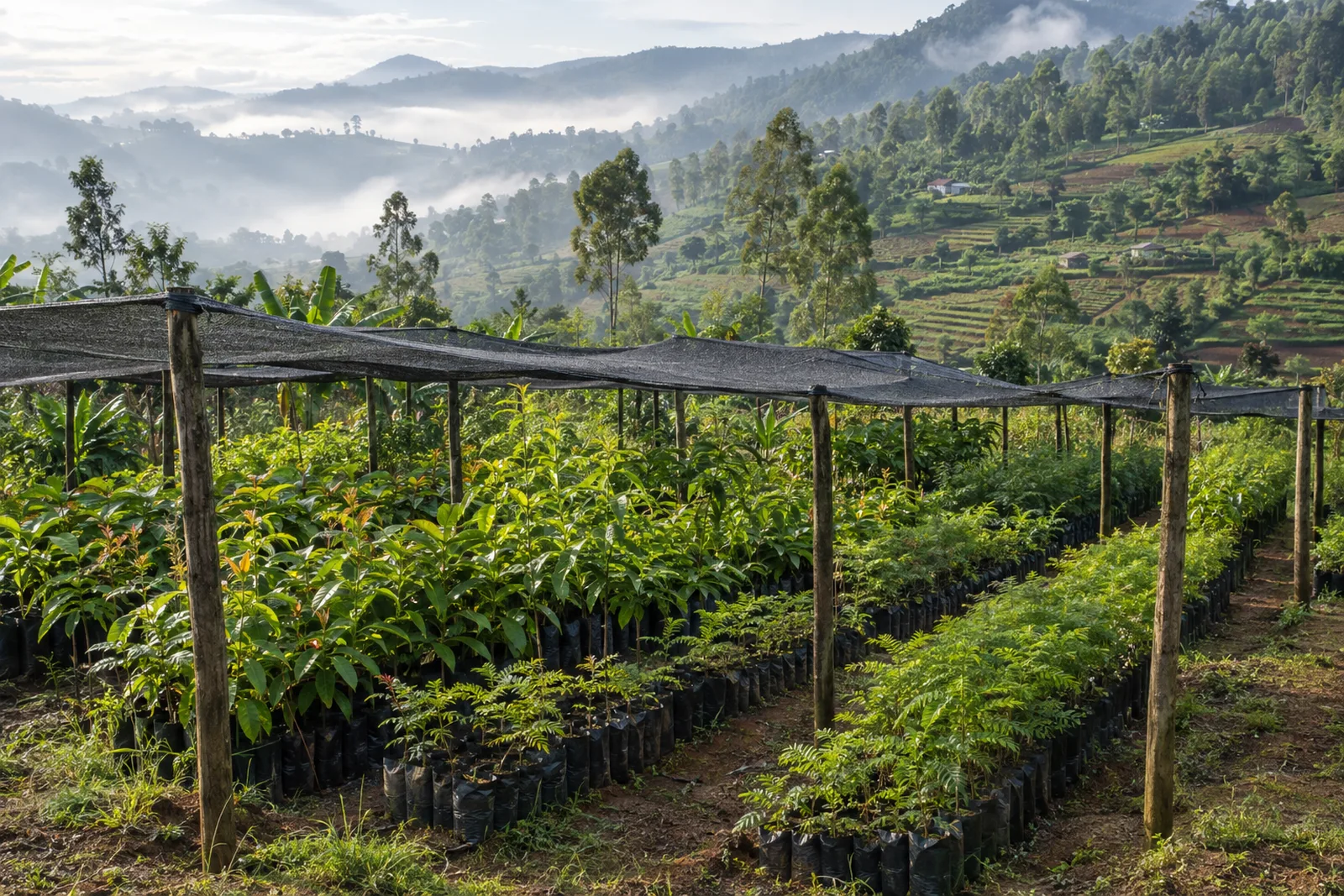
The work will focus on five landscapes: Marsabit Hills, Marmanet, Nyambene Hills, Chyulu Hills and Shimba Hills. Together they span Marsabit, Isiolo, Meru, Tharaka Nithi, Laikipia, Samburu, Baringo, Makueni, Kitui, Garissa, Tana River and Kwale counties, KBC reported. The plan includes growing 240 million seedlings, 220 million of them indigenous trees and 20 million for agroforestry, and supporting ten tree-crop value chains, The Star reported.
Why it matters
Kenya’s hills and water towers store rain, feed rivers and recharge groundwater. When they are stripped and eroded, farms, taps and hydropower suffer. The World Bank’s project document cites a national assessment which found that high levels of land degradation are likely on about 88.6 per cent of Kenya’s land, and estimates the losses from degradation at about US$1.3 billion a year. Natural resources support more than 80 per cent of livelihoods, the same document says.
Ms Barasa told the launch that degradation ‘is therefore not merely a conservation concern; it is an economic and development challenge’, The Star reported. She urged county governments to build the work into their own plans and to protect hilltops, riverbanks and community forests. In GGND’s view, the most promising feature is the design: rather than planting trees wherever space allows, the project will concentrate on hydrosheds, the river catchments around gazetted water towers and major rivers.
Restoration must go beyond tree planting. It must address the underlying causes of degradation, improve land management, protect biodiversity and create sustainable economic opportunities for communities.
Deborah Barasa, Cabinet Secretary for Environment, Climate Change and Forestry, as reported by The Standard
The wider picture
KEWASIP is part of a much larger national ambition. Kenya’s National Landscape and Ecosystem Restoration Strategy aims to restore 10.6 million hectares by 2032, and the government’s 15 Billion Tree Growing Programme aims to raise national tree cover to 30 per cent by the same year, The Standard reported. Measured against those targets, 200,000 hectares is modest, but it comes with dedicated money, a monitoring system and five years of support.
The World Bank’s document divides the money into three parts: US$30 million to strengthen policy, laws and the institutions that manage watersheds, US$150 million for restoring land on private and community holdings and in gazetted forests, and US$20 million for project management and training. Priority beneficiaries include community interest groups that manage natural resources, nature-based enterprises and vulnerable and marginalised communities. The Standard also reported that more than US$25 million in additional grant financing from ProGreen, the Climate Investment Funds and the Global Environment Facility is being processed.
Officials were frank about the pressure. Forestry Principal Secretary Gitonga Mugambi called for careful use of the funds, and Kenya Forest Service Chief Conservator Alex Lemarkoko appealed for more resources from donors, noting that seed propagation is expensive, The Star reported.
Could it work elsewhere?
Many countries in East Africa and the Sahel face the same mix of overgrazing, erosion and failing water supplies. In GGND’s view, KEWASIP’s approach of linking restoration to whole river catchments, county planning and local incomes is transferable. Its success will depend less on the number of seedlings than on whether communities have reasons to protect the land once the project money ends.
What remains unresolved
- A loan, not a gift. The US$200 million is an IDA credit that Kenya will have to repay, at a time when debt is already a strain on public budgets.
- Risks to people. The World Bank rates the project’s environmental and social risk as high. Its document warns of possible restrictions on access to land and resources, displacement and the exclusion of Indigenous Peoples and vulnerable groups, and lists the plans meant to prevent this.
- Will the trees survive? Planting targets are easy to announce. The number of seedlings that are still alive in five years, and the hectares genuinely restored, will be the real measure.
- Who decides. Ms Barasa said communities must help identify priorities and sustain the work. How much say local groups actually have in each landscape is not yet clear.
What happens next
The State Department for Forestry will run the project with the Kenya Forest Service, the Kenya Forestry Research Institute, the National Environment Management Authority, the National Environment Trust Fund, the Water Resources Authority and the Kenya Wildlife Service, The Standard reported. Ms Barasa urged the agencies to speed up delivery and to account for every shilling. The first results to watch will be which hydrosheds are chosen and how quickly community groups receive funds.
Sources
- World Bank Project Information Document: Kenya Watershed Services Improvement Project, P509738 (8 April 2025)
- The Standard Sh26bn World Bank project targets 200,000 hectares of degraded land (2 November 2026)
- The Star (Kenya) State launches Sh26bn project to restore degraded landscapes (2 November 2026)
- KBC Forestry State Department unveils Ksh26B landscape restoration project (2 November 2026)
Analysis and context are by The GGND Team. Where we draw our own conclusions, we say so. To report an error, contact us.