What happened
On Thursday 26 November, President William Ruto signed six bills into law at State House in Nairobi, among them the Breastfeeding Mothers Bill, 2024, KBC reported. The bill was sponsored by Sabina Chege, a nominated member of the National Assembly, and was recommended for approval with amendments by the Departmental Committee on Social Protection, according to Parliament of Kenya.
“It requires employers to provide clean, private and appropriately equipped lactation spaces, reasonable breastfeeding breaks and flexible working arrangements. It also protects women against maternity-related discrimination,” Ruto said, KBC reported.
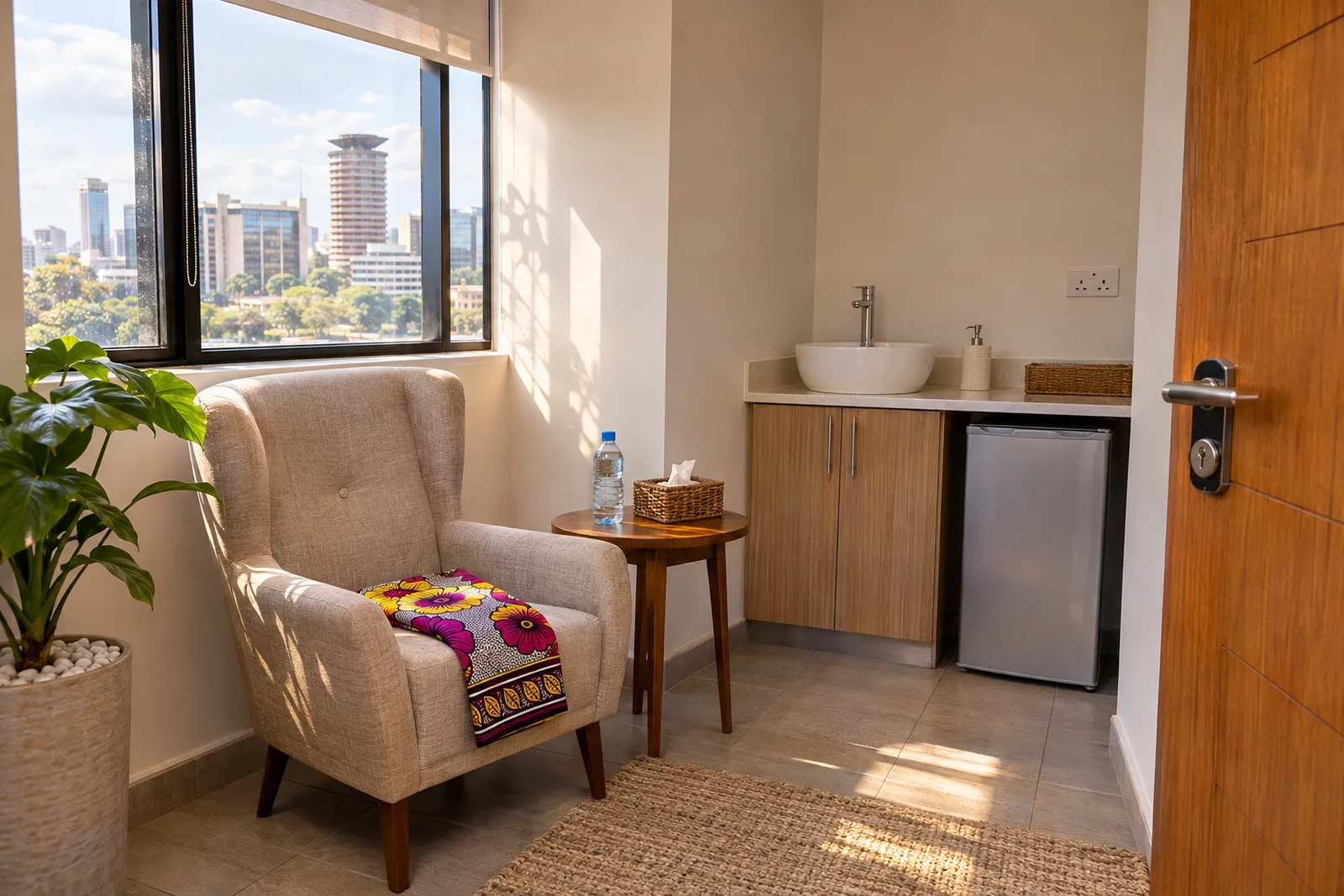
The bill as published spells out what a lactation room must have: a door that locks, a wash basin, a fridge, an electrical socket, lighting, a chair, a table and storage. It must not be a toilet. Mothers can ask for flexible hours, duties or place of work, and the labour minister will set the length of breastfeeding breaks in regulations. Buildings open to the public with room for 50 or more people must also provide baby-changing facilities. Tuko reported that all six bills were passed by the National Assembly between 14 October and 4 November.
The same day, Ruto signed two amendments to the Sexual Offences Act. One requires such cases to go through the formal courts and be concluded within six months of a plea, and stops cases being withdrawn because of out-of-court settlements, Dawan Africa explained. The other protects the right of survivors, including teenage mothers, to continue their education.
Why it matters
Most Kenyan babies start life at the breast. In the 2022 Kenya Demographic and Health Survey, 98% of children had ever been breastfed, but only 60% of babies under six months were breastfed exclusively, as the World Health Organization recommends, according to the Kenya National Bureau of Statistics. Going back to work is one of the moments when that often stops.
Ruto said the law is about letting women do both jobs. “There must be flexibility to allow our mothers to undertake the noble responsibility of bringing up our children but also being able to attend to their work,” he said, according to The Star. He directed State House to set up lactation spaces first, and thanked the sponsor: “Let me congratulate Sabina Chege. I know this piece of legislation has been in Parliament for a while; thank you very much for the push and to all the MPs who supported the Bill.”
There must be flexibility to allow our mothers to undertake the noble responsibility of bringing up our children but also being able to attend to their work.
William Ruto, President of Kenya
The wider picture
This is not the first time Kenyan law has asked for lactation rooms. Section 71 of the Health Act, 2017 already says that “all employers shall in the workplace establish lactation stations”, and that they must not be in toilets. In GGND’s view, the new law matters because it goes further: it sets out what a room must contain, adds breaks, flexible working and protection from discrimination, and attaches penalties. The bill as published set a fine of up to KSh1 million, up to a year in prison, or both, for breaking the rules. Committee amendments may have changed some details, and the final text has not yet been published in the Kenya Gazette.
The bill as published also gives employers time: it comes into force one year after publication. That gives businesses a chance to prepare, but it also means mothers going back to work this year will not yet be covered.
The law also bans discrimination against women because of pregnancy, childbirth or breastfeeding, Switch Media reported. In GGND’s view, that may prove as important as the rooms themselves, because a lactation room is little use to a woman who fears losing her job for using it.
Could it work elsewhere?
Many countries have breastfeeding-at-work rules, but few spell out a room’s equipment in law. In GGND’s view, Kenya’s detailed checklist is easy to copy and easy to inspect: a labour officer can quickly see whether there is a lock, a fridge and a basin. The harder part, everywhere, is reaching women in small businesses and informal jobs, who make up much of the workforce in East Africa.
What remains unresolved
- Break times. The law leaves the length and frequency of breastfeeding breaks to regulations that the labour minister has not yet written.
- Enforcement. A similar duty has existed in the Health Act since 2017. It is not clear who will inspect workplaces or how often.
- Informal work. Market traders, farm workers and domestic workers often have no formal employer, and the law may do little for them.
- Final text. The amended text has not yet been published, so details such as penalties and start dates should be checked once it is gazetted.
What happens next
The act will be published in the Kenya Gazette, and the labour ministry is expected to draft regulations on break times. Employers then have a year to prepare lactation rooms. GGND will look for the regulations and for the first signs of whether workplaces, starting with State House, follow through.
Sources
- KBC Ruto signs six bills to strengthen rights, justice and accountability (26 November 2026)
- The Star Ruto orders breastfeeding rooms at State House (26 November 2026)
- Tuko William Ruto assents 6 bills introducing laws on breastfeeding, sexual offences, pensions (26 November 2026)
- Switch Media Ruto signs new law protecting breastfeeding mothers (26 November 2026)
- Dawan Africa Explainer: the six laws Ruto signed at State House (26 November 2026)
- Parliament of Kenya National Assembly committee report on the Breastfeeding Mothers Bill (16 October 2026)
- Parliament of Kenya The Breastfeeding Mothers Bill, 2024 (bill as published)
- Government of Kenya (via WHO) The Health Act, 2017, section 71
- Kenya National Bureau of Statistics Kenya Demographic and Health Survey 2022
Analysis and context are by The GGND Team. Where we draw our own conclusions, we say so. To report an error, contact us.