What happened
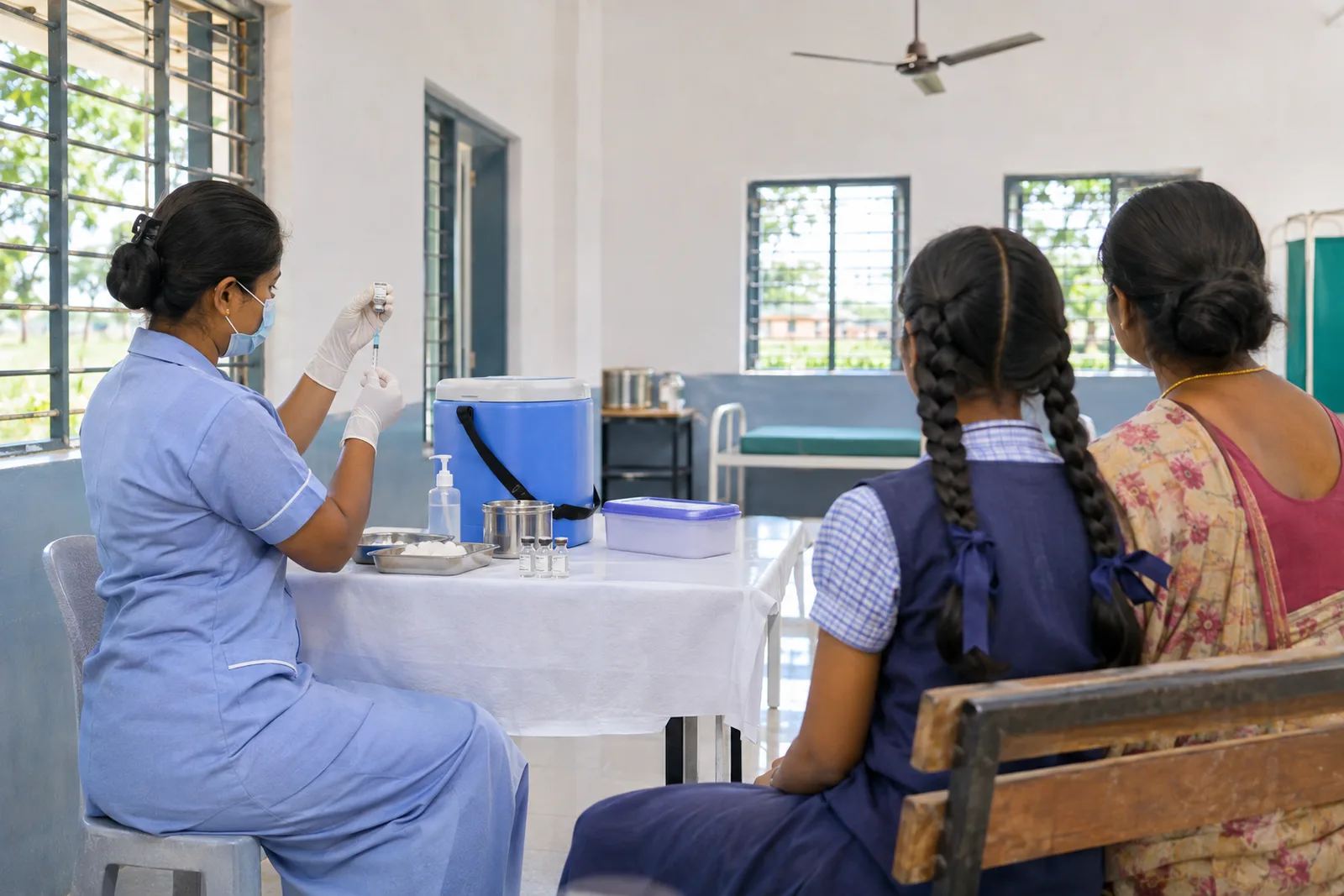
On 21 November, India’s Ministry of Health and Family Welfare said that more than 1 crore (10 million) doses of the human papillomavirus (HPV) vaccine had been given under the National HPV Vaccination Campaign in less than nine months, according to the Press Information Bureau. The campaign, launched by Prime Minister Narendra Modi in February, offers a free, voluntary single dose to 14-year-old girls at government health facilities, with parental consent.
The ministry says this is nearly 87% of the annual target group of about 1.2 crore girls, based on population estimates. Six states, Gujarat, Uttar Pradesh, Andhra Pradesh, Mizoram, Madhya Pradesh and Bihar, report 100% coverage of their target groups. Uttar Pradesh has vaccinated more than 29.33 lakh girls, Bihar more than 13.70 lakh and Gujarat more than 7.75 lakh. Bookings, tracking and certificates run through the U-WIN digital platform.
The World Health Organization’s South-East Asia office congratulated India on 23 November, saying the achievement “reflects the collective commitment of the Government, health workers, communities, parents and partners”, The New Indian Express reported. Modi called it “a significant milestone in our journey towards preventive healthcare”, according to a second government release.
Why it matters
Cervical cancer is the second most common cancer among women in India. India accounts for about a quarter of the world’s cervical cancer deaths, and about one in 50 girls born in India is expected to develop the disease in her lifetime, according to Gavi’s VaccinesWork. Nearly all cases are caused by persistent HPV infection, and the vaccine used, Gardasil, protects against types 16 and 18, which cause around 70% of cervical cancers in India.
HPV vaccine was first used in India in 2008, but national coverage was held back for years by safety fears, misinformation and the stigma of a sexually transmitted infection, Gavi reported. Only Punjab and Sikkim ran public programmes before this year. Reaching 10 million girls in nine months is a sharp break with that history.
India’s introduction of the HPV vaccine and its plan to vaccinate more than 10 million girls each year will have a profound impact not only nationally but also globally.
Partha Basu, International Agency for Research on Cancer
The wider picture
The figures need care. A peer-reviewed review in the International Journal of Women’s Health, published in October and co-written by IARC’s Partha Basu, warned that early numbers come largely from government reports and press releases that have not been independently verified. Using September figures, it estimated about 8 million doses against an eligible group of about 11.5 million girls, roughly 43%, while stressing that this was an early administrative indicator. The ministry’s newer 87% figure uses a slightly larger target group of about 1.2 crore girls, and outside researchers have not yet checked it.
The review also named barriers: vaccination only at designated health facilities, mandatory written parental consent and limited vaccine supply, which is why only one age group is being covered. Some large states remain behind the leaders: the ministry reports Kerala at 77.02%, Tamil Nadu at 76.12% and Odisha at 74.90%.
In GGND’s view, the bigger gap is screening. Only 1.9% of women aged 30 to 49 said they had ever been screened for cervical cancer in the 2019–21 national family health survey, the review notes. Girls vaccinated today will not reach the ages of highest risk for decades, so millions of adult women still depend on screening and treatment.
Could it work elsewhere?
Ninety countries now use a single-dose HPV schedule, according to Gavi. In GGND’s view, India shows what that simpler schedule makes possible: one visit, one dose and a digital booking system can reach a whole year group quickly, even in very large and poor states. Countries with similar populations, such as Pakistan, Nigeria or Indonesia, will be watching.
What remains unresolved
- Verified coverage. The 87% figure is the ministry’s own, and independent surveys have not yet confirmed it.
- Older girls and boys. Limited supply means only 14-year-old girls are being reached; missed cohorts and boys are not covered.
- Screening. Fewer than 2% of women had ever been screened in the last national survey, and there are no published targets by age or district.
- Next year. Gavi reported that the campaign will run again for girls turning 14, but sustained funding and supply are not yet guaranteed.
What happens next
The government says it will keep going until every eligible girl is reached. The India-made Cervavac vaccine has WHO prequalification, the review says, though single-dose efficacy data for it are not yet available. GGND will look for independent coverage surveys and for any new national push on screening.
Sources
- Press Information Bureau, Government of India India crosses historic milestone of 1 crore HPV vaccine doses administered in less than nine months (21 November 2026)
- Press Information Bureau, Government of India Prime Minister lauds India’s achievement of administering over 1 crore HPV vaccine doses (23 November 2026)
- The New Indian Express WHO congratulates India for crossing 1 crore HPV vaccinations (23 November 2026)
- Gavi VaccinesWork India, home to 25% of the world’s cervical cancer deaths, launches nationwide HPV vaccination (13 March 2026)
- International Journal of Women’s Health Cervical cancer elimination in India: progress, gaps, and the priorities (13 October 2026)
Analysis and context are by The GGND Team. Where we draw our own conclusions, we say so. To report an error, contact us.