What happened
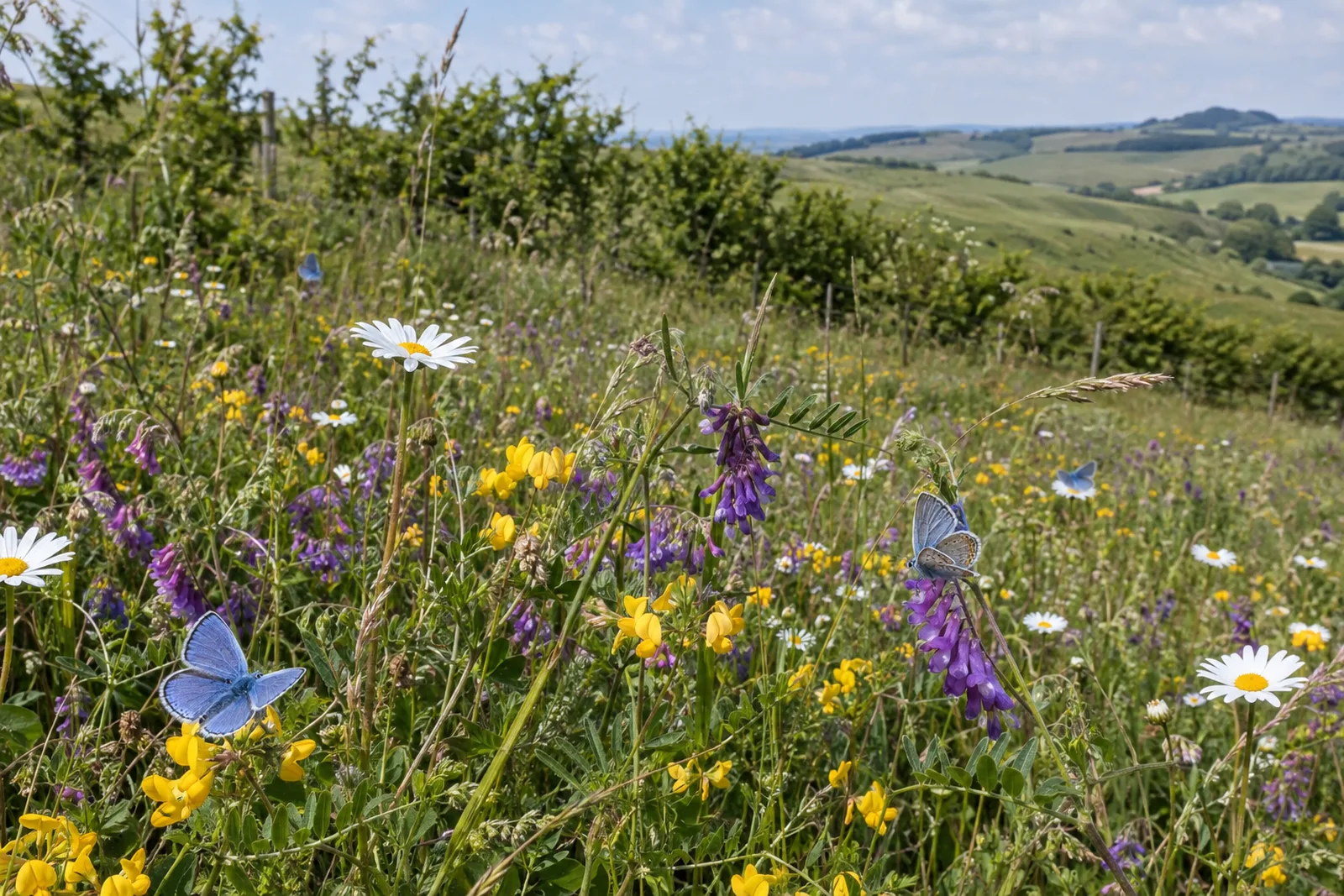
Butterfly surveys at Halnaker Hill Farm, near Chichester in West Sussex, recorded 5,290 individual butterflies from 28 species during 2026, the South Downs National Park Authority announced on 19 October. The counts came from three main surveys in May, June and July, plus 127 additional counts, carried out by the conservationist Neil Hulme, who works with the authority and the charity Butterfly Conservation.
Among them were 85 small blues, the UK’s smallest butterfly, and seven dingy skippers. Neither had ever been recorded at the site. Both are species of principal importance under the Natural Environment and Rural Communities Act 2006. The surveys also found 547 small heath butterflies, another priority species previously seen there in smaller numbers, and eight sulphur pearl moths.
Why it matters
Butterflies react quickly to changes in habitat, so ecologists often use them as a guide to the health of a whole site. “These data clearly indicate how rapidly and spectacularly the rich mosaic of habitat types at Halnaker Hill Farm has developed, in terms of its ecological value, at a remarkably early stage in the project,” Hulme said.
What makes Halnaker striking is the speed. The land had been cropped for wheat for 40 years. After a final harvest in 2024, the arable land was sown with a special wildflower mix. Seven kilometres of hedgerow have been planted, seven hectares of new woodland created, three ponds dug and 54 hectares of herbal leys sown, with tightly controlled “mob grazing” on the existing chalk grassland, Yahoo News UK reports. More than 20,000 trees have gone in over two years, according to the BBC. Skylarks, corn buntings, hobbies and dragonflies have also been seen on the site.
The speed has amazed me, from a sterile landscape to one brimming with butterflies.
Neil Hulme, ecologist and butterfly surveyor
The wider picture
Halnaker is one of the larger sites in the National Park’s ReNature programme, which aims to turn more than 7,700 hectares into habitat for wildlife. The project is owned by Halnaker Hill Natural Capital and earns its money by selling biodiversity net gain (BNG) units. Under England’s BNG rules, developers must leave nature in a measurably better state after building, or buy units from restoration sites elsewhere. Halnaker will deliver more than 850 units, the authority says.
“The results of this wildlife survey are extraordinary and it’s exciting to see nature bouncing back at this beautiful site,” said Nick Heasman of the National Park Authority. Hulme put it more bluntly: “Some people are a little bit unsure about BNG and the idea of monetising nature, but projects like this are showing so clearly how BNG can deliver nature by the bucketload. This isn’t greenwashing; this is the real deal.”
Could it work elsewhere?
The techniques used here, wildflower sowing, hedgerows, ponds and careful grazing, are well known. England has large areas of chalk farmland in the Downs and the Chilterns. In GGND’s view, the bigger question is not the ecology but the economics: whether nature-credit markets can pay landowners enough, for long enough, to make this a lasting alternative to farming marginal land.
What remains unresolved
- One season of data. Butterfly numbers rise and fall with the weather. A single year of counts, without a published baseline from the wheat years, cannot show a long-term trend.
- Who did the counting. Hulme has advised the project on its restoration. His expertise is widely recognised, but independent repeat surveys would strengthen confidence in the results.
- The credit model. The site’s income depends on developers who are building elsewhere. Critics of BNG worry that off-site credits can make it easier to damage nature near new homes.
- Keeping it going. Chalk grassland needs grazing and management for decades. How the site will be looked after once the credits are sold is not set out in the reports we reviewed.
What happens next
Next year Hulme plans to reintroduce the rare Duke of Burgundy butterfly, and wild pansies will be sown to attract the Queen of Spain fritillary, a once-rare migrant now seen more often in southern Britain, Yahoo News UK reports. “If we can achieve this in just two years, the sky is the limit,” he said. GGND will look for the 2027 counts.
Sources
- South Downs National Park Authority Nature recovery success at South Downs National Park farm as butterflies boom (19 October 2026)
- BBC News Butterflies boom at South Downs rewilding farm (19 October 2026)
- Yahoo News UK ‘This isn’t greenwashing’: thousands of butterflies return to former Sussex farmland (23 October 2026)
- ITV News Meridian Rewilding project boosts butterfly numbers at beauty spot (19 October 2026)
Analysis and context are by The GGND Team. Where we draw our own conclusions, we say so. To report an error, contact us.