What happened
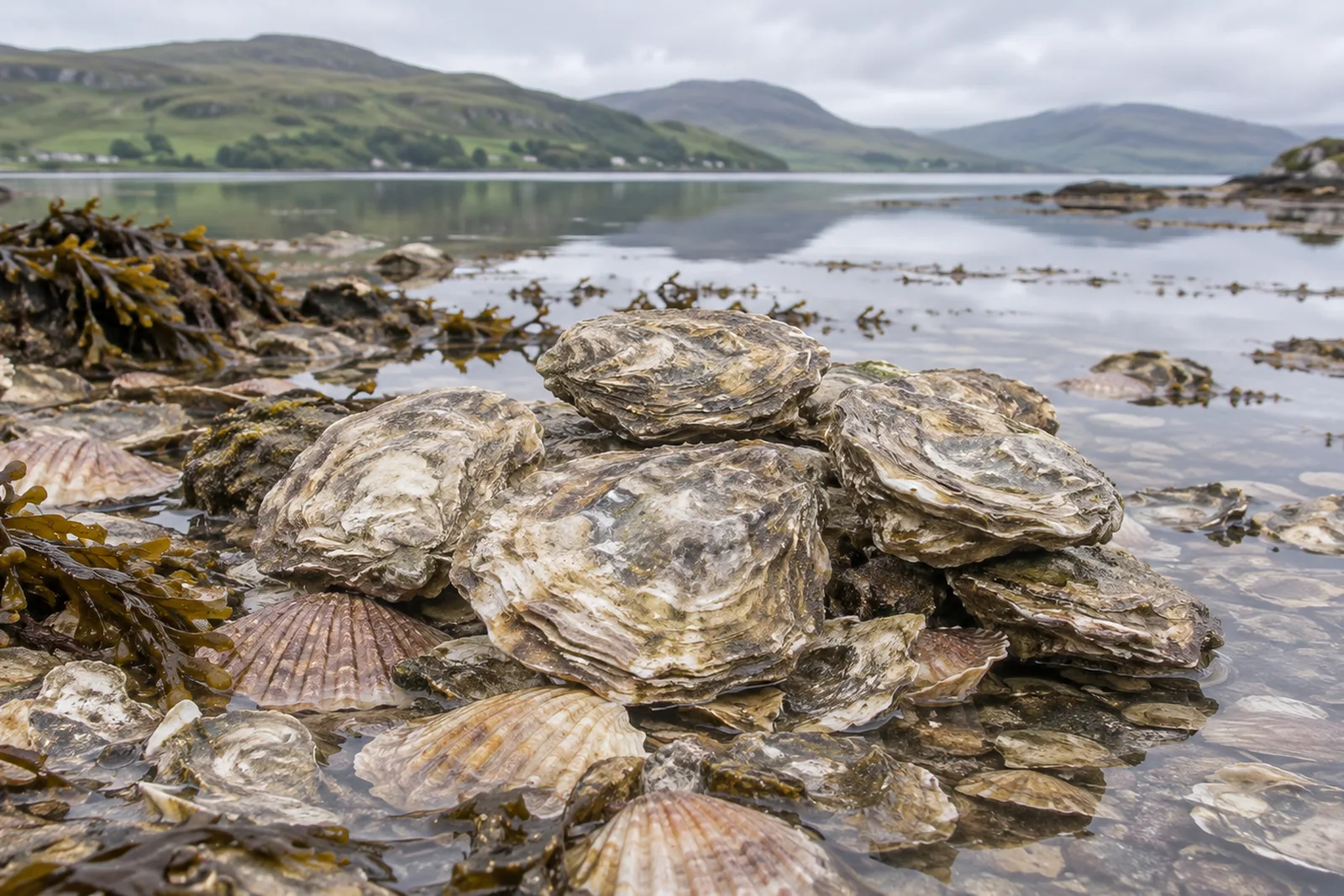
For the first time in more than a century, native oysters have been born in the Dornoch Firth, north of Inverness, Heriot-Watt University announced on 16 November 2026. Its scientists found the baby oysters, called spat, during routine checks of the site, where they had laid shells on the seabed to attract them. The first images, of oysters only a few millimetres across, were verified by invertebrate curators at National Museums Scotland and Amgueddfa Cymru – Museum Wales. On a return visit, some of the young oysters had grown to the size of a 50p coin.
The find is the biggest milestone so far for the Dornoch Environmental Enhancement Project, known as DEEP, which has spent 12 years trying to bring back a lost oyster reef. The firth’s oysters were probably fished to extinction in the late 1800s, like most of Europe’s. In 2017 the project partners, Heriot-Watt, the whisky maker Glenmorangie and the Marine Conservation Society, placed the first 300 oysters from Loch Ryan on the seabed. By October 2026 more than 140,000 young oysters had been bred, cleaned by hand and released by volunteers and scientists, the university said.
“We knew we had about 3000 oysters reaching maturity across the two beds we’ve established, which meant the possibility of spat was higher,” said Professor Bill Sanderson. Gurjameer Ramday, the research associate who made the discovery, said warm seas in 2025 and 2026 had made the team “extra vigilant and hopeful”. The BBC reported that the young oysters were first noticed in 2025, and that another 5,000 oysters were placed in the firth last week.
Why it matters
Oyster reefs once covered large parts of Britain’s seabed. The Guardian reported that Victorian maps, including Olsen’s Piscatorial Atlas of 1883, show billions of native oysters around the coast, and that at the peak of the trade 30 million oysters a year were landed from the Firth of Forth alone. Within decades the beds were fished out. Today European flat oysters are listed among critically threatened species, and only a handful of places in Britain still have substantial wild beds, the paper said.
Oysters matter far beyond the dinner plate. They filter seawater, hold seabed sediments in place and build complex reefs that shelter hundreds of other species. “We know from studying oyster habitats that when you establish an oyster reef, it’s very likely that over a decade you’re going to double the diversity on the seabed,” Sanderson told The Guardian. Sandy Luk, chief executive of the Marine Conservation Society, said the beds also help capture carbon and improve water quality, and that the work would not have been possible without hundreds of volunteers.
Ramday put the significance simply: “Wild oyster populations have collapsed throughout Europe, so finding baby oysters now is proof that targeted restoration can work.”
This is a moment over 12 years and 140,000 oysters in the making.
Professor Bill Sanderson, Heriot-Watt University
The wider picture
DEEP was among the first native European oyster restoration projects when it began, and Sanderson said the team had been “trailblazing all the way”. According to The Guardian, its success has encouraged around a dozen newer UK projects, including Seawilding in Argyll, the Essex Oyster Restoration Initiative, the Solent Oyster Restoration Project and Restoration Forth near Edinburgh. The oysters released at Dornoch come from Loch Ryan near Stranraer, one of Britain’s few surviving wild fisheries, home to about 23.5 million oysters.
Glenmorangie’s president and chief executive, Caspar MacRae, called the find “a very proud moment for all of us” and said the “fledgling reef is on its way to becoming a fully biodiverse, self-sustaining ecosystem”. In GGND’s view, that is the hope rather than the present reality. The scientists themselves describe a reef that has started to breed, not one that can yet look after itself.
Could it work elsewhere?
The method is slow but simple: find a site that once held oysters, put down clean shell for young oysters to settle on, and keep adding healthy, disease-checked adults until they breed on their own. Sanderson said “there is nothing like the presence of other oysters and shell reef material to draw them in”. In GGND’s view, the Dornoch result is useful evidence for estuaries across Europe that lost their reefs to the same Victorian overfishing, but each site will need years of volunteer effort, biosecurity checks and steady money before it reaches the same point.
What remains unresolved
- Not yet self-sustaining. “We have to keep going until the rate at which the babies that are produced exceeds the rate at which they’re eaten by crabs and starfish,” Sanderson told The Guardian. The team hopes to reach that point by 2031.
- A very large target. The project aims for around four million oysters by 2031, and Heriot-Watt says it needs additional funding to get there.
- Wider threats. The Guardian reported that conservationists remain anxious about overfishing and pollution, and critical of how bottom-dragging fishing gear is controlled. “There’s vulnerabilities in all of this stuff,” Sanderson said.
- Different numbers in reports. Some news reports describe the 140,000 differently. GGND has used Heriot-Watt’s wording: more than 140,000 juvenile oysters released by October 2026.
What happens next
The team will keep monitoring the beds to see how fast the population grows and how biodiversity changes, and will keep releasing oysters, Heriot-Watt said. It could be a decade or more before the reef is large enough to be fished, according to The Guardian. GGND will follow whether the next generation of Dornoch oysters survives to breed.
Sources
- Heriot-Watt University First oysters born in Dornoch Firth for over 100 years (16 November 2026)
- BBC News Oysters breeding in firth for first time in more than 100 years (17 November 2026)
- The Guardian (via AOL) Return of the wild oyster: conservationists bring shellfish back from local extinction off Scottish coast (15 November 2026)
- The National Native oysters breed in Dornoch Firth for first time in 100 years (November 2026)
Analysis and context are by The GGND Team. Where we draw our own conclusions, we say so. To report an error, contact us.