What happened
For the first time, broad-headed snakes bred in captivity have been released into the wild and survived. Six juveniles were placed in sandstone habitat in New South Wales in May, and at least four of them were still alive months later, the University of Technology Sydney (UTS) announced on 6 November.
The snakes were bred by the conservation organisation Aussie Ark, which has hatched eight since its breeding programme began in October 2024. Two were kept back to protect the captive population’s genetics, Phys.org reported. The six were released in mid-May under artificial rocks developed by Dr Benjamin Croak, a former UTS PhD student, which have the right crevice size and mimic the thermal properties of natural rock. “Broad-headed snakes are nocturnal so they shelter under these rocks during the day and rely on them for warmth, protection and to attract prey,” Webb said. Surveys are carried out every fortnight.
The programme also trains and supports Indigenous rangers to monitor and protect the species on Country. “It’s about all of us coming together to do what’s best for Country. Healing Country,” said Indigenous Ranger Ashley Thomas, according to UTS.
Why it matters
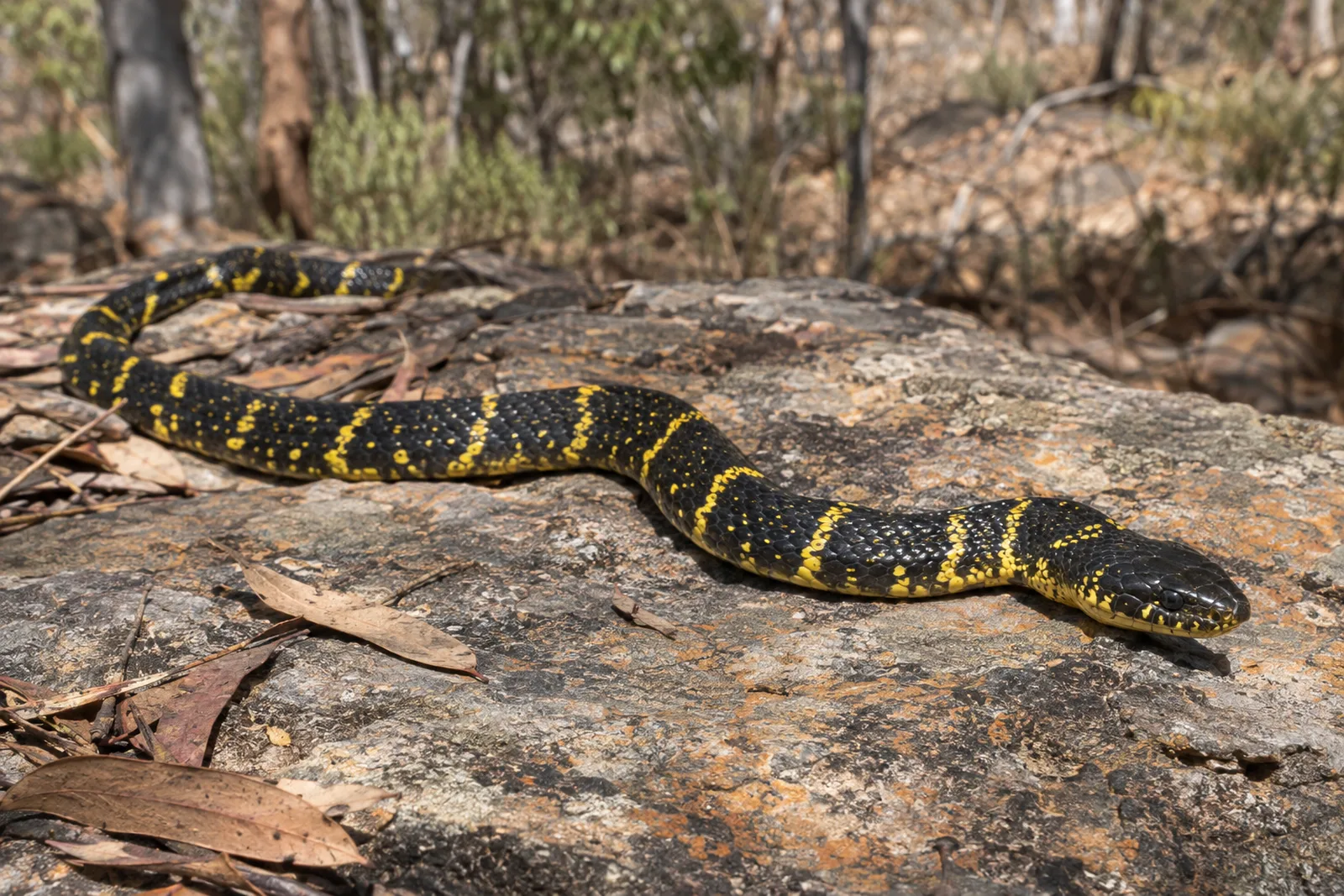
The broad-headed snake (Hoplocephalus bungaroides) is a venomous black-and-yellow snake found only in the rocky escarpment of the Sydney sandstone basin and surrounding ranges. It grows to about 90 centimetres, takes around five years to reach adulthood, and females breed only every two to three years, although individuals can live to 23, according to UTS. That slow life history means populations struggle to recover from shocks.
The shocks have been severe. Professor Jonathan Webb of UTS, who has studied the species for 34 years in Morton National Park, found that the population there fell by about 64 per cent by 2023 after the 2017–19 drought and the 2020 bushfires, UTS said. A successful release method gives conservationists a way to restock places where the snake has declined or vanished.
The reintroduction of the broad-headed snake is a world-first, and so far, the results are really encouraging.
Professor Jonathan Webb, University of Technology Sydney
The wider picture
Artificial rocks have a long history here. A trial in Morton National Park in the mid-1990s, summarised by Conservation Evidence, found that velvet geckos readily used concrete pavers with narrow crevices placed in degraded habitat, and a broad-headed snake was recorded under one. What is new is combining such shelters with snakes bred in captivity.
The biggest threat the snakes face may be people. Removing bush rock, often for gardens, has been listed as a Key Threatening Process in New South Wales since 1999. “A single attractive boulder can sell for as much as $450,” Webb told Popular Science. “We need a permit system that requires people selling bush-rocks to prove they haven’t taken rocks from areas where threatened species live,” Webb said, according to UTS.
Aussie Ark’s founder, Tim Faulkner, said: “We now have a unique, multifaceted, holistic program that’s a model for threatened species conservation Australia-wide,” Phys.org reported. An earlier update reported by Ausleisure said three of the six had been confirmed alive; the November count of at least four is more encouraging.
Could it work elsewhere?
Many reptiles depend on specific rocks, logs or crevices that are easy to destroy and slow to replace. In GGND’s view, the broad-headed snake project shows a practical pairing: breed animals in captivity, then give them ready-made shelter at release so they do not have to search exposed ground. The same approach could help other rock-dwelling reptiles, as long as the reasons they disappeared, such as rock theft or cats and foxes, are tackled too.
What remains unresolved
- A tiny sample. Six snakes is a pilot, not a recovered population. Webb himself called it a pilot study.
- Time. The snakes have been followed for months. They need to survive winters, reach adulthood in about five years and breed before the release can be called a success.
- Predators and fire. Foxes, cats, birds and future bushfires remain risks that artificial rocks cannot remove.
- Enforcement. Bush-rock removal has been a listed threat for over 25 years, yet rocks are still sold. Without better rules, habitat may keep disappearing.
What happens next
Fortnightly surveys will continue, and UTS says the pilot will guide future reintroductions. The two snakes kept in captivity remain part of Aussie Ark’s breeding programme. GGND will report on whether the released snakes reach breeding age.
Sources
- University of Technology Sydney World-first successful wild release of endangered broad-headed snake (6 November 2026)
- Phys.org World-first successful wild release of endangered broad-headed snake (6 November 2026)
- Popular Science Fake rocks boost survival for venomous Australian snakes (9 November 2026)
- Conservation Evidence The use of artificial rocks to restore degraded habitats of the endangered broad-headed snake and velvet gecko, Morton National Park
- Ausleisure Aussie Ark flags success of its world-first wild release of endangered broad-headed snake (2026)
Analysis and context are by The GGND Team. Where we draw our own conclusions, we say so. To report an error, contact us.