What happened
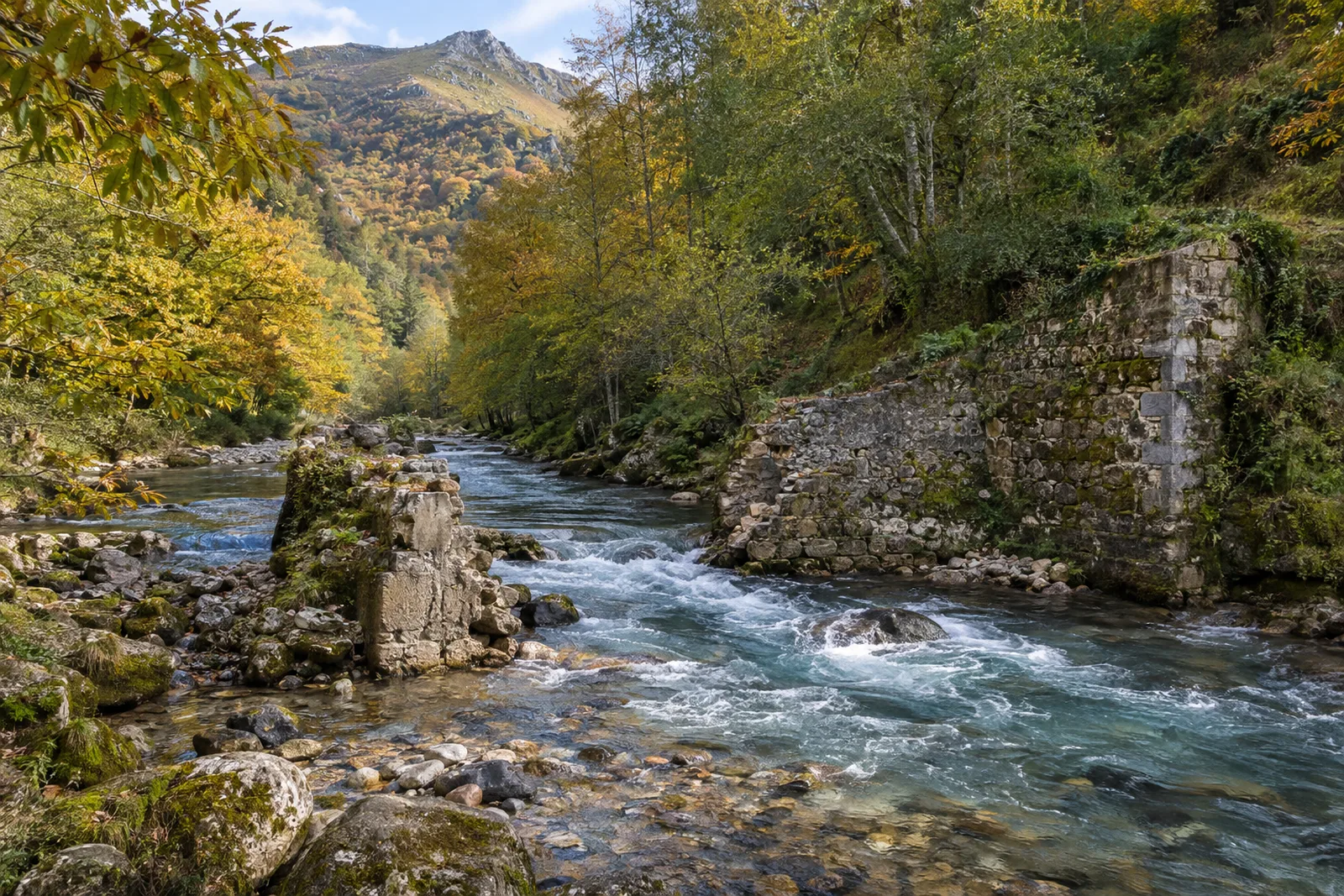
The Cantabrian conservation group Red Cambera has demolished the Valverde weir at Frama, in the municipality of Cabezón de Liébana in northern Spain, opening 24 kilometres of river to salmon and other fish, elDiario.es reported on 26 October 2026. The work was supported by an €83,228 grant from the European Open Rivers Programme.
Noel Quevedo Aja, who leads the project at Red Cambera, said removing the weir frees 24 linear kilometres of river upstream and another 42 kilometres downstream, Demócrata reported. The weir sat on the River Bullón in the Deva river system.
Why it matters
The weir was small: built of stone and masonry, about 1.7 metres high and 24 metres from bank to bank. But it created a drop of about 1.5 metres between the water levels above and below it, which Red Cambera said made it practically impassable for salmon. It once diverted water to the Frama fish farm, which had been abandoned for many years and officially dismantled. A small fish pass in the middle did not work well, and the structure had no operating licence, Red Cambera explained when the project was announced.
Barriers like this are one of the main reasons for the loss of freshwater biodiversity in Europe, Red Cambera says. Atlantic salmon need to swim from the sea to clean gravel beds high in river systems to spawn, and even a low step can stop them. Removing the weir should also let gravel and sediment move naturally again and improve habitat for fish, the group says.
…practically impassable for fish species, such as salmon, that inhabit that stretch.
Red Cambera, describing the Valverde weir, as reported by Demócrata
The wider picture
The work was done carefully. Before demolition, Red Cambera carried out feasibility studies, prepared technical designs and obtained permits from national, regional and local authorities. Following the recommendations of the Cantabrian Hydrographic Confederation, the regional water authority, 14 of the weir’s 24 metres were removed, elDiario.es reported. It is the fifth river barrier the group has taken down in the Deva basin since 2021.
Red Cambera is a non-profit group founded in Cantabria in 2010. Besides removing barriers, it runs Proyecto Ríos, a long-running scheme in which volunteers inspect and adopt stretches of river, with an autumn inspection campaign that began on 1 October, the group says. The Open Rivers grant, €83,228.75 over 12 months, covers both the demolition and the follow-up monitoring, so the project is designed to measure its own results rather than stop when the machines leave.
The salmon need the help. On the same page, elDiario.es linked to its own report that the only salmon caught in Cantabria this season points to fishing restrictions, a sign of how scarce the fish have become in the region’s rivers.
Spain’s project is part of a much larger movement. Europe removed 603 river barriers in 2025, a record for the fifth year running, Fix The News reported, citing the Dam Removal Europe coalition. The Open Rivers Programme, a Dutch charity funded by the Arcadia foundation, gives grants for exactly this kind of small, obsolete barrier, Red Cambera notes.
Could it work elsewhere?
Europe’s rivers contain hundreds of thousands of barriers, and many are small weirs like Valverde that no longer have any use. In GGND’s view, this project shows a practical route: a local group, a modest grant, careful permits and partial removal guided by the water authority. It does not need a big national programme. The harder cases are barriers that still supply water or power, where owners need compensation or alternatives.
What remains unresolved
- Will the fish come back? Opening the river is only the first step. Red Cambera’s monitoring will show whether salmon and trout actually use the new stretch.
- Very few salmon. With salmon numbers so low in Cantabria, it may take years for any recovery to show, and other pressures, such as warmer water and conditions at sea, also matter.
- Other barriers. The benefit depends on whether fish can pass every other obstacle downstream between Frama and the sea.
What happens next
In the coming months, Red Cambera will run a scientific monitoring plan to compare the river before, during and after the demolition and judge how successful it has been. GGND will look for the first results and for news of further barrier removals in the Deva basin.
Sources
- elDiario.es Cantabria La asociación Red Cambera derriba una presa que permite abrir 24 kilómetros de río para favorecer al salmón (26 October 2026)
- Demócrata Red Cambera brings down the dam of Valverde and releases 24 kilometers of habitat for the salmon (26 October 2026)
- Red Cambera El Programa europeo Open Rivers Programme facilitará el derribo de más obstáculos fluviales en Cantabria (September 2026)
- Fix The News Good news about rivers (October 2026)
Analysis and context are by The GGND Team. Where we draw our own conclusions, we say so. To report an error, contact us.