What happened
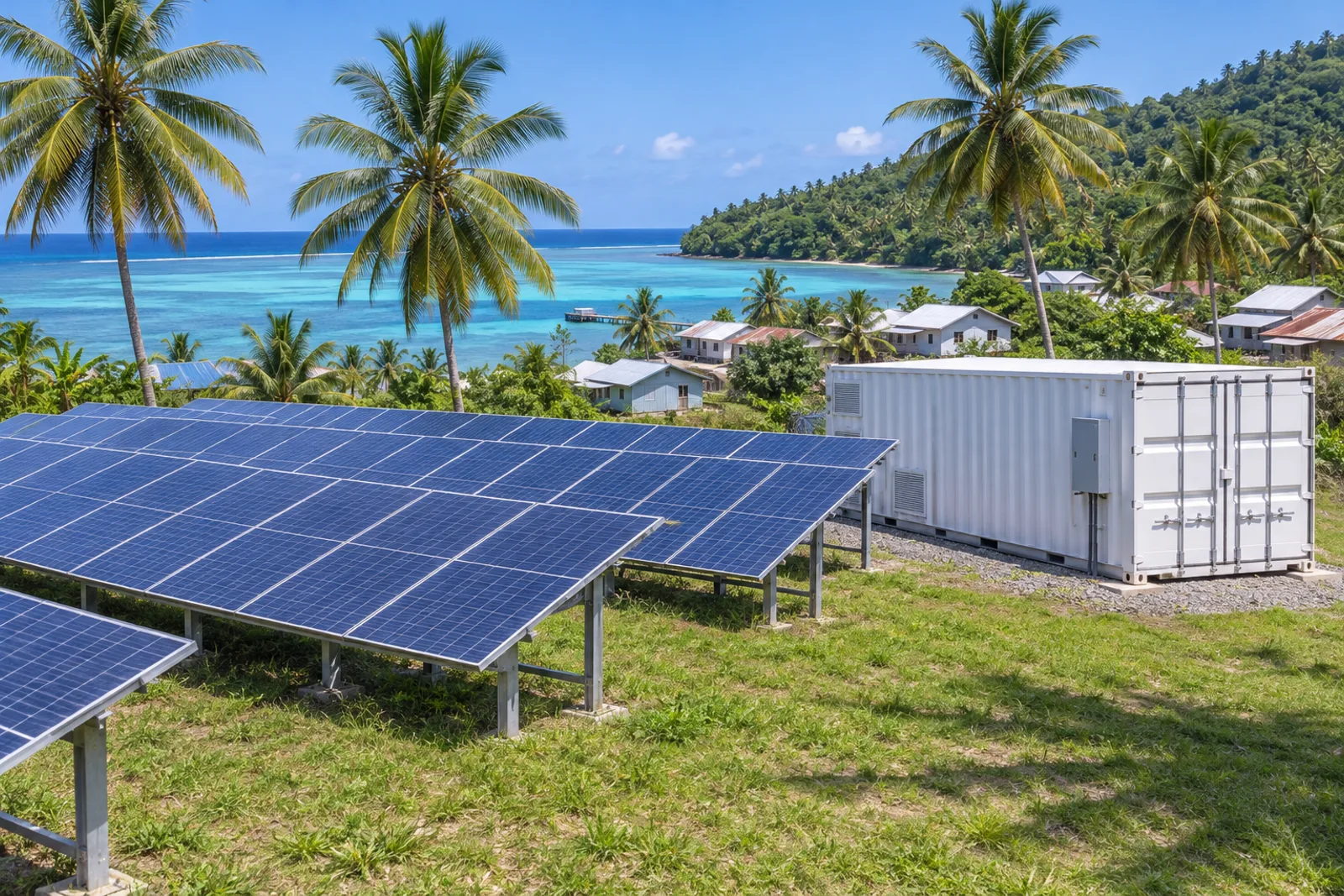
On 17 November, Pacific Island countries presented the region’s first renewable energy investment pipeline at the COP31 climate conference in Antalya, Türkiye. The Pacific Renewable Energy Investment Prospectus sets out 70 solar, battery, hydro, wind and grid projects in 14 countries, each with its status, cost and contacts. Together they are worth US$2.3 billion, of which US$358.2 million is still seeking finance, according to the launch release.
The prospectus was prepared for the Pacific Community (SPC) and its Pacific Centre for Renewable Energy and Energy Efficiency by Island Minds Ltd Vanuatu, the Smart Energy Council and the Renewable Energy Council Asia-Pacific. The data is open: anyone can explore the map and download the full dataset at 100renewablepacific.energy.
Some deals are ready now. They include a power purchase agreement in Nauru at 23 US cents per kilowatt-hour, about 36% below the cost of diesel power, a live tender for an independent power producer in Tonga, and a grid-scale solar project in Honiara, Solomon Islands. Grid and transmission projects alone total US$500.4 million, PINA reported.
Why it matters
Pacific households and businesses pay about US$0.47 per kilowatt-hour for electricity, nearly three times the global average, because most of it still comes from imported diesel. Net oil and gas imports equal 5–15% of each country’s GDP, the release said.
The cost is felt most on remote islands. Tina Stege, the COP31 envoy for Oceania and climate envoy of the Marshall Islands, said fuel there costs about US$8 a gallon in urban centres and US$15 in the outer islands. “For Pacific Island countries, the energy transition is a pathway to a more resilient and secure future, and it makes sense,” she said, PINA reported.
In GGND’s view, the value of the prospectus is practical. Small islands struggle to attract investors one project at a time. A single, open list of costed projects makes it easier for lenders to compare and bundle them.
Our islands cannot afford another decade of promises. COP31 must be where commitments become delivery.
Surangel Whipps Jr, President of Palau and Chair of the Pacific Islands Forum
The wider picture
The prospectus follows a run of regional decisions. Pacific energy ministers backed a vision of 100% renewable energy for the Blue Pacific in May 2026. In September, Forum leaders adopted the Belau Declaration and approved terms of reference for a Pacific Renewable Energy Commissioner, to be based at SPC, the release said.
The money is still far short. The Pacific NDC Hub estimates the region needs about US$650 million a year to meet its renewable energy targets; in 2023 it received US$57 million. About US$14 billion is needed to decarbonise Pacific electricity over ten years. The organisers asked journalists to keep that figure distinct from the US$2.3 billion of listed projects and the US$358.2 million still seeking finance.
Palau shows both the promise and the difficulty. President Surangel Whipps Jr said the country had aimed for 45% renewable energy by 2025 but had reached only 25%. An Australian-supported private solar project had trouble connecting to the grid and lacked enough battery storage, yet still supplied power at 14 cents per kilowatt-hour, against 28 cents for diesel, Island Times reported. “We’ve got the projects, now we just need the interest,” Whipps said.
Could it work elsewhere?
Other groups of small or remote economies, from the Caribbean to the Indian Ocean, face the same problem of expensive imported fuel and projects too small to interest big investors. In GGND’s view, the Pacific approach of pooling projects into one open, costed list is easy to copy. Whipps argued that grouping projects could help small island economies secure lower costs than they could achieve individually.
What remains unresolved
- Opportunities, not money. The listed projects are investment opportunities. Island Times stressed that the figure does not represent funding already secured.
- The scale of the gap. Even if every project is funded, US$2.3 billion is a fraction of the roughly US$14 billion needed over ten years.
- Grids and storage. Palau’s experience shows that solar alone can stall without grid connections and batteries. Whipps said his utility advised that solar could supply perhaps 70% of Palau’s electricity, not all of it.
- Policy reform. Speakers at COP31 said utilities need rules for rooftop solar, and Whipps said some members of parliament still favour diesel subsidies.
What happens next
Investors can now register interest in individual projects through the open map. The new Pacific Renewable Energy Commissioner, funded by Australia and Denmark, is due to be based at SPC. GGND will look for the first deals signed from the list, and for whether the unfunded US$358.2 million shrinks over the coming year.
Sources
- Smart Energy Council Pacific shows investors 70 renewable energy projects ready for finance at COP31 (17 November 2026)
- Pacific Community (SPC) / PCREEE Pacific Renewable Energy Investment Prospectus, open project map and dataset (November 2026)
- PINA / PACNEWS Pacific presents 70 renewable energy projects worth US$2.3 billion at COP31 (19 November 2026)
- Island Times Island nations pitch $2 billion project to advance Pacific renewable energy (17 November 2026)
- Island Times Whipps seeks renewable investment, $500m resilience fund (November 2026)
Analysis and context are by The GGND Team. Where we draw our own conclusions, we say so. To report an error, contact us.